You've studied the charts. You've backtested your strategy. You've got all the indicators lined up perfectly. And yet—something still goes wrong. You exit too early when fear kicks in. You hold too long hoping a losing trade will come back. You chase entries after missing the initial move. You overtrade when boredom sets in.
If this sounds familiar, you're not alone. Trading psychology is the single biggest factor separating consistently profitable traders from those who struggle. Studies suggest that 80-90% of trading success comes down to psychology, not strategy. But here's the thing: in 2026, you don't have to white-knuckle your way through emotional trading. AI-powered tools can help you build discipline, recognize emotional patterns, and make better decisions under pressure.
In this guide, we'll explore how to leverage AI assistance—tools like PredictIndicators.ai—to improve your trading psychology, overcome destructive emotions, and develop the mental fortitude of a professional trader.
Before we dive into solutions, let's understand the problem. Human brains evolved to survive on the African savanna, not to trade financial markets. Our instincts that kept us alive for millennia—fight or flight responses, pattern recognition, loss aversion—are often working against us in modern trading.
Fear manifests in several destructive ways:
Greed drives equally destructive behaviors:
Hope is perhaps the most insidious emotion in trading:
Regret creates a destructive cycle:
"The goal of a successful trader is to make the best trades. Money is secondary." — Alexander Elder
This is where AI-powered trading tools become game-changers. AI doesn't eliminate emotions—you're still human, after all—but it provides an objective framework that helps you recognize and override emotional impulses.
Think of AI tools like PredictIndicators.ai as a dispassionate trading partner sitting next to you. While emotions cloud your judgment, the AI:
One of the biggest psychological challenges in trading is uncertainty. You enter a trade and immediately wonder: "Did I make the right call? Should I exit? Is this going against me?"
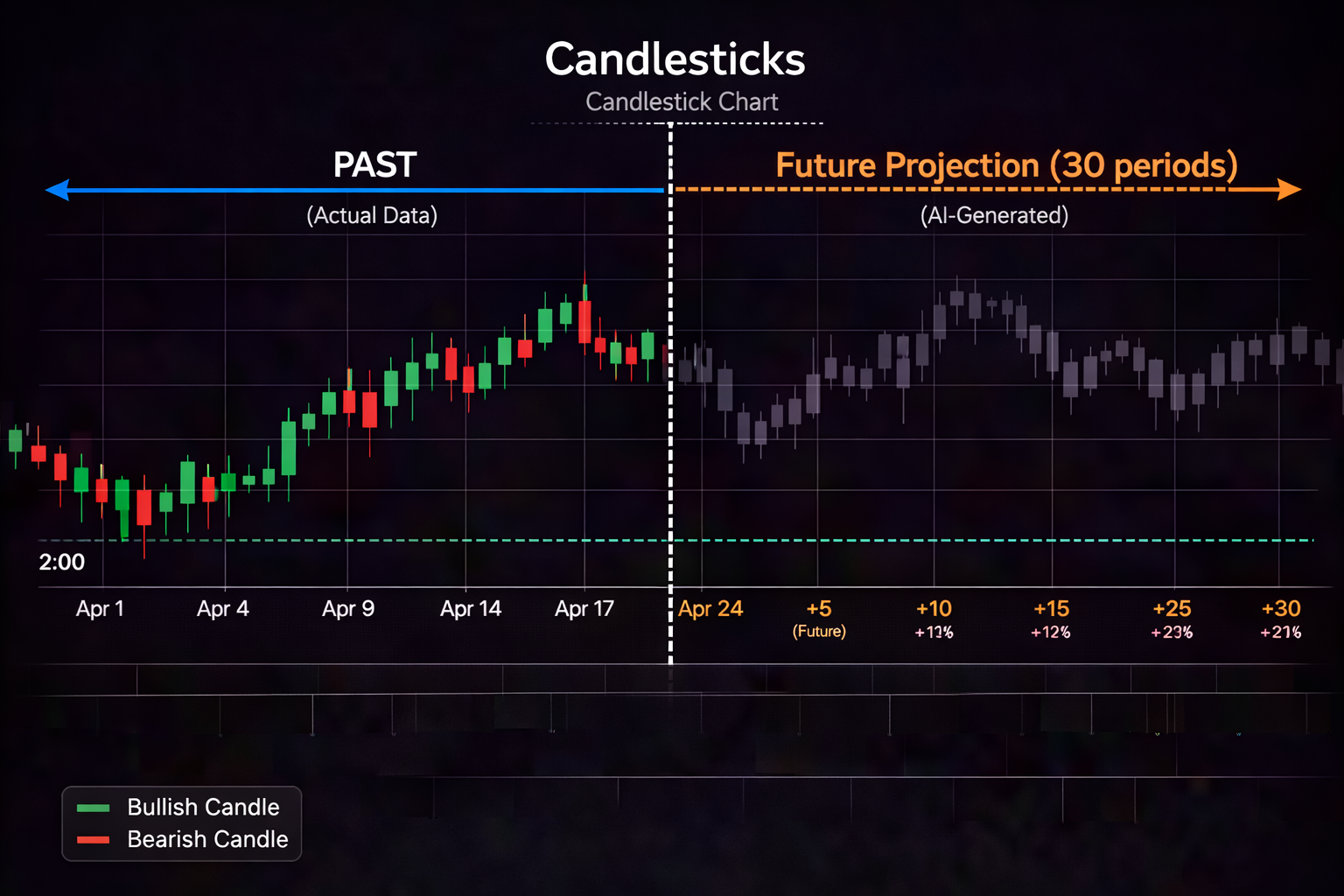
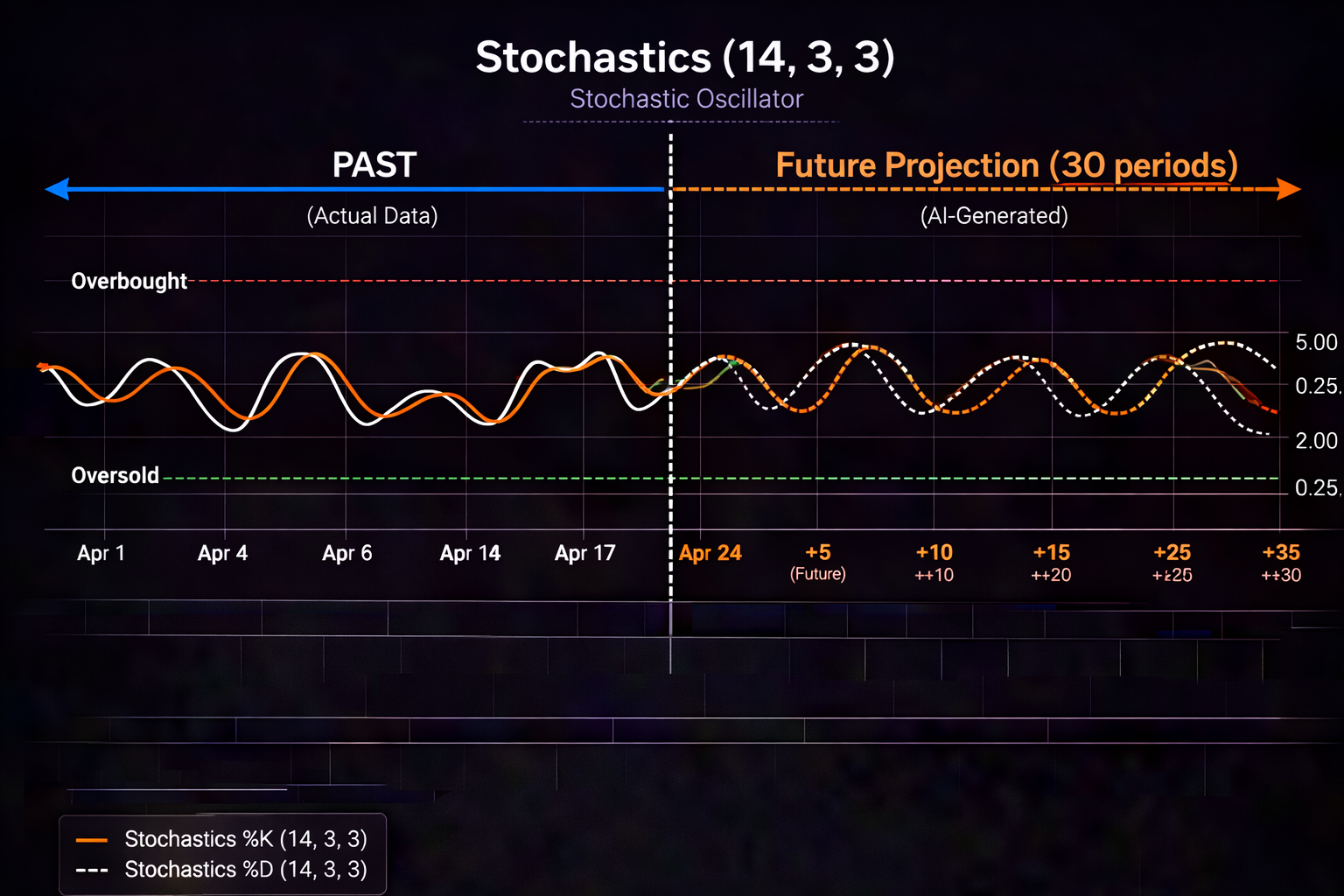
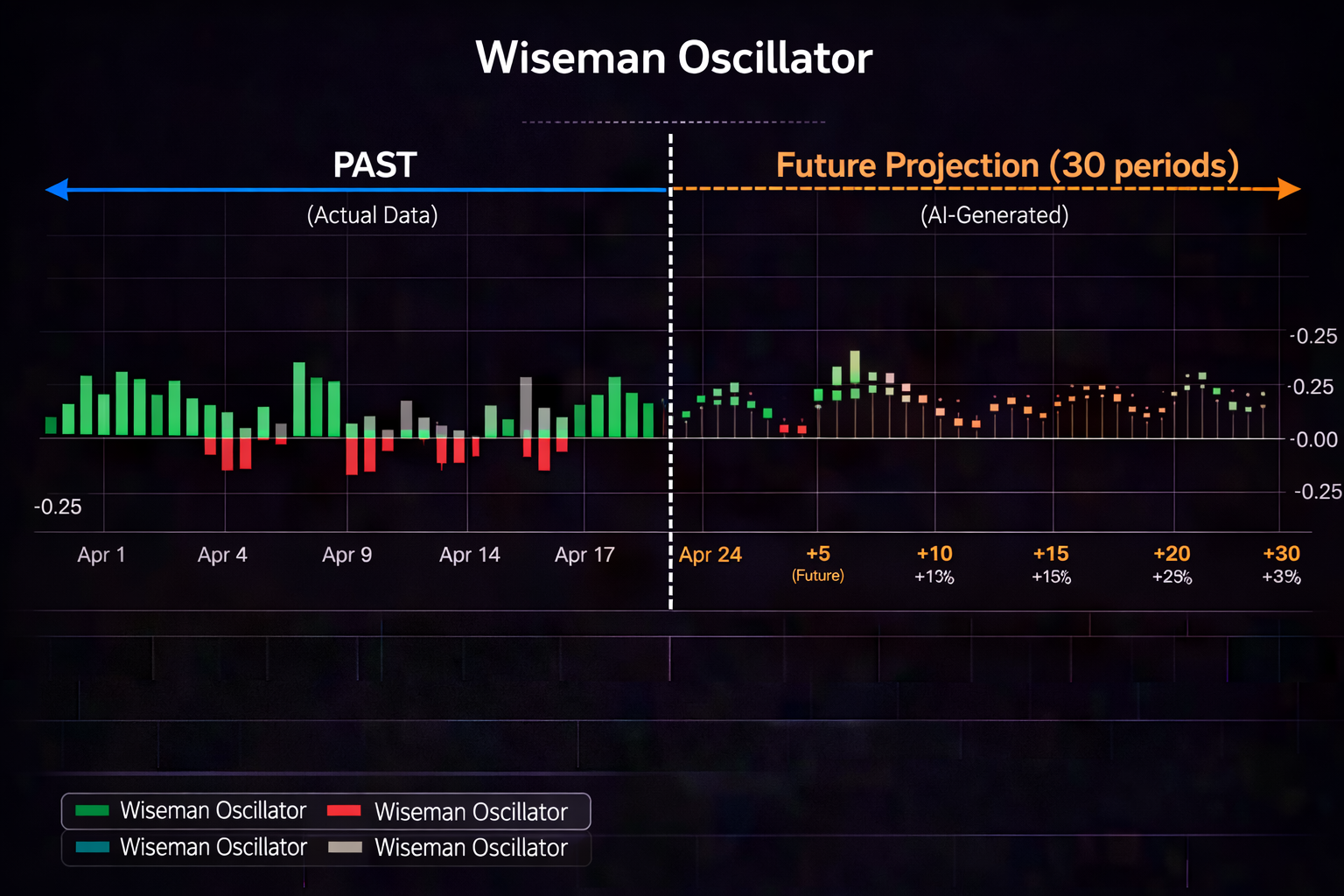
AI forecasting reduces this uncertainty by showing you where indicators are likely heading over the next 20-30 bars. When you can see that MACD is forecasted to strengthen, RSI has room to run, and volatility is expected to remain supportive, you can hold winning trades with confidence instead of exiting prematurely out of fear.
Many traders freeze when confronted with too much information. You're staring at a chart with 8 different indicators, each telling you something different. MACD is bullish but RSI is overbought. Volume is supporting the move but the trend is unclear. Decision paralysis sets in.
AI tools synthesize multiple indicators into coherent forecasts. Instead of trying to reconcile conflicting signals yourself, you see a unified prediction: "All indicators forecast bullish momentum for the next 25 bars." This clarity eliminates the mental gridlock that causes missed opportunities.
You're in a winning trade. Price pulls back slightly against you. Immediately, fear whispers: "Take the profit before it disappears." You exit, watching frustratingly as price continues in your original direction.
When AI forecasts show that momentum indicators are expected to strengthen over the next 20 bars, you have objective evidence to hold through minor pullbacks. The AI's prediction gives you permission to let winners run, backed by data rather than hope.
Every trader knows they should use stop losses. Far fewer actually do it consistently. When price approaches your stop, hope takes over: "It'll bounce back. I'll just move the stop a bit lower."
AI forecasts can validate your stop placement. If you're long and AI shows bearish forecasts emerging, that's objective confirmation that your thesis is failing—time to exit. Conversely, if AI still shows bullish forecasts and you're approaching your stop, you can objectively assess whether your stop was poorly placed or if the setup has genuinely failed.
Boredom, greed, or the need to "be productive" drives many traders to take marginal setups. You know the trade doesn't meet your criteria, but you enter anyway. This is overtrading, and it's an account killer.
AI tools can serve as a gatekeeper. Set a rule: "I only trade when AI forecasts align with my setup across at least 3 indicators." This creates an objective filter that eliminates impulse trades driven by boredom or FOMO.
After a losing trade, the urge to "make it back immediately" is powerful. You jump into the next setup without proper analysis, often taking the opposite position out of frustration. This is revenge trading, and it leads to cascading losses.
AI provides an objective reset mechanism. After a loss, instead of immediately looking for the next trade, check the AI forecasts. Are conditions actually favorable, or are you just seeking action? If AI shows unclear or conflicting forecasts, you have objective justification to step away and wait for better conditions.
One reason traders struggle psychologically is lack of confidence in their approach. You second-guess every decision because you don't truly know if your strategy works.
AI tools allow you to backtest strategies systematically. When you can see that your AI-enhanced approach has produced consistent results over hundreds of trades, you develop genuine confidence. This confidence isn't arrogance—it's based on data and experience.
Improving trading psychology isn't just about in-the-moment decisions. It's about building a comprehensive routine that supports mental stability and discipline.
Before looking at any charts, ask yourself:
If you're not in a good mental state, consider sitting out or reducing position size.
Check AI predictions on 1-hour and 4-hour charts to establish the broader market context. This prevents you from getting lost in lower-timeframe noise and helps you trade in alignment with larger trends.
Define success in terms of process, not profits:
Before every trade, run through this checklist:
Once in a trade, follow these rules:
Document each trade with these details:
Once per week, review your trading journal looking for psychological patterns:
Let's look at a realistic example of how AI assistance transforms trading psychology.
Sarah is a part-time forex trader with three years of experience. She has a decent strategy but struggles with consistency. Here's a typical week:
Monday: Takes three trades, all winners. Feeling confident, increases position size.
Tuesday: First trade loses. Moves stop loss hoping it'll come back. Loss doubles. Frustrated, immediately enters another trade—loses again. Now down for the week.
Wednesday: Determined to make it back, overtrades. Takes seven trades (double her normal). Wins three, loses four. Still down.
Thursday: Feeling defeated, hesitates on a valid setup. Watches it become a winner without her. Kicks herself, chases the next setup—gets stopped out.
Friday: Decides to skip trading entirely. "The market is off this week." Ends week down 8%.
Sarah's problem isn't strategy—she knows what good setups look like. Her problem is psychological, and her emotions are driving every decision.
Six months later, Sarah has integrated PredictIndicators.ai into her workflow. Here's her week now:
Monday: Checks AI forecasts before market open. Identifies three high-probability setups where AI forecasts align with her technical analysis. Takes all three with proper risk management. Two win, one loses at stop. Up 3% for the day.
Tuesday: First trade loses at stop (no moving it—AI showed bearish forecast emerging). Checks AI forecasts on remaining setups—none meet her criteria. Stands aside. Ends day flat. No revenge trading.
Wednesday: AI shows strong bullish forecasts across multiple pairs. Takes two trades, both win. However, she's only up 2% and resists the urge to overtrade. Stops at her daily limit of 3 trades.
Thursday: Valid setup forms but AI forecasts are mixed. She skips it (old Sarah would have taken it). Setup fails. Patience rewarded.
Friday: Two trades, both winners. AI forecasts were accurate, giving her confidence to hold through minor pullbacks. Ends week up 7%.
The difference? Sarah isn't trading emotionally anymore. She has an objective partner in AI that keeps her honest, validates her decisions, and gives her the confidence to follow her plan.
Professional athletes use visualization to improve performance. Traders can too, and AI makes it more effective.
The Exercise: Each morning, spend 5 minutes visualizing successful trades. But don't just imagine vaguely—use specific AI forecast scenarios:
This mental rehearsal programs your brain to respond correctly when real situations arise.
One powerful psychological trick is to view your trading as a business, not a personal performance. AI helps with this by providing data that separates your identity from individual trade outcomes.
Instead of thinking "I was wrong on that trade," think "The setup had a high based on historical AI-confirmed setups. This was part of the 35% that don't work."
This statistical mindset reduces the emotional weight of losses and prevents overconfidence from wins.
Amateur traders obsess over individual trades. Professionals think in samples of 100 trades.
AI backtesting supports this mentality. When you know your AI-enhanced strategy has a high and 2:1 reward-to-risk over 500 historical trades, a single loss becomes meaningless noise in a large sample.
Create a physical tracker—100 checkboxes on a sheet of paper. Mark each trade. Your goal isn't to win every trade; it's to complete 100 trades while following your process. This shifts focus from outcome to execution.
AI assistance is powerful, but it's not a magic solution. You still need to watch for these traps:
Some traders swing from trusting their gut 100% to trusting AI 100%. Both extremes are dangerous. AI is a tool, not an oracle. Use it to inform decisions, not replace your judgment entirely.
You might be tempted to only notice when AI forecasts are correct and ignore when they're wrong. This creates false confidence.
Having access to AI forecasts across multiple indicators and timeframes can lead to overthinking. You might start second-guessing valid setups because one minor indicator doesn't align.
Improving trading psychology is a marathon, not a sprint. Here's how to build lasting resilience:
View losses and mistakes as learning opportunities, not failures. Every losing trade contains information that can make you a better trader.
You are not your P&L. A losing trade doesn't make you a failure as a person. A winning trade doesn't make you a genius. Detach your identity from outcomes.
Trading is mentally demanding. Support your psychology with:
Continuous screen time degrades decision quality. Every 60-90 minutes, step away from your charts for 5-10 minutes. Clear your mind, stretch, rest your eyes.
Trading is one part of your life, not your entire identity. Maintain relationships, hobbies, and interests outside of markets. This perspective reduces the emotional pressure on every trade.
The traders who thrive in 2026 and beyond won't be those who ignore technology or those who blindly follow algorithms. They'll be the ones who integrate AI tools thoughtfully, using them to enhance their natural abilities while remaining grounded in sound psychology and risk management.
AI assistance like PredictIndicators.ai gives you something invaluable: an objective framework for decision-making. When emotions run high, AI provides a voice of reason. When uncertainty clouds your judgment, AI offers data-driven clarity. When discipline wavers, AI serves as a guardrail keeping you on track.
But remember—AI is a tool, not a replacement for the inner work of trading psychology. You still need to:
The combination of AI-powered analytics and strong psychological discipline is unstoppable. You get the best of both worlds: cutting-edge technology to enhance your analysis, and timeless principles of mental mastery to keep you executing at your best.
If you're ready to use AI to improve your trading psychology, here's your action plan:
Trading psychology has always been the differentiator between successful and struggling traders. What's new in 2026 is that you don't have to go it alone. AI assistance provides an objective, consistent partner that helps you recognize emotional patterns, maintain discipline, and execute your plan with confidence.
The question isn't whether AI will transform trading—it already has. The question is whether you'll leverage this technology to overcome your psychological limitations and become the trader you're capable of being.
Your emotions will always be part of trading. That's human nature. But with AI as your partner, you can ensure those emotions inform your intuition without derailing your discipline. That's the path to consistent profitability. That's the path to trading mastery.
Trading Disclaimer: This content is for educational and informational purposes only and does not constitute financial advice, investment recommendations, or trading instructions. Trading financial instruments involves substantial risk of loss and is not suitable for all investors. Past performance is not indicative of future results. Trading psychology techniques and AI tools do not guarantee profits or protect against losses. Always conduct your own research and consult with a licensed financial advisor before making any trading or investment decisions. PredictIndicators.ai is a software tool that provides predictive analytics; users are solely responsible for their trading decisions and risk management.