Swing Trading Education for Retail Traders in 2026: Mastering Multi-Day Position Management
Swing trading occupies the sweet spot between day trading's intensity and position trading's patience. Hold positions for days to weeks. Capture meaningful moves. Avoid screen-glue requirements. Sleep at night without checking positions every 3 minutes. Yet most retail traders approach swing trading inconsistently—entering without clear hold periods, exiting prematurely from anxiety, or holding losers hoping for reversals.
If you've been searching for "swing trading education" or "multi-day trading strategies," you've encountered content that either oversimplifies ("Just hold for 3-5 days!") or overcomplicates (complex option-adjusted spread models). The middle ground—practical, time-bound frameworks—is where real swing trading success happens.
In this comprehensive guide, we'll explore swing trading education that builds multi-day skills progressively, how to integrate AI forecasting into your swing frameworks without abandoning core principles, and why tools like PredictIndicators.ai are transforming how retail traders manage swings across NinjaTrader 8, MetaTrader 5, iPhone, iPad, Android devices, Mac apps, and web browsers.
What Swing Trading Actually Means
Swing trading isn't simply "not day trading." It's a distinct approach with specific characteristics:
Time Horizon Definition
Swing trading typically holds positions 2-10 trading days. Some swings extend to 2-3 weeks. Rarely longer—that becomes position trading. The time bound matters because it shapes your analysis, your risk management, and your psychological approach.
Day trading: Intraday (minutes to hours, closed before session end)
Swing trading: Multi-day (2-10 days average, occasionally 2-3 weeks)
Position trading: Multi-week to multi-month (fundamental bias dominant)
Knowing your horizon prevents horizon drift. Don't enter a swing trade expecting 2-day hold, then panic at day 3 and exit. Don't enter a day trade hoping for "a few days if it works." Commitment clarity reduces anxiety.
Analysis Timeframe Alignment
Swing trading analyzes primarily from daily charts, with 4-hour charts for entry timing and weekly charts for context:
Weekly: Establish primary trend. Mark major support/resistance levels (multi-month/annual levels).
Daily: Identify swing setups. This is your primary chart. Most analysis happens here.
4-Hour: Time entries precisely. Wait for trigger signals at daily confluence zones.
1-Hour: Optional for fine-tuning entries. Don't go lower or you'll talk yourself into day-trading psychology.
Sticking to these timeframes prevents analysis creep. Pulling out 5-minute charts mid-swing trade triggers anxiety and premature exits.
Instrument Selection for Swings
Not all instruments suit swing trading:
Equity Indices (ES, NQ, YM): Excellent for swings. Clear trends, liquid, session breaks allow mental resets.
Forex Majors (EUR/USD, GBP/USD, USD/JPY): Good for swings. 24-hour markets require comfort with overnight gaps.
Commodities (Gold, Oil, Copper): Good for swings. Watch for commodity-specific news events.
Individual Stocks: Variable for swings. Earnings gaps can destroy swing theses overnight. Know earnings calendars.
Crypto: Challenging for swings. 24/7 markets, high volatility, gap risk always present. Size smaller if swinging crypto.
Match instrument characteristics to your swing tolerance. If overnight gaps anxiety you, avoid 24-hour markets or reduce size significantly.
Target: 14,500 (rectangle height = 500 points, projected from 14,000)
Hold 5-8 days as breakout momentum develops
This strategy works because breakout retests offer high-probability continuation entries. The retest confirms breakout validity before you commit capital.
Swing Trading Risk Management
Multi-day positions require specific risk considerations:
Overnight and Weekend Risk
Swing trades hold through closes and weekends. Gaps against your position can exceed normal stop distances:
Gap Risk Mitigation:
Size smaller than day trades (1.5% risk instead of 2%)
Avoid holding through major news events (earnings, FOMC, NFP)
Consider futures over stocks (futures gap less than individual equities)
Know economic calendars—reduce exposure before high-impact releases
Weekend Holding:
Friday closes to Monday opens create gap risk
Weekend news can gap markets significantly
Consider reducing size on Friday entries (2-day gap vs. 1-day gap)
Accept that weekend gaps are inherent to swing trading (can't eliminate, only manage)
Time-Based Stops
Swing trades need time limits, not just price stops:
Time Stop Logic:
Capital has opportunity cost
Tied-up capital in non-moving trades misses other opportunities
Time defines maximum hold period (e.g., 7 days for trend swings, 10 days for breakout swings)
Exit at time stop even if trade not stopped out (redeploy capital)
Implementation:
Set calendar alerts for time stop dates
Exit on time stop day close (don't wait for price action)
Journal time stop exits (was thesis wrong or just early?)
Adjust future time stops based on journal insights
Trailing Stops for Swings
Lock profits as swings develop:
Trail Methods:
Swing Low Trail: Move stop to below prior swing low as new highs form (bullish trades)
MA Trail: Move stop to below 20-day MA as price advances (trend-following trails)
ATR Trail: Move stop to 2 ATR below highest close since entry (volatility-adjusted trail)
Partial Profit Trail: Take 50% at 1R target, trail stop on remaining (locks some profit, lets rest run)
Trail Timing:
Don't trail too early (day 1-2: let trade develop)
Begin trailing at day 3-4 if favorable move occurred
Trail aggressively at day 5+ if target nears
Never move stops wider (only tighter or neutral)
Integrating AI Forecasting into Swing Frameworks
AI forecasting tools like PredictIndicators.ai add forward-looking dimensions to swing trading:
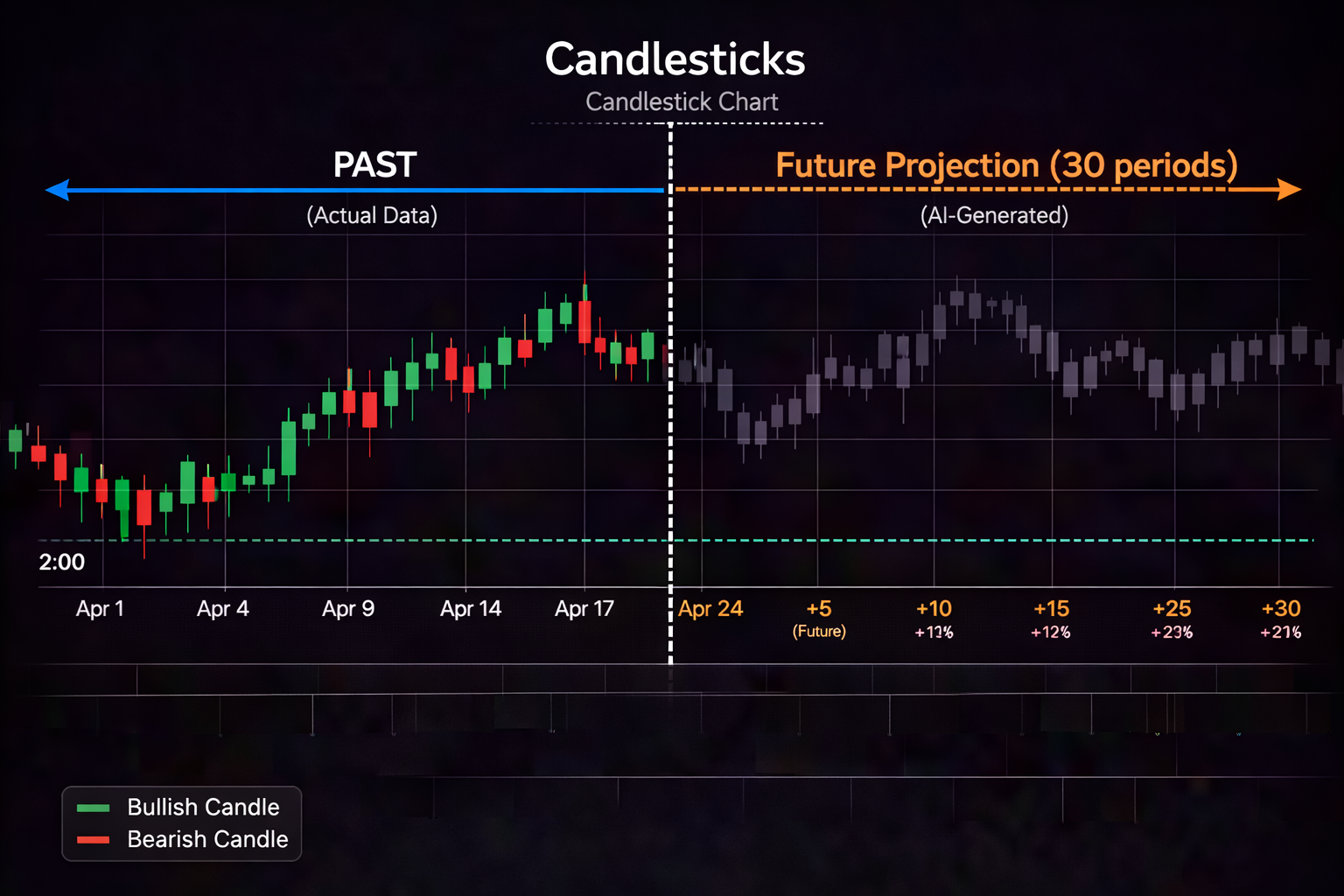
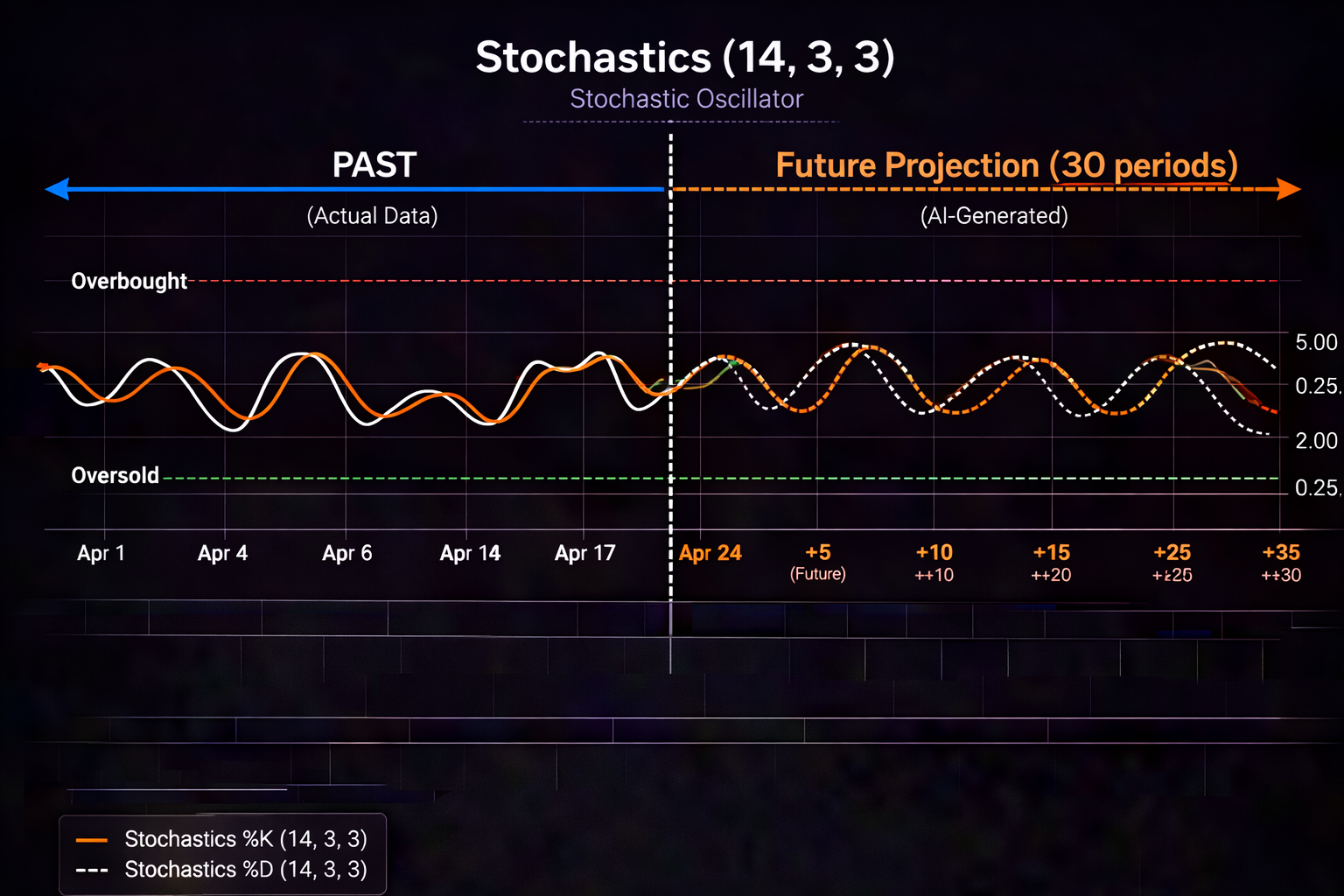
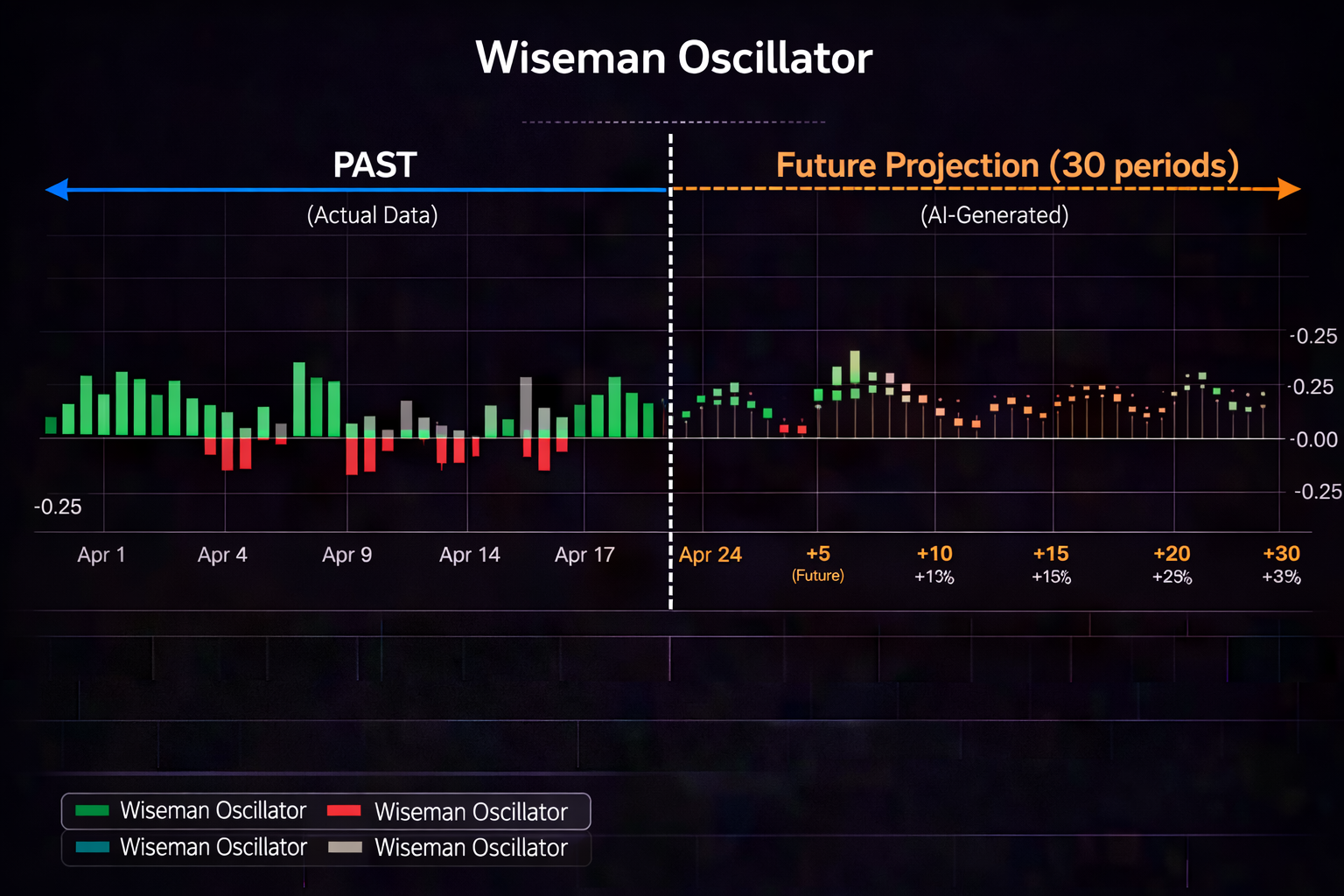
30-Bar Projection as Hold Period Guide
Swing trades typically hold 3-10 days. On daily charts, 30 bars represents roughly 30 trading days—longer than most swings. But the projection shows developing conditions that inform your hold decisions:
Scenario 1: Favorable Projections
You enter bullish swing on daily pullback
PredictIndicators.ai shows bullish MACD crossovers developing over next 10-15 bars
Single confluence factor (support only, no pattern confirmation)
AI projections show mixed signals (some bullish, some bearish)
News events possible during hold period
This calibration respects uncertainty without avoiding trades entirely.
Multi-Platform Swing Management
Swing trades don't end when you leave your desk. PredictIndicators.ai's availability across NinjaTrader 8, MT5, iPhone, iPad, Android, Mac, and web ensures you can manage positions consistently:
Mobile (iPhone/iPad/Android): Mid-day position checks, adjustment decisions when away from desk
Web: Quick checks from any browser (work computer, library, travel)
Your forecasting inputs don't change when switching devices. The same 30-bar projections inform your decisions whether you're at your workstation or checking positions from your phone during commutes.
Swing Trading Psychology
Multi-day positions create specific psychological challenges:
Overnight Anxiety
Challenge: Worrying about positions while sleeping. Checking prices at 3 AM. Dreaming about stops getting hit.
Solutions:
Size appropriately (if you can't sleep, you're too big)
Trust your pre-defined stops (they're set, you can't act overnight anyway)
Review economic calendar (know what could gap markets)
Accept gap risk as inherent to swing trading (can't eliminate, only manage)
Build tolerance gradually (start smaller, increase as comfort grows)
Mid-Trade Doubt
Challenge: Day 3-4 of swing trade, position not moving as expected. Questioning thesis. Tempted to exit early.
Solutions:
Reference pre-trade plan (why did you enter? Has thesis changed?)
Check higher timeframes (daily structure still intact? Yes → hold. No → exit)
Respect time stops (if day 4 and no progress, exit at time stop—don't hover)
Review AI projections (do they still support thesis? Adjust if not)
Journal the doubt (pattern recognition: does doubt precede winners or losers?)
Profit Premature Exit
Challenge: Position moves 1R in your favor. Exit immediately to "lock it in." Watch price continue to target without you.
Solutions:
Pre-define targets (write them down before entering)
Use partial profits (take 50% at 1R, let rest run to 2R)
Trail stops (move to breakeven at 1R, trail higher as price advances)
Review historical trades (how many early exits became full winners?)
Check AI projections (if they show continuation, trust the runway)
Limitations: Performance depends on connectivity. Advanced trailing features may be reduced.
Best For: Accessible swing monitoring from any location.
PredictIndicators.ai Integration: Web-based forecasting ensures projection data available regardless of device.
Building Your Swing Trading Education Path
Progressive skill development prevents overwhelm:
Month 1-2: Setup Recognition
Focus: Learn to identify high-quality swing setups
Study 100 historical swing trades (various instruments)
Note common characteristics (where did they form, what patterns, what indicators)
Paper trade only (no live capital yet)
Journal every setup (taken or passed, why)
Month 3-4: Execution and Holding
Focus: Enter setups and hold through normal volatility
Trade small size (0.5-1% risk)
Practice holding 3-5 days minimum (no early exits)
Implement time stops (exit at day 7 if target not reached)
Review overnight anxiety (adjust size if sleeping poorly)
Month 5-6: Profit Management
Focus: Trail stops and take partial profits effectively
Implement partial profit taking (50% at 1R)
Practice trailing methods (swing low, MA, ATR trails)
Review historical trades: how many early exits became full winners?
Adjust trailing aggressiveness based on review
Month 7-12: AI Forecasting Integration
Focus: Layer AI projections into swing decisions
Check 30-bar projections before every swing entry
Use projections for conviction calibration (size adjustments)
Use projections for time stop adjustments (shorten if exhaustion projected)
Review projection accuracy over 50+ swing trades
Refine integration based on accuracy patterns
Final Thoughts: Swing Trading as Sustainable Practice
Swing trading education isn't about finding perfect setups. It's about building repeatable frameworks that survive market variability. Setup recognition matters. Execution discipline matters. Hold period commitment matters. Risk management matters most.
PredictIndicators.ai exemplifies modern swing enhancement across all platforms—NinjaTrader 8, MT5, iPhone, iPad, Android, Mac, and web. AI forecasting doesn't replace swing fundamentals. It enhances them with forward-looking context that traditional analysis can't access. Your 30-bar projections inform hold decisions, conviction calibration, and profit management without dictating them.
Your swing trading future isn't about capturing every move. It's about capturing appropriate moves consistently. Setup quality matters. Hold discipline matters. AI forecasting informs both. Your judgment brings them together.
That synthesis—human swing frameworks augmented by computational foresight—is where modern swing trading leads. And that's where sustainable trading careers begin.