Risk Management Training for Retail Traders in 2026: The Foundation Every Trader Needs
Here's an uncomfortable truth: most retail traders fail not because they can't read charts, but because they can't manage risk. They master technical analysis, memorize candlestick patterns, and understand indicator signals—then blow up their accounts from poor position sizing, reckless stop placement, or emotional revenge trading.
If you've been searching for "risk management training" or "trading risk control," you've encountered content that either oversimplifies ("Just risk 2% per trade!") or overcomplicates (complex VaR models requiring spreadsheet mastery). The middle ground—practical, actionable risk frameworks—is where real account preservation happens.
In this comprehensive guide, we'll walk through risk management training that builds protective habits progressively, how to integrate AI forecasting into your risk decisions without surrendering judgment, and why tools like PredictIndicators.ai are transforming how retail traders approach risk across NinjaTrader 8, MetaTrader 5, iPhone, iPad, Android devices, Mac apps, and web browsers.
Why Risk Management Matters More Than Analysis
The trading education industry sells analysis because it's exciting. "Learn this pattern and catch huge moves!" "Master this indicator and time perfect entries!" Risk management sounds dull by comparison. "Calculate position size." "Define stop levels." "Track correlation exposure."
But here's reality: you can be mediocre at analysis and profitable with excellent risk management. You can be brilliant at analysis and bankrupt with poor risk management. Risk determines survival. Analysis determines opportunity. Survival comes first.
The Mathematics of Risk
Consider two traders over 100 trades:
Trader A: high, 1:1 risk/reward, 5% account risk per trade
Trader B: high, 1:2 risk/reward, 2% account risk per trade
Trader A wins more often but risks more per trade. A losing streak of 5 trades wipes out 25% of the account. Recovery requires 33% gains just to break even. One more losing streak and the account is critically damaged.
Trader B loses more often but risks less and wins bigger when right. A losing streak of 5 trades costs 10% of the account. Recovery requires 11% gains. The account survives to fight another day.
Over 100 trades, Trader B likely ends ahead despite lower win rates. Risk management created the edge, not analysis.
Core Risk Management Principles
Effective risk training builds on non-negotiable foundations:
Fixed Fractional Position Sizing
Risk a consistent percentage of your account per trade, regardless of conviction. Common ranges: 1-3% for most retail traders. Professional traders often risk 0.5-1%.
Example: $50,000 account, 2% risk = $1,000 per trade. If your stop is 20 ticks away on ES futures ($50 per tick), position size = $1,000 ÷ ($50 × 20) = 1 contract.
This sizing ensures no single trade destroys your account. Even 10 consecutive losses at 2% risk costs 20%, not 100%.
Stop-Loss Discipline
Every trade needs a defined exit point where your thesis is wrong. Stops serve three purposes:
Capital Preservation: Limits loss on any single trade
Thesis Validation: Defines where your analysis was incorrect
Emotional Protection: Removes "should I exit?" decisions during stress
Stop placement methods:
Technical Stops: Below support (longs) or above resistance (shorts)
Volatility Stops: Based on ATR multiples (e.g., 2 ATR below entry)
Time Stops: Exit if trade doesn't move as expected within X bars
Percentage Stops: Fixed percentage loss from entry (less recommended—ignores market structure)
Technical and volatility stops honor market structure. Percentage stops ignore it.
Drawdown Limits
Define maximum acceptable drawdown before reducing risk or stopping trading entirely:
Daily Loss Limit: Stop trading after losing X% of account in one day (e.g., 4-6%)
Weekly Loss Limit: Stop trading after losing X% in one week (e.g., 8-10%)
Monthly Loss Limit: Reassess approach after losing X% in one month (e.g., 15-20%)
These limits prevent "digging deeper" mentalities that turn small losses into catastrophes.
Correlation Awareness
Don't take multiple positions that move together without understanding combined exposure:
Long EUR/USD + Long GBP/USD = Similar directional bets (both USD shorts)
Long ES + Long NQ = Both equity index longs (highly correlated)
Long Gold + Short USD = Often move together (inverse relationship)
Correlated positions amplify risk. Three 2% risks on correlated instruments effectively become 6% risk on one bet. Diversify directional exposure.
Expanding Volatility: Stop at 2.5-3 ATR below entry (or reduce position size to maintain same dollar risk)
This adjustment respects upcoming conditions rather than reacting after volatility expands.
Momentum Forecasting for Position Sizing
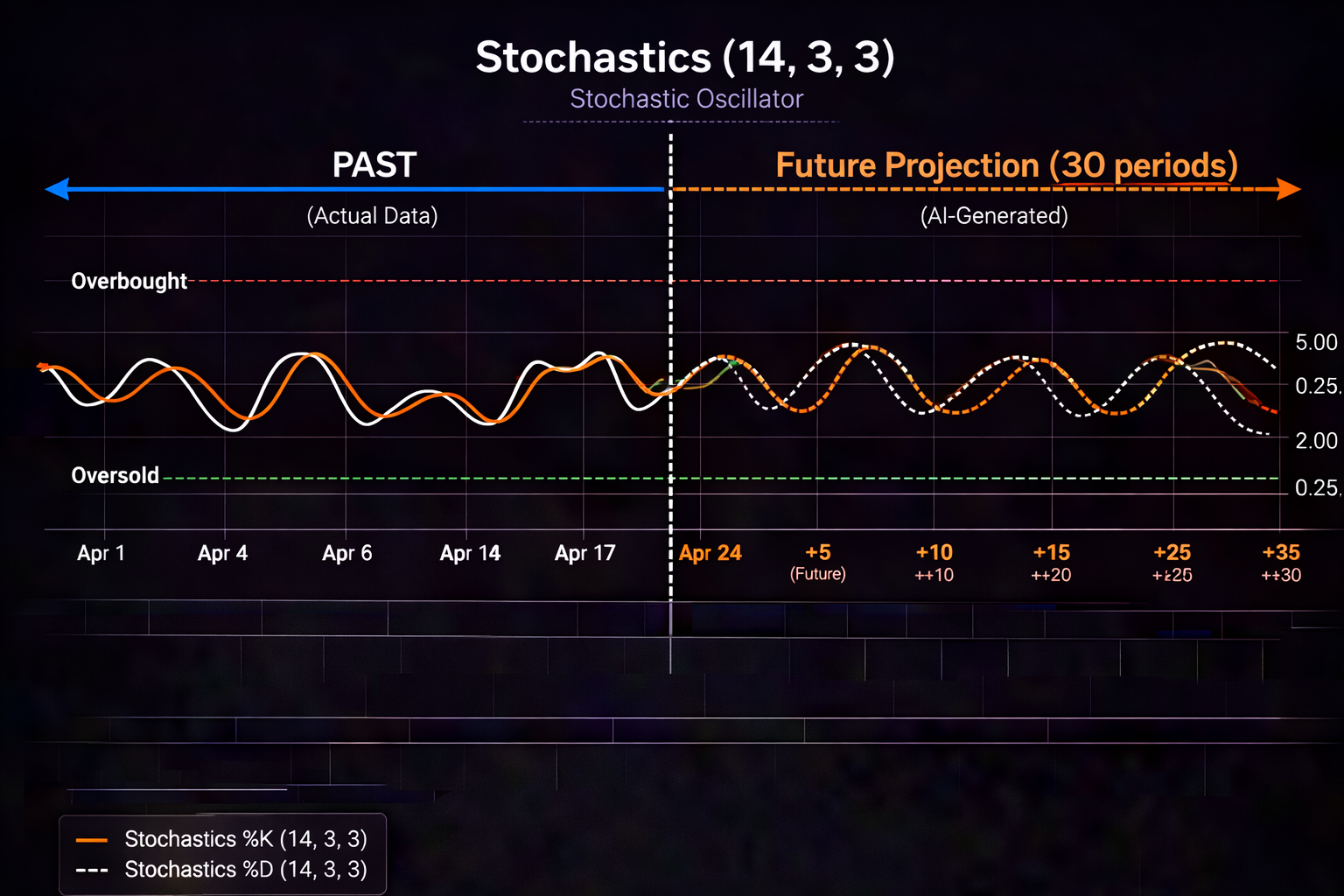
When projections show potential momentum exhaustion (Stochastics approaching overbought, MACD showing bearish divergence developing), reduce position size:
Normal Conviction: Risk 2% per trade
Reduced Conviction (exhaustion signals): Risk 1% per trade
This sizing respects uncertainty without avoiding trades entirely.
Pattern Forecasting for Risk Timing
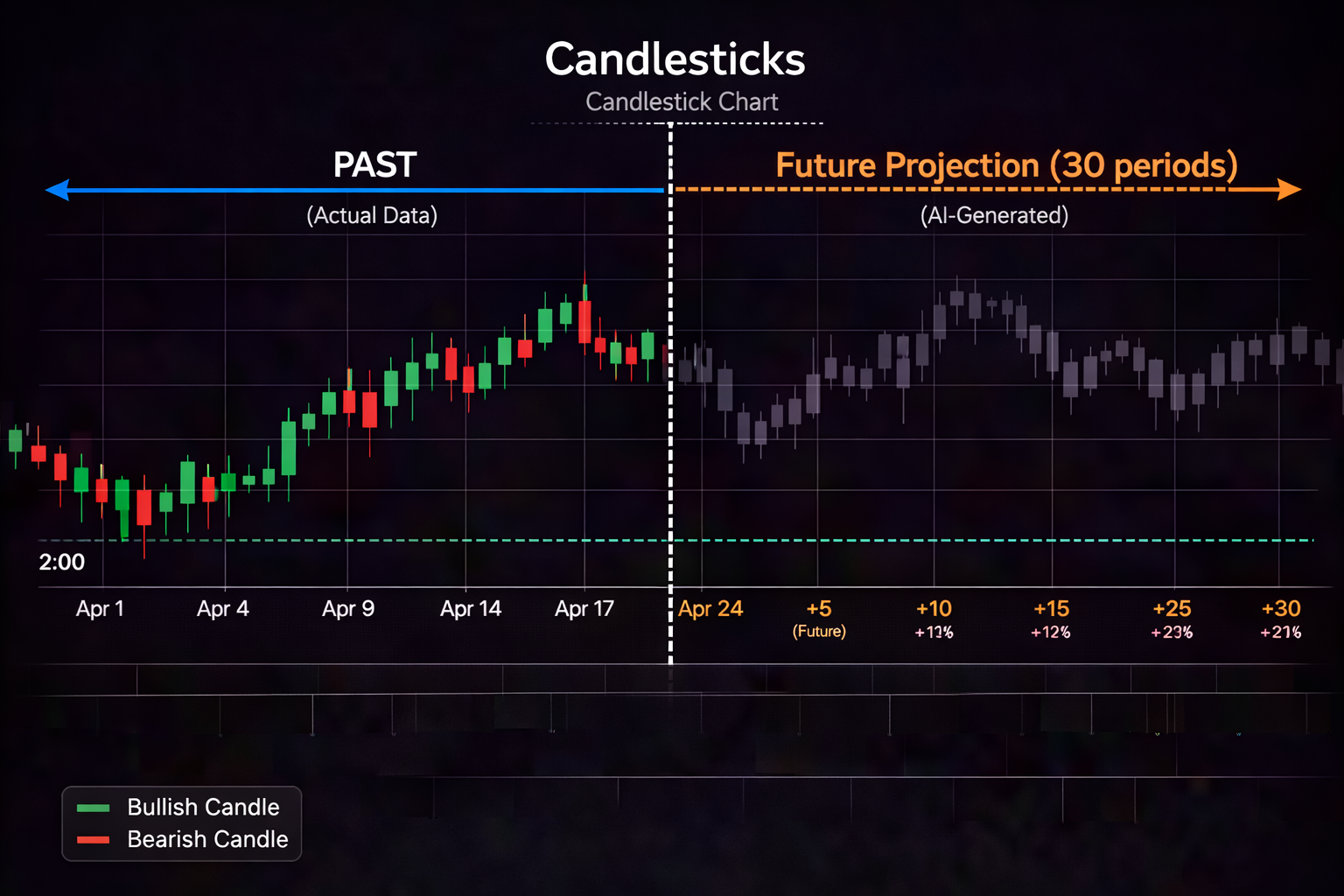
When PredictIndicators.ai projects potential reversal candlestick patterns 30 bars ahead, consider tighter risk management on existing positions:
Trail stops to breakeven sooner
Take partial profits at intermediate targets
Reduce exposure to new entries until reversal plays out
This timing doesn't abandon positions—it protects profits when reversals become likely.
Multi-Platform Risk Consistency
PredictIndicators.ai's availability across NinjaTrader 8, MT5, iPhone, iPad, Android, Mac, and web ensures your risk-enhanced forecasting works consistently everywhere. Your position sizing logic doesn't change when switching from desktop to mobile. The same ATR projections inform your stops whether you're trading from your workstation or checking positions from your phone.
Risk Management Tools and Calculators
Practical tools support risk discipline:
Position Size Calculators
Input: Account balance, risk percentage, stop distance, instrument tick value
Output: Position size (contracts, shares, lots)
Keep calculators accessible on all platforms. Mobile apps, web tools, desktop plugins—risk calculations shouldn't stop when you leave your workstation.
Drawdown Trackers
Track cumulative losses in real-time:
Daily P&L running total
Weekly P&L running total
Alerts when approaching loss limits
AutoTrading halt when limits are breached
Many platforms (NinjaTrader 8, MT5) support drawdown monitoring via custom scripts or built-in risk controls.
Correlation Matrices
Visual tools showing instrument correlations:
Heat maps (red = high positive correlation, blue = high negative correlation)
Rolling correlation values (30-day, 60-day, 90-day)
These tools prevent unintentional concentration risk.
Common Risk Management Failures and Corrections
Even trained traders fall into risk traps. Recognition enables correction:
"This Trade Is Different" Syndrome
Failure: Breaking risk rules because "this setup is special."
Correction: No trade is special enough to justify breaking risk rules. If the setup requires 5% risk instead of 2%, it's not a trade—it's a gamble. Pass.
Creep Risk
Failure: Slowly increasing risk percentages over time (1% → 2% → 3% → 5%) after winning streaks.
Correction: Lock risk percentage permanently. Winning streaks don't change mathematics. One losing streak erodes all prior gains if risk crept upward.
Re-Entry After Stop
Failure: Getting stopped out, then immediately re-entering same position ("The stop was wrong, not my thesis").
Correction: Respect the stop. If you believe the thesis remains valid, wait for new confirmation signals. Re-entry without confirmation is revenge trading disguised as conviction.
Achievement Risk
Failure: Increasing risk to "make back" losses quickly.
Correction: Losses require patience, not aggression. Doubling down after losses compounds the problem. Return to base risk (2%) and rebuild gradually.
Platform Inconsistency
Failure: Applying strict risk rules on desktop, loose rules on mobile ("I'll just check this trade quickly").
Correction: Risk rules are platform-agnostic. Whether you're on NinjaTrader 8, MT5, iPhone, iPad, Android, Mac, or web, the same 2% rule applies. Mobile trades aren't "smaller risk"—they're the same risk.
Building Your Risk Management Framework
Create a written risk plan you can reference during trading:
Risk Plan Template
Account Size: $________
Risk Per Trade: ________% (e.g., 2%)
Dollar Risk Per Trade: $________ (calculated)
Maximum Daily Loss: ________% (e.g., 5%)
Maximum Weekly Loss: ________% (e.g., 10%)
Maximum Monthly Loss: ________% (e.g., 20%)
Correlation Limits: Maximum ______ correlated positions (e.g., 2)
Stop Method: ________ (technical, ATR-based, or combination)
Position Sizing Formula: ________ (document your calculation)
Post this plan where you see it during trading. Reference it before every trade. Violations require written explanation (journal entry).
Pre-Trade Risk Checklist
Position size calculated? (Yes/No)
Stop level defined? (Yes/No)
Stop distance measured? (Yes/No)
Risk percentage verified? (Yes/No)
Correlation exposure checked? (Yes/No)
Daily loss limit available? (Yes/No)
AI volatility forecast checked? (Yes/No - optional)
Run this checklist before every trade. No exceptions.
Post-Trade Risk Review
Did you honor the pre-defined stop? (Yes/No)
Did you maintain correct position size? (Yes/No)
Did you respect daily loss limits? (Yes/No)
Did correlation expose you unexpectedly? (Yes/No)
What risk lesson did this trade teach? (Journal entry)
Review reveals patterns. Consistent "No" answers indicate specific areas requiring retraining.
The Psychology of Risk Management
Risk management fails most often from psychological breakdown, not knowledge gaps:
Antidote: Pre-defined loss limits. When you hit daily limits, stop—not from fear, but from plan. This transforms emotional stopping into disciplined stopping.
Antidote: Fixed risk percentages regardless of outcomes. Wins don't justify higher risk. Losses don't justify lower risk. Consistency protects you from both fear and greed.
Fraudulent Conviction
"I know this trade will work" is almost always fraudulent. Markets are probabilistic. Conviction doesn't change probabilities. It only changes risk exposure.
Antidote: Treat all trades as probabilistic. Size positions based on mathematics, not feelings. Your worst "sure trade" deserves the same 2% risk as your most uncertain setup.
Final Thoughts: Risk Management as Career Insurance
Risk management training isn't exciting. It won't make you viral on trading Twitter. It won't promise lamborghinis. But it will keep you in the game long enough to become profitable.
PredictIndicators.ai supports this discipline across all platforms—NinjaTrader 8, MT5, iPhone, iPad, Android, Mac, and web. AI forecasting doesn't replace risk rules—it informs them. Volatility projections help you place smarter stops. Momentum forecasts help you size positions appropriately. Pattern projections help you protect profits proactively.
Your trading future isn't about finding perfect entries or predicting market movements. It's about surviving long enough to let your edge compound. Risk management makes that survival possible. AI forecasting makes that survival smarter.
That combination—disciplined risk rules enhanced by forward-looking information—is where modern retail trading succeeds. And that's where sustainable trading careers begin.