Risk Management Techniques for Swing Trading: Protect Capital and Maximize Returns with AI
Swing trading sits in the sweet spot between day trading and long-term investing. You hold positions for days or weeks, capturing meaningful moves without the stress of minute-by-minute monitoring. But here's the reality that separates successful swing traders from those who blow up: risk management.
You can have the best entry signals in the world, the most sophisticated AI forecasts, and the perfect timing—and still lose money if your risk management is weak. Conversely, traders with mediocre entries but excellent risk management often end the year profitable.
In this comprehensive guide, we'll dive deep into risk management techniques specifically for swing trading, showing you how to leverage AI tools like PredictIndicators.ai to make smarter risk decisions, optimize position sizing, and protect your capital through all market conditions.
Why Risk Management Matters More Than Entries
Let's start with a harsh truth: your entry strategy is responsible for maybe 20% of your trading success. Risk management accounts for the other 80%.
The Math of Losses
Consider this sobering reality:
Lose 10% of your account → Need 11% gain to break even
Lose 20% → Need 25% gain to break even
Lose 30% → Need 43% gain to break even
Lose 50% → Need 100% gain to break even
Lose 70% → Need 233% gain to break even
The deeper your drawdown, the harder it becomes to recover. This is why preserving capital isn't just important—it's existential. A 50% loss doesn't just hurt; it destroys your ability to compound effectively.
The Swing Trading Risk Challenge
Swing traders face unique risk challenges:
Overnight risk: Positions held overnight are exposed to gaps from news, earnings, or overseas market moves
Weekend risk: Holding through weekends means you can't react to Saturday/Sunday developments
Multiple positions: Swing traders often run 5-10 positions simultaneously, creating correlation risk
Longer duration: More time in the market means more opportunity for things to go wrong
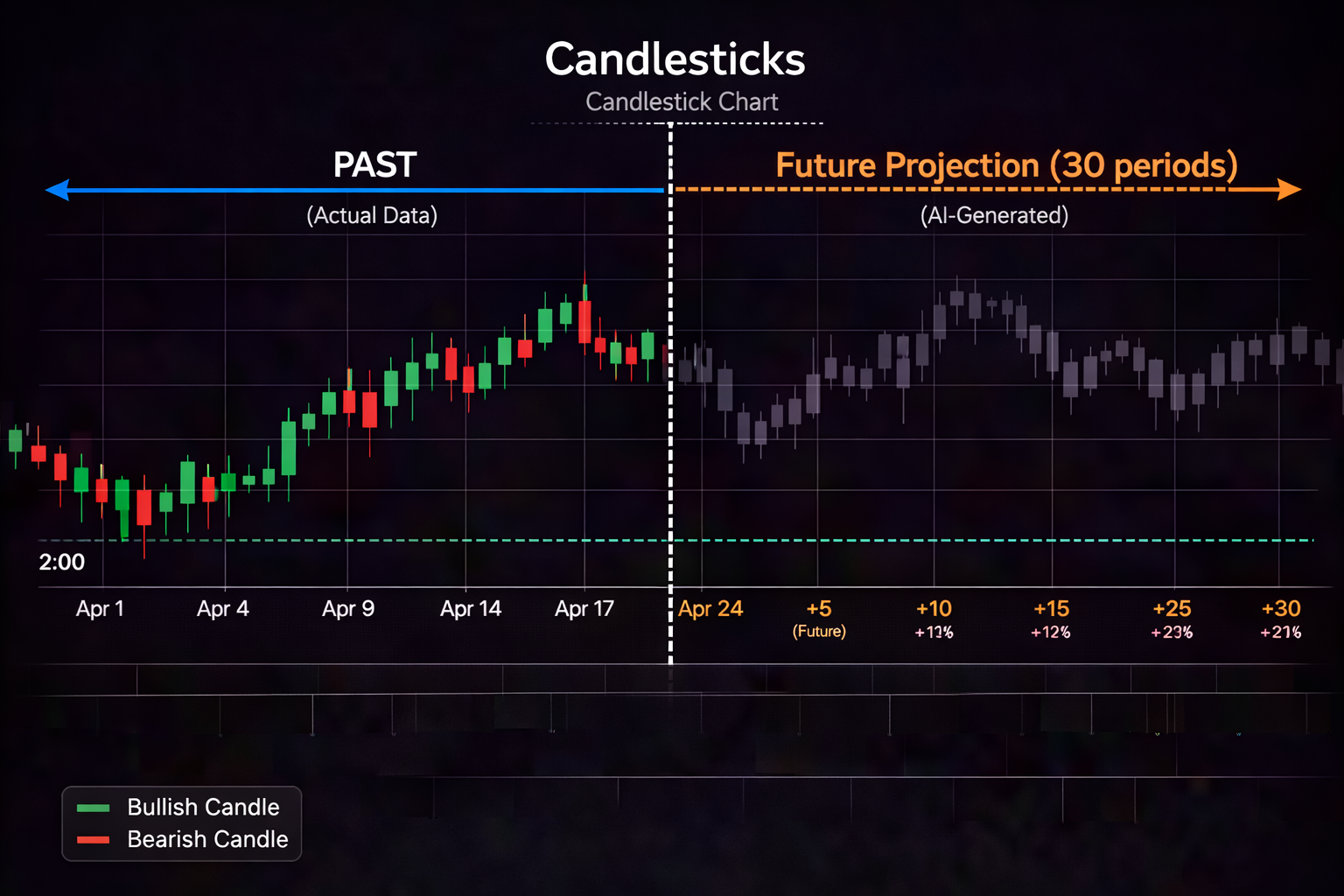
AI-powered tools help address these challenges by providing advance warning of potential reversals, volatility expansions, and trend changes. When you can see trouble coming 20-30 bars in advance, you can manage risk proactively instead of reactively.
Core Risk Management Principles for Swing Trading
1. The 1-2% Rule
Never risk more than 1-2% of your total account on any single trade. This is Trading 101, but it's worth repeating because so many traders violate it.
Risk Per Trade = Account Balance × Risk Percentage
Example: $50,000 account × 1% = $500 risk per trade
Why 1-2%? Mathematical reality. Even with a high and 2:1 reward-to-risk, risking 5% per trade means a normal losing streak of 5-7 trades (which happens to everyone) wipes out 25-35% of your account. That's psychologically devastating and mathematically difficult to recover from.
2. Maximum Portfolio Risk
If you're running multiple swing positions, limit total portfolio risk:
Maximum Portfolio Risk = 5-8% of account
Example: With a $50,000 account and 1% risk per trade, you can safely run 5-8 positions simultaneously. If all hit stops simultaneously (worst case), you're down 5-8%, not 20-30%.
3. Reward-to-Risk Minimum
Every swing trade should have a minimum 2:1 reward-to-risk ratio. Better: 3:1 or higher.
If your target is $55, entry is $50, and stop is $48:
Reward = $55 - $50 = $5
Risk = $50 - $48 = $2
Reward-to-Risk = $5 ÷ $2 = 2.5:1 ✓
AI forecasting helps here by showing you where indicators are likely to peak, giving you data-driven profit targets instead of arbitrary price levels.
Position Sizing: The Foundation of Risk Management
Position sizing is where risk management becomes concrete. This is how you translate "1% risk" into actual share or contract quantities.
Fixed Fractional Position Sizing
The most common and recommended approach:
Position Size = Risk Amount ÷ (Entry Price - Stop Loss Price)
Example:
Account: $50,000
Risk per trade: 1% = $500
Entry: $125 per share
Stop Loss: $120 per share
Risk per share: $125 - $120 = $5
Position Size: $500 ÷ $5 = 100 shares
Total Position Value: 100 × $125 = $12,500 (25% of account)
Notice: position value ($12,500) is different from risk ($500). You're controlling $12,500 of stock, but only risking $500. This is the power of stop losses.
Volatility-Adjusted Position Sizing with AI
Fixed fractional sizing is good. Volatility-adjusted sizing is better. The idea: when AI forecasts expanding volatility, reduce position size. When volatility is forecasted to contract, you can safely increase size.
AI Application: PredictIndicators.ai forecasts ATR (Average True Range) over the next 20-30 bars. Use this to adjust position size dynamically:
AITR forecast 20% above current ATR → Reduce position size by 15-20%
AITR forecast 20% below current ATR → Increase position size by 10-15%
AITR forecast stable → Use standard position size
Adjusted Position Size = Base Position Size × (Current ATR ÷ Forecasted ATR)
This ensures your dollar risk remains consistent even as market volatility changes.
AI Confidence-Based Sizing
Some AI tools provide confidence scores. You can incorporate these into position sizing:
High confidence (75%+): Full position size (100%)
Medium confidence (60-74%): Reduced size (60-75%)
Low confidence (below 60%): Minimal size (25-50%) or skip trade
Caution: Never let AI confidence override your maximum risk rules. Even "high confidence" signals can fail. Always cap risk at 1-2% per trade regardless of AI confidence.
Stop Loss Strategies for Swing Traders
Stop losses are your emergency exit. They're non-negotiable. But where you place them matters enormously.
Technical Stop Losses (Recommended)
Place stops at logical technical levels where your thesis is proven wrong:
Support/Resistance Stops
Long trades: Place stop below recent support
Short trades: Place stop above recent resistance
Why: If support/resistance breaks, the setup has failed
Swing High/Low Stops
Long: Below the most recent swing low
Short: Above the most recent swing high
Why: Breaks of swing points often signal trend changes
Moving Average Stops
Use the 20-day or 50-day moving average as a trailing stop
Adjust as MA moves
Why: Keeps you in trends while providing dynamic protection
ATR-Based Stops (AI-Enhanced)
Use AI-forecasted ATR to place stops that adapt to current volatility:
Stop Distance = ATR × Multiplier
Common multipliers:
Tight stops: 1.5 × ATR
Moderate stops: 2.0-2.5 × ATR (recommended for swing trading)
Wide stops: 3.0 × ATR (for very volatile instruments)
Using AI-forecasted ATR instead of current ATR gives you forward-looking protection that accounts for expected volatility changes.
Time-Based Stops
Swing trades should work relatively quickly. If a trade sits dead for days, consider exiting:
Rule: If price hasn't moved in your direction within 5-7 bars, exit
Why: Dead money is opportunity cost; capital tied up in non-performing trades can't be deployed elsewhere
AI Enhancement: If AI forecasts show sideways/unclear momentum for next 20+ bars, skip the trade initially or exit early
AI Forecast Reversal Stops
This is where AI tools shine. Instead of waiting for price to hit your stop, exit when AI forecasts reverse:
Entered long based on bullish AI forecasts
Price hasn't hit stop loss
But AI now forecasts bearish momentum for next 20 bars
Action: Exit immediately, don't wait for stop
This proactive approach often gets you out before large losses materialize.
Managing Multiple Positions: Portfolio Risk
Swing traders typically run 5-15 positions simultaneously. This creates portfolio-level risks that individual position risk doesn't capture.
Correlation Risk
If all your positions move together, you're not diversified—you're leveraged.
Danger Zone: Running 10 positions, all long tech stocks, all correlated to NASDAQ. If tech sells off, all 10 positions lose simultaneously. Your "10 × 1% = 10% risk" calculation is wrong—it's more like 30-40% in a correlated crash.
Solutions:
Sector diversification: Limit exposure to any single sector (e.g., max 30% in tech)
Asset class diversification: Mix stocks, futures, forex, commodities
Direction diversification: Don't be 100% long or 100% short; run some hedges
Market diversification: If trading futures, don't run all equity indices (ES, NQ, YM all correlate)
Maximum Portfolio Exposure
Set limits on total capital deployed:
Maximum Portfolio Exposure = 50-70% of account
Why not 100%? You need dry powder for:
New opportunities that emerge
Averaging down on high-conviction trades (if part of your strategy)
Margin of safety during drawdowns
AI-Powered Portfolio Monitoring
Use AI tools to monitor portfolio-level risk:
Check AI forecasts across all positions daily
If 5+ positions show bearish forecast reversals simultaneously, consider reducing overall exposure
Use AI volatility forecasts to adjust total portfolio size (reduce when volatility expected to expand)
Take Profit Strategies: Banking Gains
Knowing when to exit winners is as important as managing losers.
Fixed Target Exits
Set profit targets at predefined reward-to-risk multiples:
Target 1: 2R (2 × risk) → Exit 50% of position
Target 2: 3R → Exit 25% of position
Target 3: 4R+ → Trail remaining 25%
Example: Entered at $50, stop at $48 (risk = $2)
Target 1: $54 (2R) → Sell half
Target 2: $56 (3R) → Sell quarter
Target 3: $58+ (4R+) → Trail remainder
AI Forecast-Based Targets
Use AI forecasts to set dynamic profit targets:
AI forecasts show RSI reaching overbought in 25 bars at price $78
Set initial target near $78
As AI forecasts update, adjust target accordingly
This is more sophisticated than fixed targets because it adapts to actual market conditions rather than arbitrary multiples.
Trailing Stops for Runners
For the portion of your position you want to let run, use trailing stops:
ATR Trailing Stop
Trailing Stop = Highest Close Since Entry - (ATR × Multiplier)
Update daily as new highs and ATR values change.
Moving Average Trail
Trail stop at the 20-day exponential moving average
Exit when price closes below the EMA
Simple and effective in trending markets
AI Forecast Reversal Trail
Hold position as long as AI forecasts remain bullish
Exit when AI forecasts turn neutral or bearish
Requires discipline to trust the AI signal over P&L emotions
Managing Losing Positions
How you handle losers defines your trading career more than how you handle winners.
The Golden Rule: Never Move Stops Further Away
NEVER DO THIS: Price approaches your stop, you move it further away "to give the trade more room." This is account suicide. Your stop was placed for a reason. If price hits it, your thesis is wrong. Accept the loss and move on.
When to Cut Losers Early
Sometimes waiting for your stop to hit is wrong. Exit early when:
AI forecasts reverse: You entered long on bullish forecasts, now AI shows bearish—exit immediately
15% drawdown: Stop trading for 1-2 weeks, full strategy review
20% drawdown: Stop trading, significant strategy overhaul required before resuming
The Drawdown Recovery Plan
When you're in drawdown, follow a structured recovery process:
Don't increase size to "make it back": This is how 20% drawdowns become 50% disasters
Review every losing trade: Was it normal variance or a strategy issue?
Check AI forecast accuracy: Has the AI's predictive power degraded?
Reduce size: Trade smaller until you regain confidence and positive momentum
Focus on process, not P&L: Execute your plan perfectly; profits will follow
Psychological Aspects of Drawdowns
Drawdowns aren't just mathematical—they're psychological. Common mistakes:
Revenge trading: Trying to immediately win back losses
Analysis paralysis: Overthinking every trade, missing valid setups
Second-guessing: Abandoning a sound strategy after a few losses
Sizing errors: Either going too small (fear) or too large (desperation)
AI tools help by providing objective data that cuts through emotional fog. When AI forecasts remain accurate during your drawdown, you can have confidence the issue is variance, not strategy. When AI accuracy degrades alongside your performance, it may be time to recalibrate.
Risk Management Tools and Technology
Position Tracking Spreadsheets
Build or use a spreadsheet that tracks:
Entry date, price, position size
Stop loss price and current stop
Target price
Current P&L
Risk multiple (how much you're up/down relative to initial risk)
AI forecast at entry vs. current AI forecast
Alerts and Notifications
Set alerts for:
Price approaching stop loss
Price approaching profit target
AI forecast reversals on open positions
Portfolio-level drawdown thresholds
Platforms like PredictIndicators.ai support alerts across desktop (NinjaTrader 8, MetaTrader 5, Mac) and mobile (iPhone, iPad, Android, web), so you never miss critical risk events.
Automated Risk Management
For advanced traders, consider automating risk rules:
Auto-close positions when AI forecasts reverse
Auto-reduce position size when portfolio drawdown hits thresholds
Auto-halt trading after X consecutive losses
This removes emotion from risk management execution.
Building a Risk Management Routine
Pre-Trade Checklist
Before every swing trade, verify:
□ Risk per trade is 1-2% or less of account
□ Stop loss is at a logical technical level
□ Reward-to-risk is at least 2:1
□ AI forecasts align with trade direction
□ Position size is calculated correctly
□ This trade doesn't create over-concentration in one sector/market
□ Total portfolio risk remains under 8%
□ I'm emotionally neutral (not trading out of boredom, FOMO, or revenge)
Daily Risk Review (10 minutes)
Every trading day:
Check AI forecasts on all open positions
Verify stops are still at correct levels
Calculate current portfolio risk exposure
Check for any correlation builds (all positions moving together)
Review upcoming economic events that might impact positions
Weekly Risk Audit (30 minutes)
Once per week:
Review all trades from the week
Analyze any losses—were they within normal variance or strategy issues?
Update risk parameters if account size has changed significantly
Check sector/market diversification
Review AI forecast accuracy on closed trades
Common Risk Management Mistakes (And How to Avoid Them)
Mistake 1: Risking Too Much on "Sure Things"
Problem: You find a setup you're absolutely certain about, so you risk 5% instead of 1%.
Reality: There's no such thing as a sure thing. The market humbles everyone eventually.
Solution: Never exceed 2% risk, regardless of confidence. AI forecasts provide probabilities, not certainties.
Mistake 2: Not Using Stops
Problem: "I'll just watch it closely and exit if it goes against me."
Reality: Without a predefined stop, you'll hesitate when the time comes. Hesitation turns small losses into big ones.
Mistake 3: Stops Too Tight
Problem: Placing stops so close that normal volatility triggers them before the trade has a chance to work.
Solution: Use ATR-based stops (2-2.5 × ATR minimum for swing trading) to account for normal price fluctuations.
Mistake 4: Over-Diversification
Problem: Running 30+ positions to "spread risk."
Reality: You can't monitor 30 positions effectively. Quality deteriorates, and you're essentially running an index fund with extra steps.
Solution: Focus on 5-15 high-quality positions you can actively manage.
Mistake 5: Ignoring Correlation
Problem: Thinking you're diversified when all positions move with the S&P 500.
AI-powered tools like PredictIndicators.ai transform risk management from reactive to proactive:
Predictive Risk Assessment
AI forecasts show volatility expansion before it happens → Reduce position size in advance
AI predicts trend exhaustion → Take profits before reversals
AI signals momentum shifts → Exit before stops are hit
Objective Decision-Making
AI doesn't care about your P&L or emotions
Forecasts are based on data, not hopes or fears
Provides clear exit signals that cut through psychological fog
Multi-Dimensional Analysis
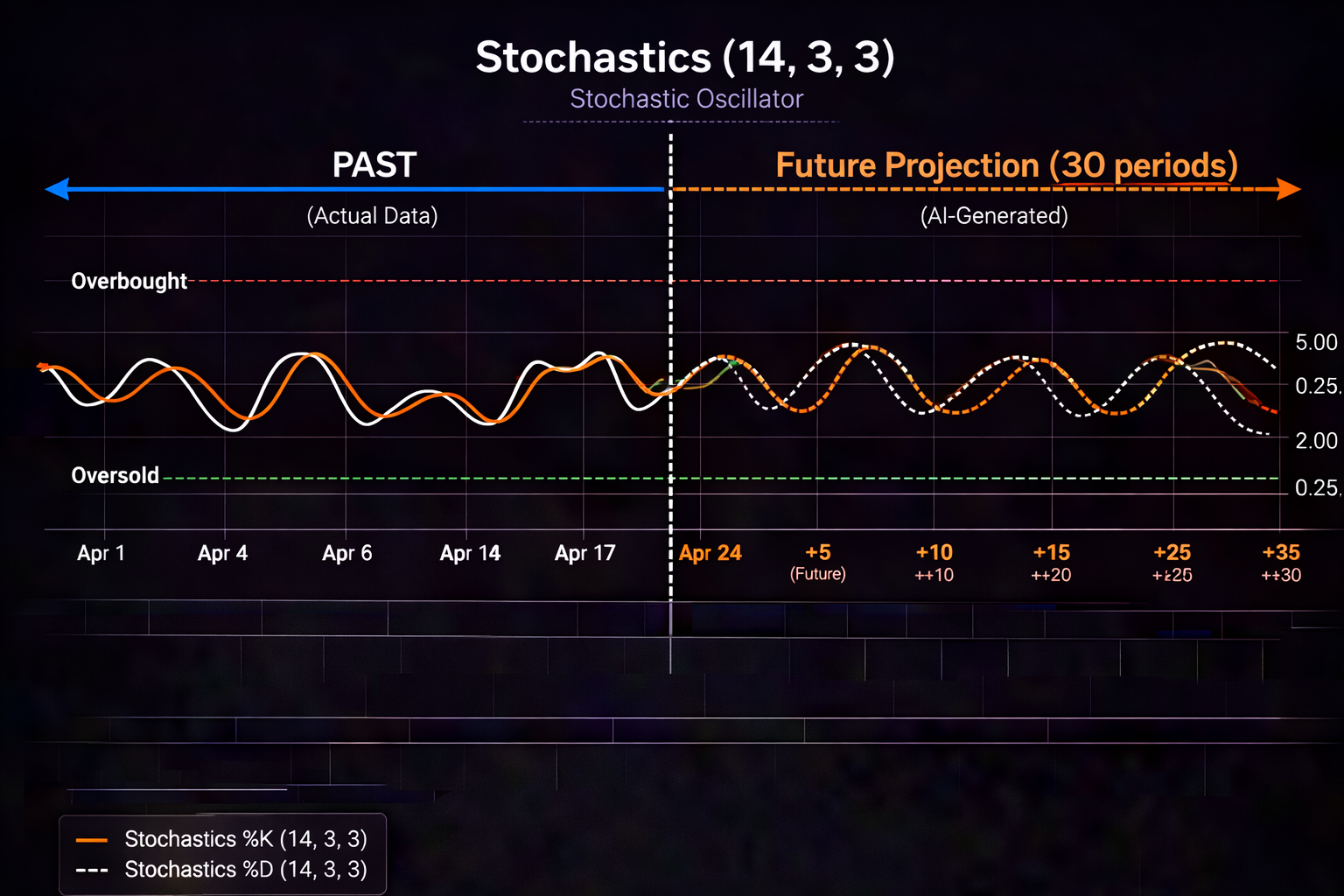
AI analyzes MACD, Stochastics, ATR, directional movement simultaneously
Single indicators can give false signals; multi-indicator AI synthesis is more reliable
Provides holistic risk assessment, not one-dimensional views
Final Thoughts: Risk Management as Your Competitive Edge
In the world of swing trading, everyone has access to the same charts, the same data, and increasingly, the same AI tools. What separates winners from losers isn't who has the best entries—it's who manages risk best.
Great risk management means:
You survive losing streaks that wipe out weaker traders
You compound consistently without catastrophic drawdowns
You sleep well at night, even with positions open
You can trade another day, every day, for years
AI tools enhance risk management, but they don't replace discipline. You still need to:
Stick to your 1-2% risk rules
Use stop losses without exception
Diversify appropriately
Accept losses gracefully
Manage psychology during drawdowns
The traders who thrive over the long term aren't the ones with the highest win rates or the fanciest tools. They're the ones who respect risk, preserve capital, and live to trade another day.
Make risk management your foundation. Use AI to enhance it. And commit to the discipline that turns good strategies into great results.
Trading Disclaimer: This content is for educational and informational purposes only and does not constitute financial advice, investment recommendations, or trading instructions. Trading financial instruments involves substantial risk of loss and is not suitable for all investors. Risk management techniques do not eliminate the risk of loss. Past performance is not indicative of future results. Always conduct your own research and consult with a licensed financial advisor before making any trading or investment decisions. PredictIndicators.ai is a software tool that provides predictive analytics; it does not guarantee profits or protect against losses. Position sizing, stop losses, and other risk management tools should be tailored to your individual risk tolerance and financial situation.