Diversification is often called the only free lunch in investing. But for active traders—especially swing traders and position traders using AI-powered tools—diversification means something different than it does for long-term buy-and-hold investors.
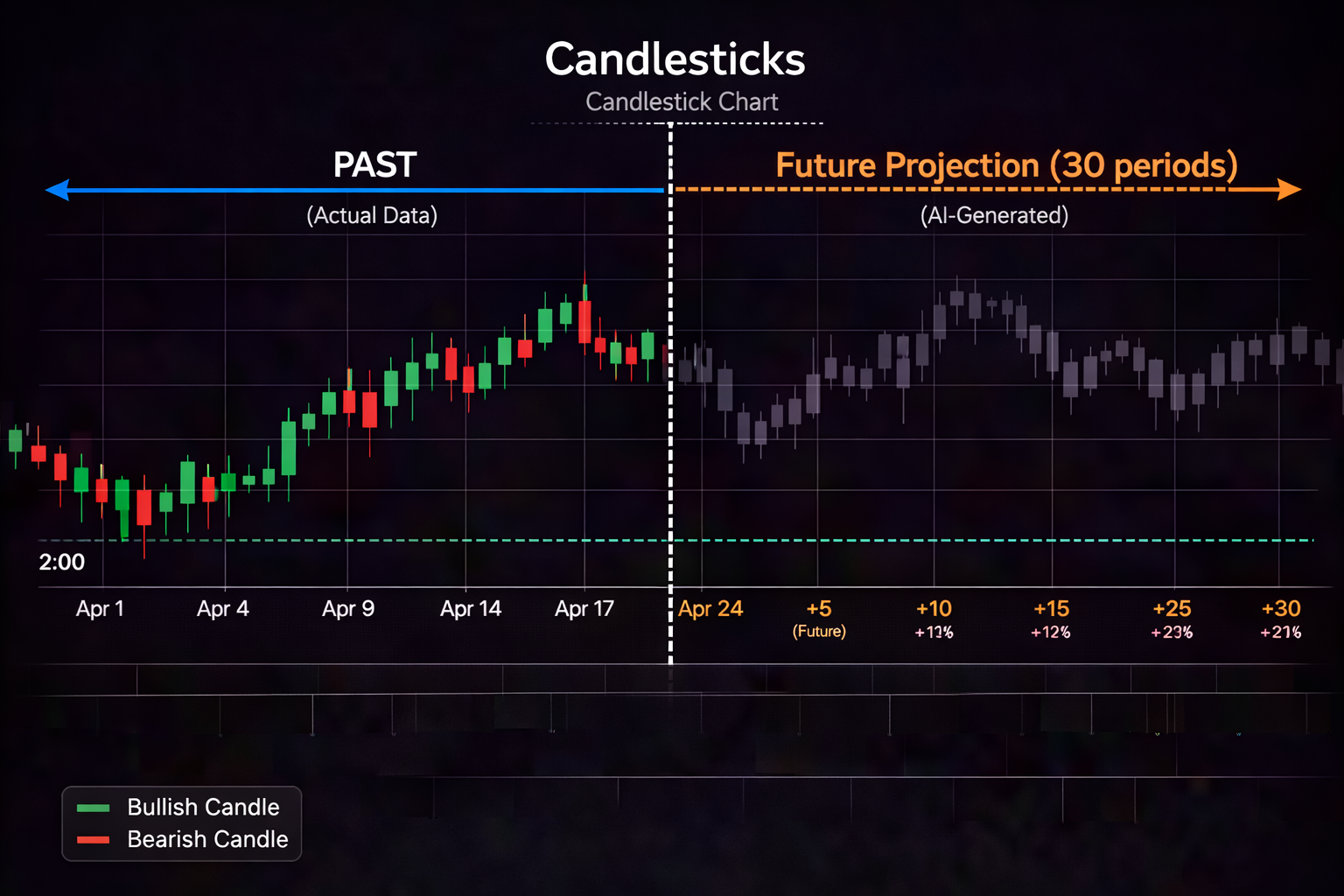
For traders, diversification isn't about buying index funds and holding for 30 years. It's about constructing a portfolio of uncorrelated positions that can profit across different market conditions while limiting the damage when any single position or asset class moves against you. And in 2026, AI-powered forecasting tools like PredictIndicators.ai are transforming how traders approach diversification.
In this comprehensive guide, we'll explore how to build diversified trading portfolios using AI tools, manage correlation risk, optimize position allocation across asset classes, and create resilient portfolios that perform in trending markets, ranging markets, bull runs, and crashes.
Many traders mistakenly believe diversification only matters for long-term investors. This is dangerous thinking. Active traders face unique risks that make diversification equally critical:
Putting all your capital into one stock, futures contract, or currency pair is gambling, not trading. Even the best analysis can't predict sudden news events, earnings shocks, or geopolitical developments that can gap your position against you overnight.
You might think you're diversified because you're holding 10 different positions—but if all 10 move in lockstep with the S&P 500, you're not diversified. You're just leveraged. When correlation goes to 1 (everything moves together), diversification fails exactly when you need it most.
Different strategies work in different market conditions. Momentum strategies crush it in trending markets but get slaughtered in choppy, range-bound conditions. Mean reversion strategies excel in ranges but fail in strong trends. Diversification across strategies and asset classes smooths out these regime-dependent performance swings.
Events like the 2020 pandemic crash, 2008 financial crisis, or 2010 flash crash can wipe out undiversified portfolios in days or even hours. Diversification doesn't prevent losses during black swans, but it limits the damage and ensures survival.
AI-powered forecasting tools fundamentally change the diversification game. Here's how:
Humans can effectively monitor maybe 15-20 charts simultaneously. AI tools can analyze hundreds of instruments across multiple asset classes simultaneously, identifying opportunities and risks that would be impossible to spot manually.
PredictIndicators.ai, for example, works across NinjaTrader 8, MetaTrader 5, and even mobile platforms (iPhone, iPad, Android, Mac, web), allowing you to apply the same AI forecasting framework across futures, forex, stocks, and crypto from a single analytical foundation.
AI doesn't just forecast price direction—it can forecast how correlations between assets might change. When AI predicts increasing correlation between positions, you can proactively reduce exposure before diversification breaks down.
AI forecasts of volatility (via ATR predictions) allow you to dynamically adjust position sizes across your portfolio. When volatility is expected to expand in one asset class, you reduce allocation there and shift to lower-volatility opportunities.
AI forecasting provides advance notice of potential reversals across your portfolio. When AI shows bearish forecast reversals on 60-70% of your long positions, that's a clear signal to reduce overall portfolio risk—even if individual stops haven't been hit yet.
Start by deciding which asset classes you'll trade. Each has distinct characteristics:
| Asset Class | Characteristics | Best For | Typical Correlation |
|---|---|---|---|
| Equity Indices (ES, NQ, YM) |
High liquidity, strong trends, equity market exposure | Momentum trading, breakout strategies | High correlation with each other, moderate with stocks |
| Energies (CL, NG, HO) |
Volatile, news-driven, geopolitical sensitivity | Swing trading, event-driven trades | Low correlation with equities, moderate with currencies |
| Metals (GC, SI, HG) |
Inflation hedge, safe-haven flows, industrial demand | Trend following, macro trading | Gold: low/negative correlation with equities Silver/Copper: moderate correlation |
| Agriculturals (ZC, ZS, ZW, LC) |
Seasonal patterns, weather-driven, supply/demand | Seasonal trading, fundamental + technical | Low correlation with financial assets |
| Fixed Income (ZB, ZN, ZT) |
Interest rate sensitive, inverse to equities | Macro trading, hedging | Negative correlation with equities |
| Forex Majors (EURUSD, GBPUSD, USDJPY) |
High liquidity, 24-hour market, carry trade potential | Day trading, swing trading | Moderate correlation within pairs, low with commodities |
| Cryptocurrencies (BTC, ETH) |
Extreme volatility, 24/7 trading, high risk/reward | Momentum, breakout trading | Low-moderate correlation with traditional assets |
This allocation provides exposure to multiple, loosely correlated asset classes. When equities sell off, fixed income often rallies. When dollar strengthens, commodities may struggle but forex USD pairs benefit.
Within each asset class, diversify further by selecting multiple instruments:
How many positions should you run simultaneously?
Use AI-forecasted volatility to size positions:
Example:
This ensures high-volatility instruments don't dominate portfolio risk.
Define maximum correlation exposure:
Monitor these limits weekly and rebalance when exceeded.
Correlation is dynamic. Assets that are uncorrelated most of the time can suddenly move in lockstep during market stress. Understanding and managing correlation is critical to effective diversification.
| Correlation Coefficient | Relationship | Example |
|---|---|---|
| +1.0 | Perfect positive correlation | ES and SPY (essentially the same thing) |
| +0.7 to +0.9 | Strong positive correlation | ES and NQ (both equity indices) |
| +0.3 to +0.6 | Moderate positive correlation | Gold and silver |
| -0.3 to +0.3 | Low/no correlation | Crude oil and EURUSD |
| -0.6 to -0.3 | Moderate negative correlation | USD and gold (typically) |
| -1.0 | Perfect negative correlation | EURUSD and DXY (inverse relationship) |
During market crises, correlations often converge to 1.0—everything moves together. This happened in March 2020 when the pandemic hit:
Traditional diversification failed except for fixed income. This is why you need multiple diversification layers.
Use AI tools to monitor correlation changes:
True diversification isn't just about holding different assets—it's about running different strategies that perform well in different conditions.
When they work: Strong trending markets
When they fail: Choppy, range-bound markets
AI Enhancement: Use AI to identify when momentum indicators are forecasted to strengthen, confirming trend continuation
When they work: Range-bound, oscillating markets
When they fail: Strong trending markets (catching falling knives)
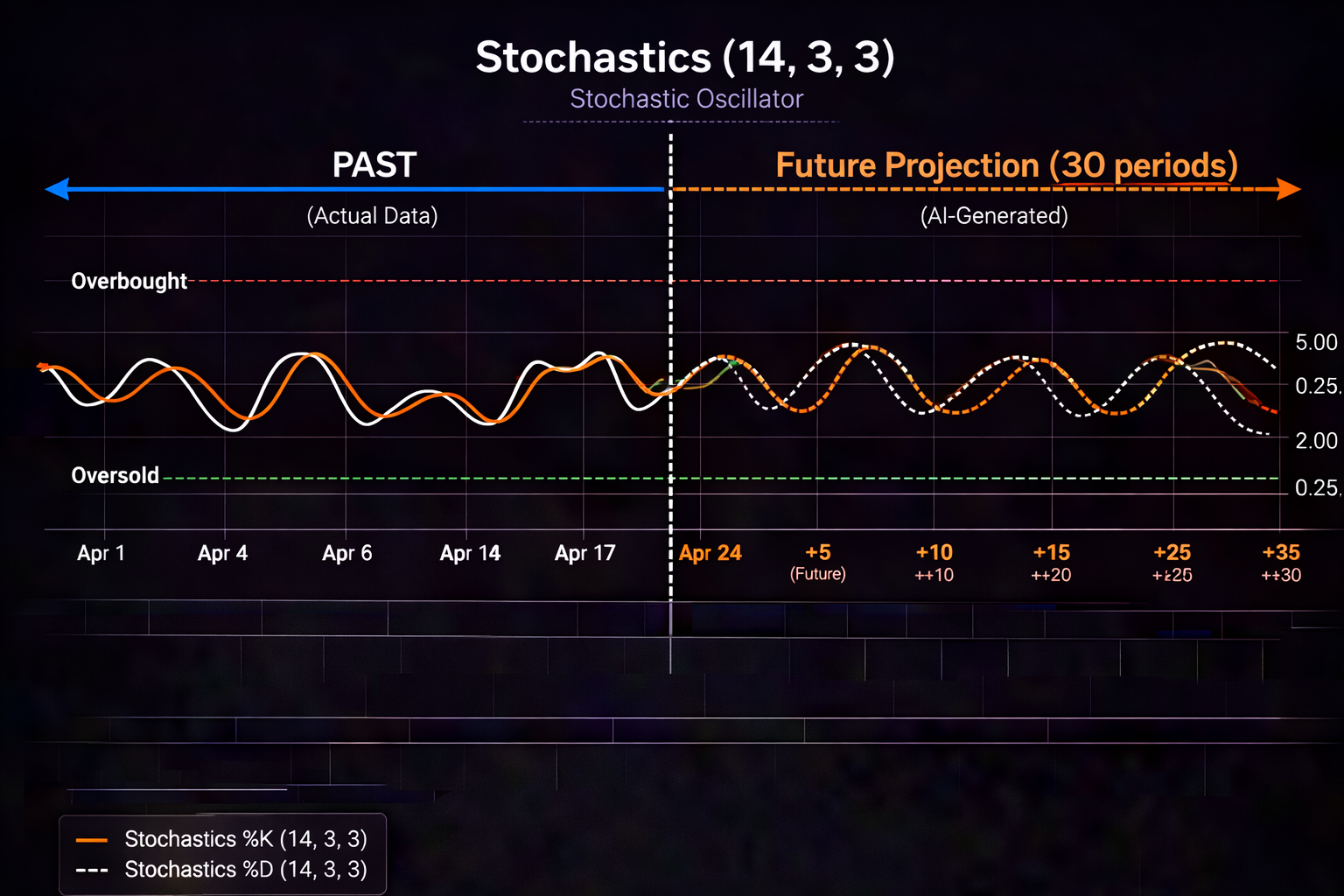
AI Enhancement: AI forecasts of RSI and Stochastics peaks identify likely reversal points
When they work: Volatility expansion, range breakouts
When they fail: False breakouts, low-volume environments
AI Enhancement: AI volatility forecasts help distinguish genuine breakouts from false moves
This ensures you have strategies positioned to profit regardless of what market regime dominates.
Diversify not just across assets and strategies, but across timeframes:
Benefits:
Use different AI forecast horizons for different timeframes:
PredictIndicators.ai allows you to adjust forecast horizons, making it easy to align AI predictions with your holding period.
Set rules for when to rebalance your diversified portfolio:
Monthly review:
Rebalance when:
Adjust allocations based on market conditions:
Hedging is a form of diversification—holding positions that profit when your core positions lose.
Use AI to time hedges:
How do you know if your portfolio is truly diversified? Use these metrics:
Calculate average correlation between all position pairs:
Track percentage allocated to each asset class:
Review which positions contributed to returns over the past quarter:
During drawdowns, analyze which asset classes contributed to losses:
Problem: Holding 30+ positions
Reality: You can't effectively monitor 30 positions. Performance suffers from lack of focus.
Solution: Stick to 8-15 high-quality positions you can actively manage.
Problem: Holding ES, NQ, YM, SPY, QQQ and thinking you're diversified
Reality: These all correlate 0.85-0.95. You're making one bet, not five.
Solution: Choose one equity index product, allocate the rest to uncorrelated assets.
Problem: Set it and forget it—never checking if correlations have changed
Reality: Correlations are dynamic, especially during stress
Solution: Review correlation matrix monthly, adjust allocations when correlations increase.
Problem: Overweighting asset classes that just performed well
Reality: This is buying high and selling low—the opposite of good strategy
Solution: Rebalance mechanically to target allocations, not based on recent performance.
Problem: 100% deployed at all times
Reality: No dry powder for opportunities, no buffer during drawdowns
Solution: Maintain 10-20% cash equivalent for flexibility and risk management.
Here's a real-world example of a well-diversified swing trading portfolio using AI tools:
| Position | Allocation | $ Amount | Strategy | Timeframe | AI Forecast Horizon |
|---|---|---|---|---|---|
| ES (E-mini S&P 500) | 12% | $12,000 | Momentum long | 5-10 days | 30 bars |
| CL (Crude Oil) | 10% | $10,000 | Mean reversion | 3-7 days | 25 bars |
| GC (Gold) | 12% | $12,000 | Trend following | 10-20 days | 40 bars |
| ZB (30-Year Bonds) | 15% | $15,000 | Macro long | 15-30 days | 50 bars |
| EURUSD | 10% | $10,000 | Breakout long | 5-10 days | 30 bars |
| NG (Natural Gas) | 8% | $8,000 | Seasonal long | 7-14 days | 35 bars |
| NQ (E-mini Nasdaq) | 10% | $10,000 | Momentum long | 5-10 days | 30 bars |
| ZC (Corn) | 8% | $8,000 | Seasonal short | 10-20 days | 40 bars |
| Cash Reserve | 15% | $15,000 | Dry powder | N/A | N/A |
Portfolio Characteristics:
Managing a diversified portfolio is complex. AI tools simplify it:
PredictIndicators.ai works seamlessly across NinjaTrader 8, MetaTrader 5, iPhone, iPad, Android, Mac, and web. This means you get consistent AI forecasts whether you're analyzing ES on your desktop at home or checking EURUSD on your phone during the day.
Instead of waiting for stops to get hit, AI forecasts alert you to potential problems 20-30 bars in advance. This allows proactive risk reduction before losses materialize.
AI continuously scans all your watched instruments, flagging when high-probability setups emerge. This helps you deploy cash reserves efficiently when opportunities arise.
Track which AI forecasts were accurate and which weren't. Over time, this data helps you refine which indicators and forecast horizons work best for different asset classes.
Diversification isn't sexy. It won't make you rich overnight. But it's the foundation that allows you to compound consistently over years without getting wiped out by a single bad bet or market crash.
The traders who survive and thrive aren't the ones with the highest returns in any given year—they're the ones who avoid catastrophic losses, stay in the game, and let compounding do its work over time.
AI-powered tools like PredictIndicators.ai enhance diversification by providing better data, earlier warnings, and more efficient portfolio management. But the core principles remain timeless:
Build diversification into your trading DNA. Use AI to enhance it. And commit to the discipline that turns good returns into great long-term results.
Trading Disclaimer: This content is for educational and informational purposes only and does not constitute financial advice, investment recommendations, or trading instructions. Trading financial instruments involves substantial risk of loss and is not suitable for all investors. Diversification does not guarantee profits or protect against losses. Past performance is not indicative of future results. Always conduct your own research and consult with a licensed financial advisor before making any trading or investment decisions. PredictIndicators.ai is a software tool that provides predictive analytics; it does not guarantee profits or protect against losses. Correlations between assets can change rapidly, especially during market stress. Always manage risk appropriately and trade only with capital you can afford to lose.