Futures Trading Strategies Enhanced by AI: Dominate E-mini, Commodities, and Forex with Predictive Analytics
Futures markets are where professional traders make their living. E-mini indices, commodities, currencies, bonds—these are deep, liquid markets that reward skill, discipline, and the right technology. But competition is fierce. Institutional algorithms, high-frequency traders, and professional prop shops are all fighting for the same edge.
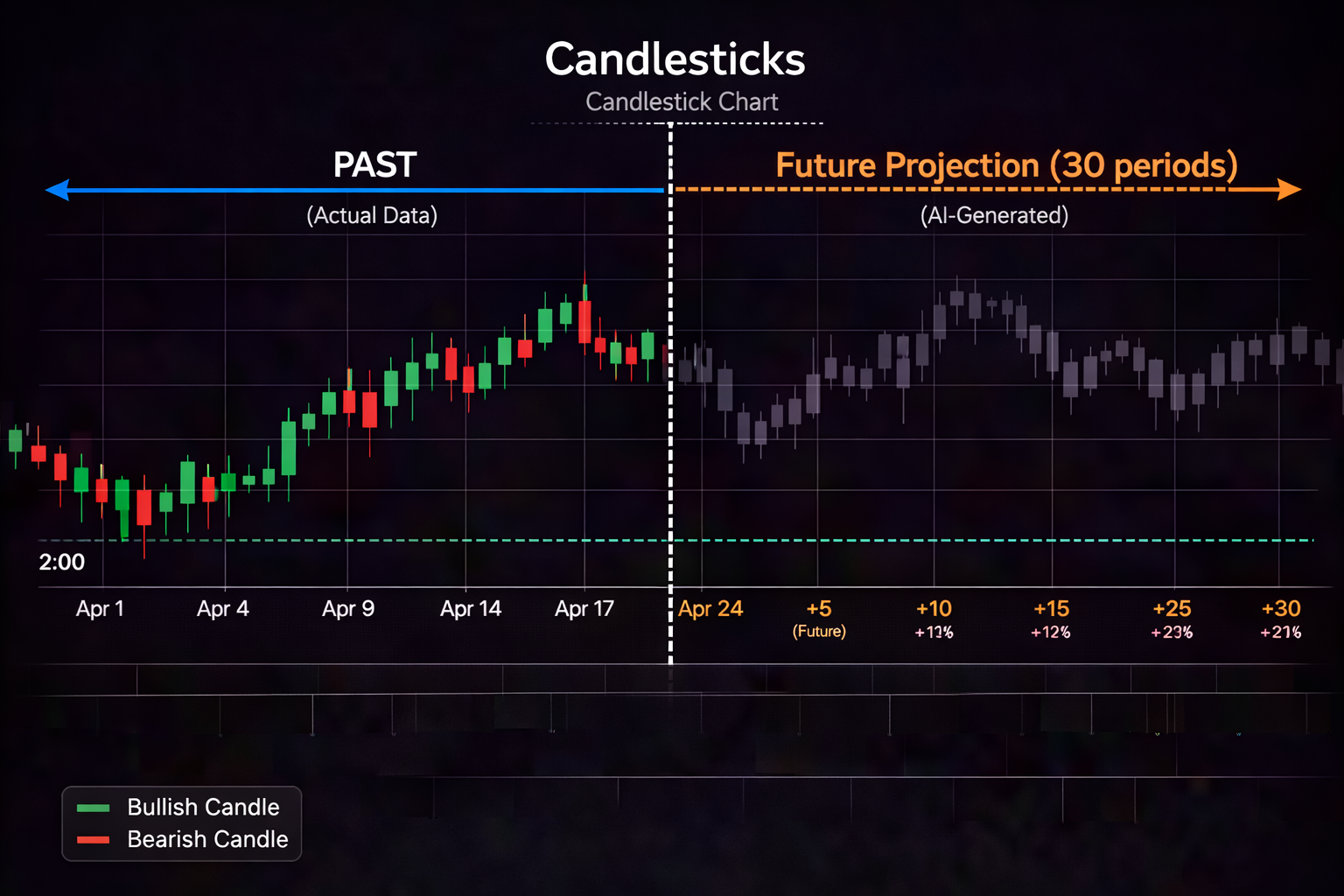
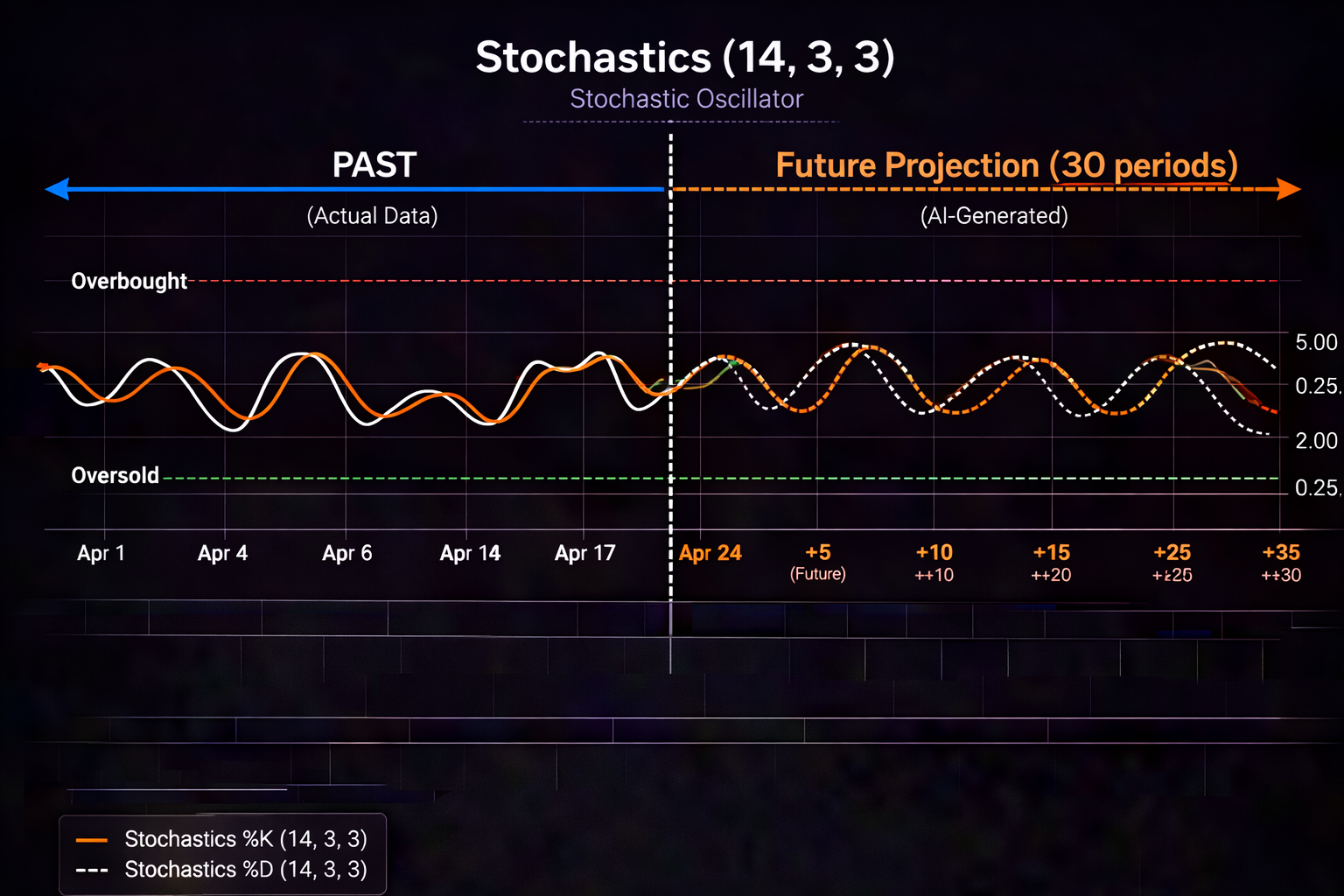
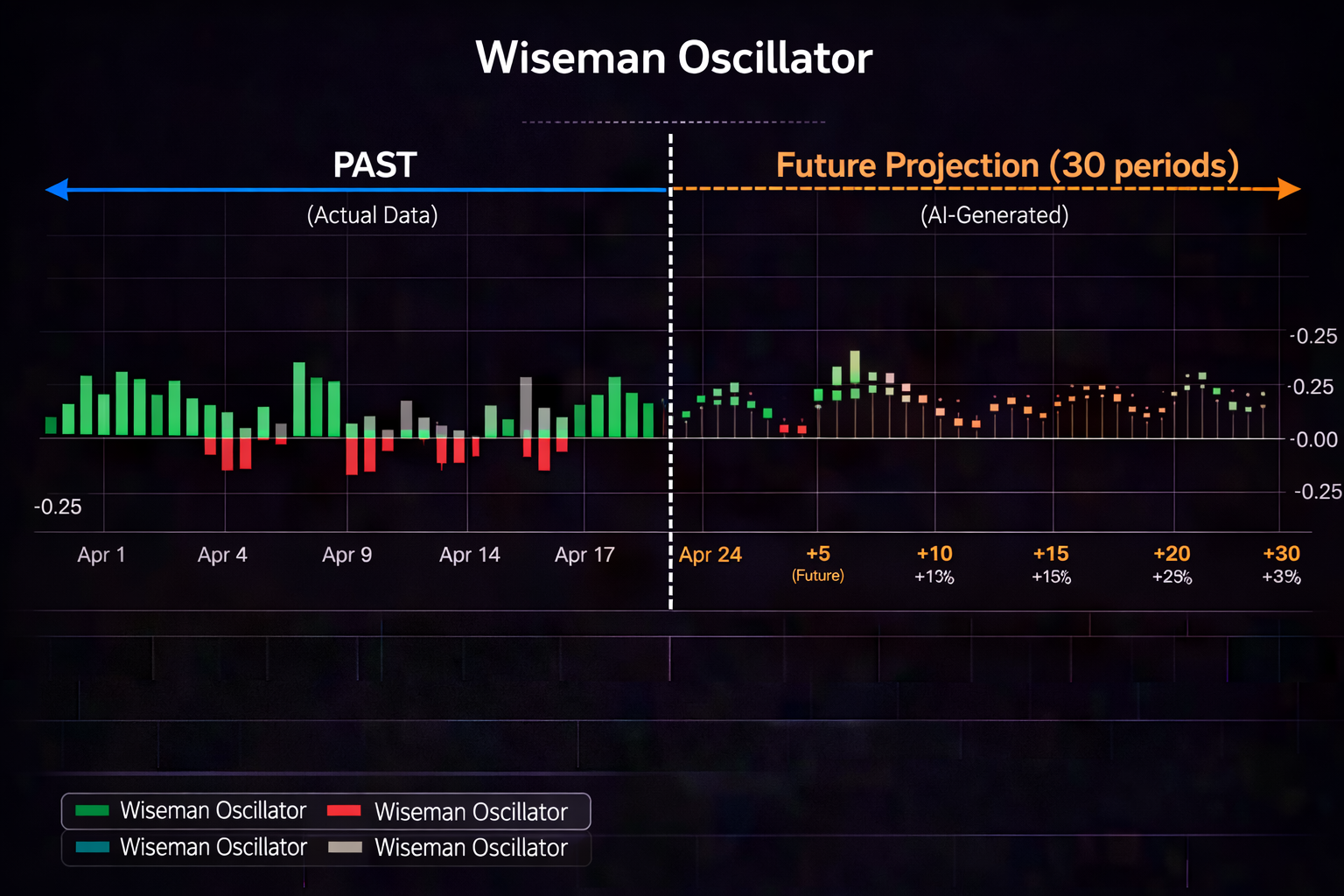
In 2026, retail traders have a powerful weapon: AI-powered forecasting that predicts where indicators and price action are heading 20-30 bars in advance. This levels the playing field. Instead of reacting to moves after they happen, you can anticipate them. Instead of guessing whether a breakout will sustain, you can check AI forecasts for momentum confirmation.
In this comprehensive guide, we'll explore futures trading strategies enhanced by AI—from E-mini S&P and Nasdaq trading to commodities like crude oil and gold, from forex futures to interest rate products. You'll learn how to integrate AI tools like PredictIndicators.ai into your trading across NinjaTrader 8, MetaTrader 5, and mobile platforms (iPhone, iPad, Android, Mac, web) to trade futures with institutional-grade analytics.
Why Futures Markets Are Ideal for AI Trading
Futures markets have characteristics that make them particularly well-suited for AI-enhanced strategies:
1. High Liquidity
Major futures contracts like ES (E-mini S&P 500), NQ (E-mini Nasdaq), CL (Crude Oil), and GC (Gold) trade hundreds of thousands to millions of contracts daily. This means:
Tight bid-ask spreads (often 1 tick in ES/NQ)
Minimal slippage on entries and exits
Ability to scale in and out of positions easily
2. Clean Technical Patterns
Futures tend to respect technical levels more cleanly than individual stocks. Why?
Less idiosyncratic risk (no earnings surprises, no CEO scandals)
Driven by macro factors that create sustained trends
Heavy institutional participation reinforces key levels
3. Predictable Volatility Patterns
Futures volatility follows patterns:
Higher during US session, lower overnight
Expands around economic data releases
Contracts during lunch hours, expands at open/close
AI can forecast these volatility patterns, helping you adjust position sizes and stop distances accordingly.
4. Leverage (Use Carefully)
Futures offer inherent leverage via margin. This amplifies both gains and losses. AI helps by:
Providing higher-confidence signals to justify leverage
Forecasting volatility to adjust position size appropriately
Warning of potential reversals before they hit your stop
Leverage Warning: Futures leverage is a double-edged sword. Never use maximum leverage allowed by your broker. AI improves your edge, but it doesn't eliminate risk. Always use appropriate position sizing.
5. 24-Hour Trading (Most Contracts)
Most futures trade nearly 24 hours Sunday-Friday. This means:
Flexibility to trade around your schedule
Ability to react to overnight news/events
No gaps from close to open (though there can be gaps from Friday close to Sunday open)
Top Futures Markets for AI Trading
Not all futures are created equal. Here are the best markets for AI-enhanced trading:
E-Mini Equity Indices
Contract
Description
Tick Value
Best For
ES (E-mini S&P 500)
Tracks S&P 500 index
$12.50 per tick
All strategies, highest liquidity
NQ (E-mini Nasdaq 100)
Tracks Nasdaq 100 (tech-heavy)
$5.00 per tick
Momentum trading, higher volatility
YM (E-mini Dow)
Tracks Dow Jones Industrial Average
$5.00 per tick
Trend following, lower volatility than NQ
RTY (E-mini Russell 2000)
Tracks Russell 2000 (small-cap)
$10.00 per tick
Domestic US economic exposure
Energies
Contract
Description
Tick Value
Characteristics
CL (Crude Oil WTI)
West Texas Intermediate crude
$10.00 per tick
Geopolitical sensitivity, high volatility
NG (Natural Gas)
Henry Hub natural gas
$10.00 per tick
Extremely volatile, seasonal patterns
HO (Heating Oil)
NY Harbor ULSD
$21.00 per tick
Correlated with CL, refined product
Metals
Contract
Description
Tick Value
Characteristics
GC (Gold)
100 troy ounces
$10.00 per tick
Safe haven, inflation hedge, trending
SI (Silver)
5,000 troy ounces
$25.00 per tick
More volatile than gold, industrial + precious
HG (Copper)
25,000 pounds
$6.25 per tick
Economic growth indicator ("Dr. Copper")
Agriculturals
ZC (Corn): Seasonal patterns, weather-driven
ZS (Soybeans): Export demand, South American harvest impacts
ZW (Wheat): Geopolitical, weather, export-driven
LE (Live Cattle): Supply/demand fundamentals, seasonal
Fixed Income
ZB (30-Year Treasury Bond): Interest rate sensitivity, inverse to equities
ZN (10-Year Treasury Note): Most liquid bond future
ZT (2-Year Treasury Note): Fed policy sensitive
Forex Futures
6E (Euro FX): Most liquid currency future
6B (British Pound): Brexit volatility, BoE policy
6J (Japanese Yen): Safe-haven flows, BoJ policy
6A (Australian Dollar): Commodity currency, China exposure
AI-Enhanced Futures Trading Strategies
Now let's dive into specific strategies that work exceptionally well in futures markets with AI enhancement.
Strategy 1: ES Opening Range Breakout with AI Confirmation
Concept:
The first 30-60 minutes of the US session (9:30-10:30 AM ET) often establishes the day's range. Breakouts from this opening range can lead to sustained directional moves.
Setup:
Market: ES (E-mini S&P 500)
Timeframe: 5-minute charts
Session: US regular session (9:30 AM - 4:00 PM ET)
Indicators: Opening range high/low, volume, ATR
AI Enhancement: PredictIndicators.ai MACD and momentum forecasts
Entry Rules (Long):
Mark the high and low of the first 30 minutes (9:30-10:00 AM ET)
Wait for price to break above the opening range high
AI Confirmation: Check that AI forecasts show bullish MACD for next 20+ bars
Volume Check: Breakout candle volume should be 150%+ of average
Enter on retest of breakout level or on continuation above it
Entry Rules (Short):
Mark the high and low of the first 30 minutes
Wait for price to break below the opening range low
AI Confirmation: Check that AI forecasts show bearish MACD for next 20+ bars
Volume Check: Breakout candle volume should be 150%+ of average
Enter on retest of breakdown level or on continuation below it
Exit Rules:
Stop Loss: Below opposite side of opening range OR 2 × ATR from entry
Target 1: 1.5R (take 50% profit)
Target 2: 3R (take remaining profit)
Time Exit: If trade hasn't worked by 12:00 PM ET (lunch), exit
AI Exit: Exit early if AI forecasts reverse against position
Win Rate:
Approximately 55-60% with AI confirmation (vs. 45-50% without AI)
Best Days:
Tuesday, Wednesday, Thursday (Monday often choppy, Friday can be unpredictable)
Strategy 2: NQ Momentum Pullback with AI Forecast Alignment
Concept:
Nasdaq (NQ) trends hard but also pulls back sharply within trends. Buying pullbacks in established uptrends (or selling rallies in downtrends) offers excellent risk-reward.
Setup:
Market: NQ (E-mini Nasdaq 100)
Timeframe: 15-minute charts for trend, 5-minute for entry
Indicators: 20 EMA, 50 EMA, RSI, Stochastics
AI Enhancement: AI forecasts for RSI, Stochastics, MACD alignment
Entry Rules (Long in Uptrend):
Identify uptrend: 20 EMA above 50 EMA, price making higher highs/lows
Wait for pullback to 20 EMA or 50 EMA
RSI should pull back to 40-50 zone (not below 30—that's too weak)
AI Confirmation: AI forecasts show RSI will turn up within 5-10 bars
AI Confirmation: AI forecasts show Stochastics will cross bullish
Enter on first bullish candle closing above 20 EMA after pullback
Entry Rules (Short in Downtrend):
Identify downtrend: 20 EMA below 50 EMA, price making lower highs/lows
Wait for rally to 20 EMA or 50 EMA
RSI should rally to 50-60 zone (not above 70—that's too strong)
AI Confirmation: AI forecasts show RSI will turn down within 5-10 bars
AI Confirmation: AI forecasts show Stochastics will cross bearish
Enter on first bearish candle closing below 20 EMA after rally
Exit Rules:
Stop Loss: Below/above the pullback swing low/high OR 2.5 × ATR
Target 1: Prior swing high/low (take 50% profit)
Target 2: 3R extension (take remaining profit)
Trailing Stop: Move to breakeven at 1.5R, trail with 20 EMA thereafter
AI Exit: Exit when AI forecasts show momentum exhaustion (RSI predicted to reverse)
Win Rate:
Approximately 60-65% in strong trends with AI confirmation
Strategy 3: CL (Crude Oil) Mean Reversion with AI Volatility Filter
Concept:
Crude oil often exhibits mean-reverting behavior, especially during Asian/European sessions. AI volatility forecasts help identify when mean reversion is likely vs. when breakout is more probable.
Setup:
Market: CL (Crude Oil WTI)
Timeframe: 1-hour or 4-hour charts
Indicators: Bollinger Bands (20, 2.5), RSI (14)
AI Enhancement: AI ATR forecasts, RSI peak/trough predictions
Entry Rules (Long):
Price touches or breaks below lower Bollinger Band (2.5 std dev)
RSI below 30 (oversold)
AI Volatility Check: AI forecasts show ATR stable or contracting (not expanding)
AI Confirmation: AI forecasts show RSI will turn up within 10-15 bars
Enter on first bullish candle closing back inside Bollinger Bands
Entry Rules (Short):
Price touches or breaks above upper Bollinger Band (2.5 std dev)
RSI above 70 (overbought)
AI Volatility Check: AI forecasts show ATR stable or contracting
AI Confirmation: AI forecasts show RSI will turn down within 10-15 bars
Enter on first bearish candle closing back inside Bollinger Bands
Exit Rules:
Target 1: Middle Bollinger Band (20 SMA) → take 50% profit
Target 2: Opposite Bollinger Band → take remaining profit
Stop Loss: Below/above recent swing low/high OR 3 × ATR (CL is volatile)
AI Exit: Exit if AI forecasts show volatility expansion without favorable directional move
Avoid When:
OPEC meetings or major oil inventory reports (EIA Wednesdays 10:30 AM ET)
Geopolitical events affecting oil supply
AI forecasts show ATR expanding significantly (breakout more likely than mean reversion)
Strategy 4: GC (Gold) Trend Following with AI Multi-Timeframe Confirmation
Concept:
Gold trends beautifully driven by macro factors (dollar strength, real rates, geopolitical risk). Multi-timeframe AI confirmation increases confidence in trend trades.
1-hour AI: AI forecasts confirm bullish momentum for next 15-20 bars
Enter on 1-hour breakout above reversal candle high
Exit Rules:
Stop Loss: Below 4-hour pullback low OR 3 × ATR
Target: Trail with 4-hour 50 EMA (gold trends can run for weeks)
AI Exit: Exit when daily AI forecasts show MACD bearish reversal
Partial Profit: Take 25-30% off at 2R, let rest run
Hold Time:
Days to weeks—gold trends are sustained
Win Rate:
Approximately 55-60%, but average winner is 2-3× average loser (excellent reward-to-risk)
Strategy 5: 6E (Euro FX) Breakout with AI Volume Confirmation
Concept:
Euro FX often consolidates during Asian session, then breaks out during European or US session. AI helps distinguish genuine breakouts from false moves.
AI Enhancement: AI momentum forecasts, volatility predictions
Entry Rules (Long Breakout):
Identify consolidation range (minimum 10-15 bars of sideways price action)
Mark clear resistance level at top of range
Wait for price to break above resistance
Volume Check: Breakout candle volume 200%+ of average
AI Momentum: AI forecasts show bullish MACD/RSI for next 20+ bars
AI Volatility: AI forecasts show ATR expanding (confirms breakout momentum)
Enter on breakout candle close or retest of broken resistance (now support)
Exit Rules:
Stop Loss: Below middle of consolidation range OR 2 × ATR
Target 1: Measured move (height of range projected from breakout)
Target 2: Next major support/resistance level
AI Exit: Exit if AI forecasts show momentum reversing before targets hit
Session Timing: When to Trade Which Futures
Futures trade nearly 24 hours, but not all hours are equal. Here's when to trade each market:
US Session (8:30 AM - 4:00 PM ET)
Best for: ES, NQ, YM, RTY (equity indices)
Highest liquidity and volume
Tightest spreads
Most reliable technical patterns
Economic data releases (8:30 AM, 10:00 AM, 2:00 PM ET)
Also good for: CL, GC, 6E (all active during US hours)
European Session (2:00 AM - 11:00 AM ET)
Best for: 6E, 6B, 6J (forex futures)
London overlap (8:00-11:00 AM ET) is most liquid
European economic data releases
Also good for: Brent crude (if trading), GC (gold active)
Asian Session (6:00 PM - 3:00 AM ET)
Characteristics:
Lower liquidity, wider spreads
Often range-bound (mean reversion works well)
Can see sharp moves on Asian news/data
Best for: Mean reversion strategies, not breakouts
Best Overall Trading Times
9:30-11:30 AM ET: US open, highest volatility and volume (ES, NQ focus)
11:30 AM-1:30 PM ET: Lunch lull—lower volume, choppy (reduce size or sit out)
1:30-4:00 PM ET: Afternoon session, trends often resume
8:00-11:00 AM ET: London/NY overlap—best for forex futures
AI-Enhanced Risk Management for Futures
Position Sizing
Futures leverage makes position sizing critical:
Market Type
Risk Per Trade
Rationale
E-mini Indices (ES, NQ, YM)
1-2%
High liquidity, reliable patterns
Energies (CL, NG)
0.75-1.5%
Higher volatility, gap risk
Metals (GC, SI)
1-1.5%
Trending, moderate volatility
Agriculturals
0.5-1%
Lower liquidity, weather risk
Forex Futures
1-1.5%
High liquidity, moderate volatility
AI-Adjusted Sizing
Use AI-forecasted ATR to adjust position size dynamically:
Example:
Standard ES position: 2 contracts
AI forecasts ATR 25% above average → Reduce to 1-2 contracts
AI forecasts ATR 25% below average → Can increase to 2-3 contracts
Stop Loss Placement
Futures stops need to account for normal volatility:
ES/NQ: 2-2.5 × ATR minimum
CL/NG: 3-4 × ATR (very volatile)
GC: 2.5-3 × ATR
6E: 2-2.5 × ATR
AI Enhancement: Use AI volatility forecasts to set stops anticipatorily. If AI predicts ATR expansion, widen stops before volatility increases rather than getting stopped out by noise.
Maximum Concurrent Positions
Beginner: 1-2 positions maximum
Intermediate: 2-4 positions
Advanced: 4-6 positions (manageable with AI alerts)
Remember: correlation risk. Don't run ES, NQ, and YM long simultaneously—that's one bet, not three.
Platform Selection for Futures Trading
NinjaTrader 8
Best for: E-mini futures traders, advanced charting, custom indicators
Strengths:
Purpose-built for futures trading
Excellent Strategy Analyzer for backtesting
Superb charting and DOM (Depth of Market)
AI tools like PredictIndicators.ai integrate directly
Best for: Monitoring positions, managing trades on the go
Use cases:
Receive AI-based alerts when away from desk
Check forecasts before entering trades
Adjust stops or take profits remotely
Ideal Setup: Primary trading on NinjaTrader 8 desktop, monitoring and alerts on mobile (iPhone/iPad/Android) via PredictIndicators.ai cross-platform sync.
Backtesting Futures Strategies with AI
Before trading live, backtest your AI-enhanced strategies:
NinjaTrader 8 Market Replay
Download historical tick data for your instrument
Load Market Replay mode
Add your AI indicators to the chart
Step through bars, noting AI forecasts and actual outcomes
Track accuracy: what percentage of AI forecasts were correct?
Refine entry/exit rules based on findings
Strategy Analyzer (Automated Backtesting)
Code your strategy in NinjaScript (or use Strategy Builder)
Include AI indicator conditions in entry/exit logic
Run backtest over 2+ years of data
Analyze metrics: win rate, profit factor, max drawdown, Sharpe ratio
Optimize parameters carefully (avoid overfitting)
Validate with walk-forward analysis
Key Metrics to Evaluate
Profit Factor: Aim for 1.8+ (gross profit / gross loss)
Win Rate: 50-60% is realistic for most strategies
Average Win / Average Loss: Aim for 1.5:1 or better
Max Drawdown: Should be under 15% of account
Sharpe Ratio: Above 1.0, ideally above 2.0
Recovery Factor: Net profit / max drawdown (aim for 3.0+)
Common Futures Trading Mistakes (And How AI Helps Avoid Them)
Mistake 1: Overtrading
Problem: Taking every signal, every session, every day
Solution: Use AI as a filter—only trade when AI forecasts align with setup. This eliminates low-probability trades.
Mistake 2: Fighting the Trend
Problem: Trying to pick tops and bottoms
Solution: Use AI multi-timeframe analysis. If daily and 4-hour AI forecasts are bullish, only look for long setups on pullbacks.
Mistake 3: Ignoring Session Timing
Problem: Trading ES at 3 AM ET (low liquidity, choppy)
Solution: Set trading hour rules. Only trade during high-liquidity sessions. Use AI to identify when volatility is appropriate for your strategy.
Mistake 4: Stops Too Tight
Problem: Getting stopped out by normal volatility before the move happens
Solution: Use AI-forecasted ATR to set appropriate stop distances. If AI predicts volatility expansion, widen stops proactively.
Mistake 5: No Profit-Taking Plan
Problem: Watching winners turn into losers
Solution: Define profit targets before entry. Use AI forecasts to identify likely exhaustion points. Take partial profits at predefined levels.
Building Your AI-Enhanced Futures Trading Plan
Tie it all together with a written plan:
Market Selection
Primary markets: ES, NQ (or your chosen 2-3 futures)