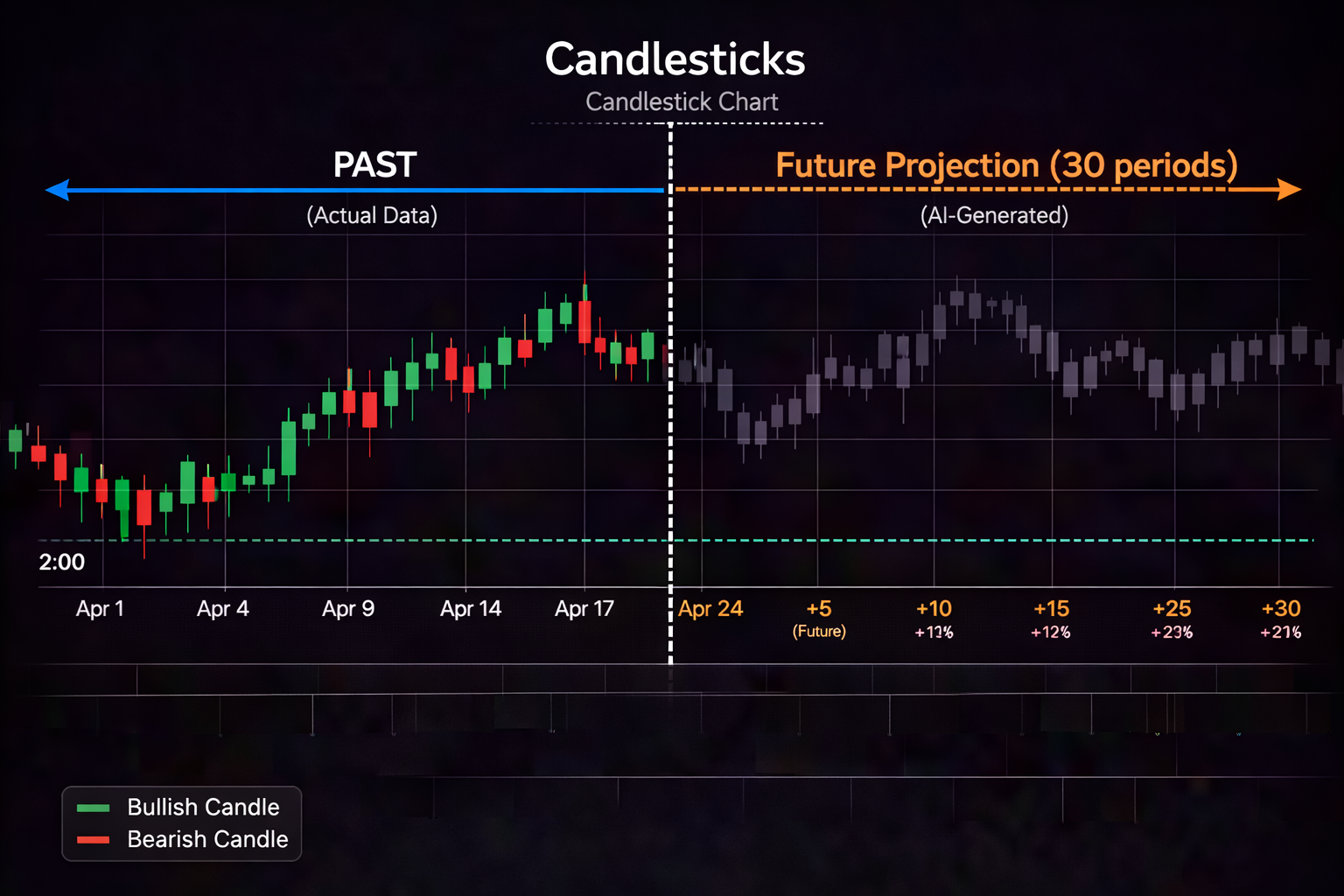
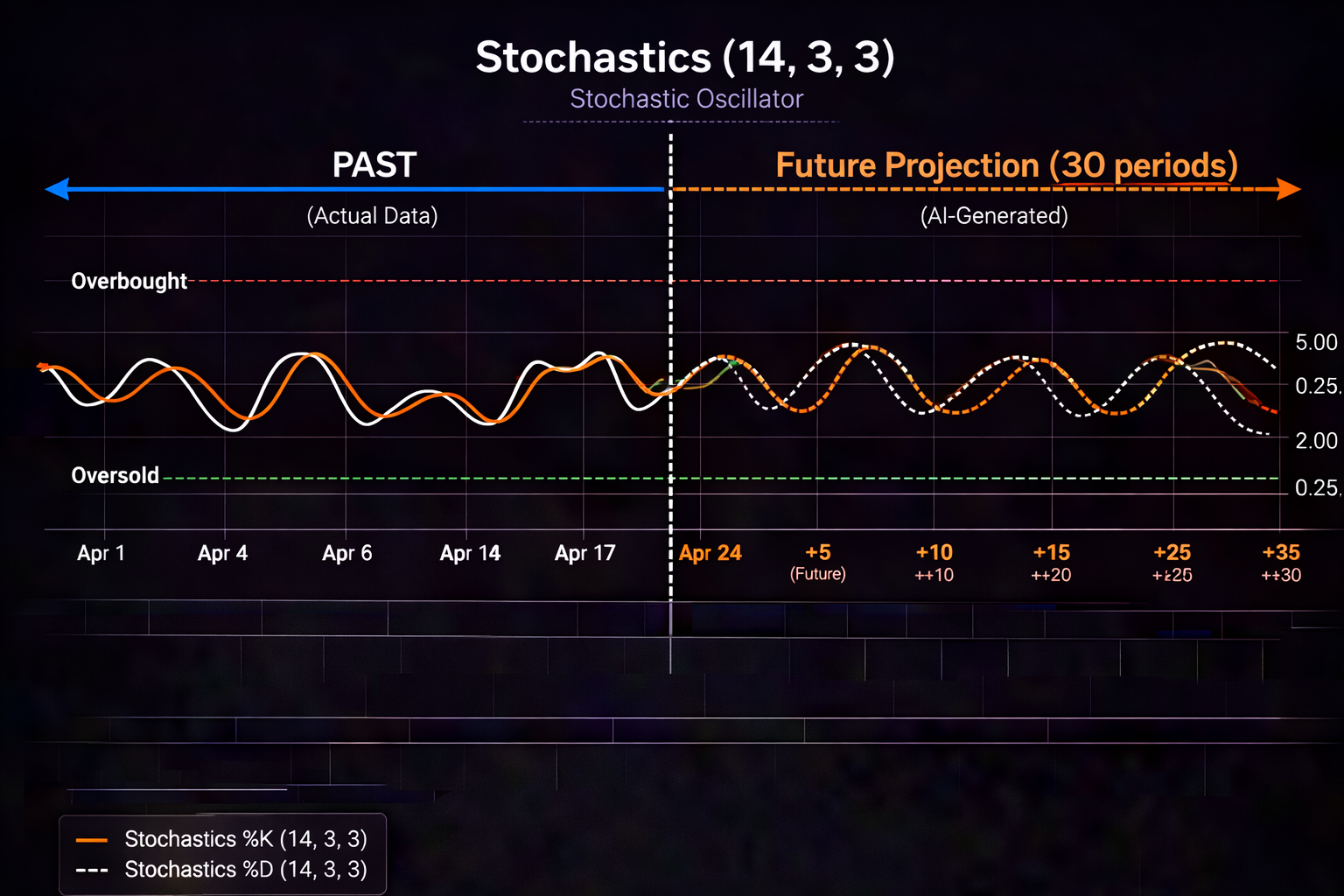
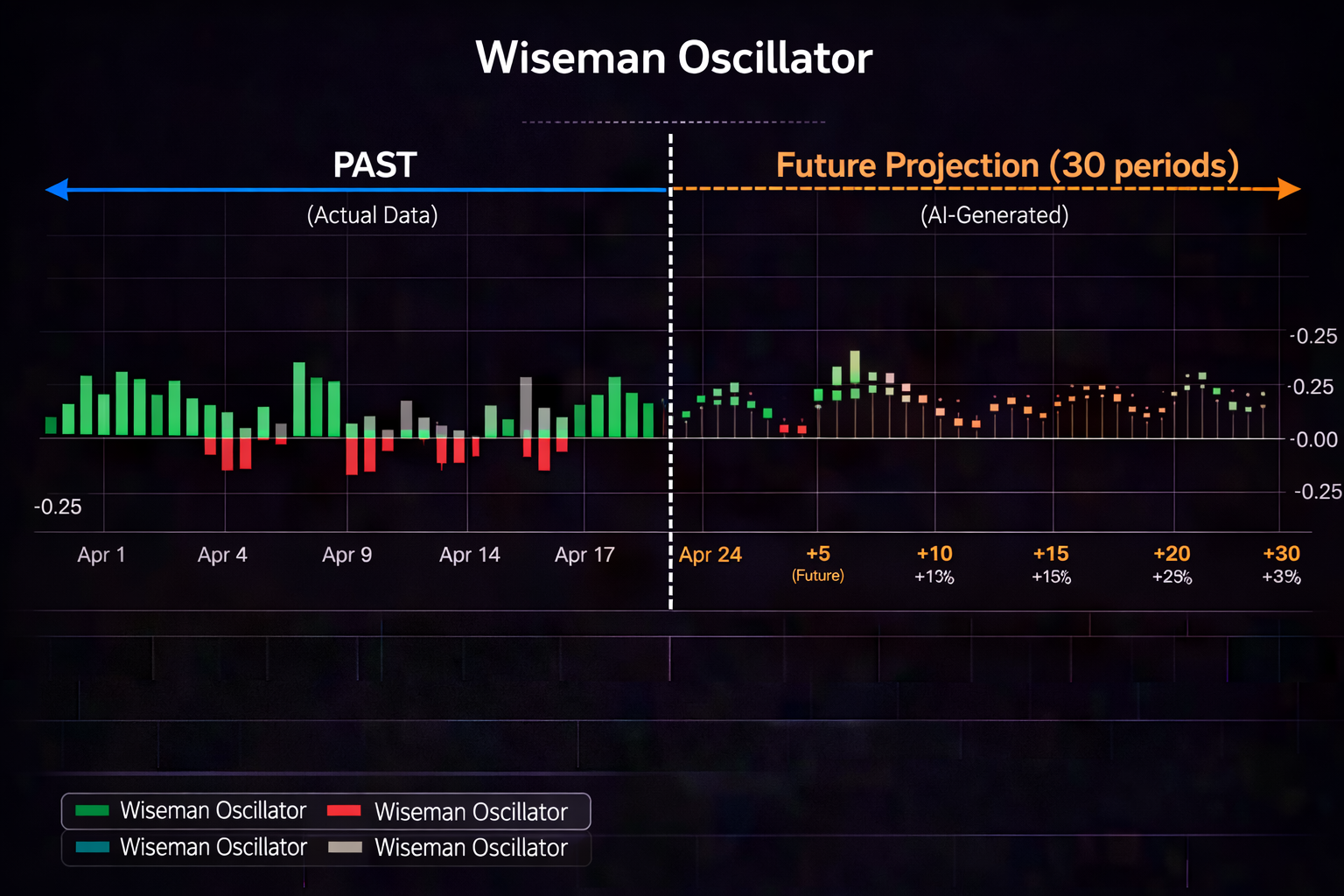
Get AI Signals Before Opening TradingView: A Mobile-First Workflow for Swing Traders
Published March 4, 20265 min read
If you're like most swing traders, your morning routine probably looks the same: wake up, grab your phone, open TradingView, scroll through your watchlist, check a dozen charts, tweak some indicators, and try to figure out which setups are worth trading today.
It works. But what if you could skip the first 20 minutes of that routine?
What if, before you even opened TradingView, you already knew which tickers had the highest-probability setups for the day?
That's the workflow I've built with PredictIndicators.ai. And it's changed how I approach every trading session.
The Problem: Too Much Noise, Not Enough Signal
TradingView is an incredible platform. The charting is world-class. The community ideas are insightful. The scripting language (Pine Script) lets you build custom indicators that would take weeks to code from scratch.
But here's the thing: TradingView shows you everything. Every indicator. Every pattern. Every price level. It's a firehose of data.
For swing traders especially, this creates a problem. You're not looking for intraday scalps. You're looking for multi-day setups with clear risk/reward ratios. You need to know:
Which direction is this stock likely to move over the next 2-5 days?
Is there a high-probability entry point forming?
What's a reasonable price target?
Where should I place my stop loss?
TradingView can help you answer these questions after you've spotted a potential setup. But it doesn't tell you where to look in the first place.
That's where PredictIndicators comes in.
The Solution: AI Predictions as Your Morning Filter
Here's my current workflow, step by step:
Step 1: Wake Up, Check Your Phone (2 minutes)
Before I even get out of bed, I open the PredictIndicators mobile site on my phone. No laptop. No multiple monitors. Just my phone and a cup of coffee (still brewing).
The dashboard shows me predictions for over 500 tickers — stocks, ETFs, crypto. Each prediction includes:
Direction (bullish, bearish, or neutral)
Confidence score (how strong the signal is)
Entry zone (where to consider entering)
Price targets (realistic areas to take profit)
Stop loss level (where the setup is invalidated)
I'm not making trades yet. I'm just scanning.
Step 2: Build a "High-Conviction" Watchlist (3 minutes)
I filter for tickers with:
Bullish or bearish predictions (skip neutral)
Confidence scores above 70%
Entry zones that are close to current price (setups forming now, not three days ago)
Usually, this gives me 5-10 tickers worth watching. Sometimes fewer. Sometimes more. On days when the market is choppy and predictions are scattered, I might get zero high-conviction signals.
That's fine. No signal is also information.
Step 3: Open TradingView Only for Those Tickers (10 minutes)
Now I open TradingView. But instead of scrolling through my 50-stock watchlist, I only load charts for the 5-10 tickers that PredictIndicators flagged.
This is where the magic happens.
I use TradingView for what it does best:
Confirming the setup visually — Does the chart look like a valid entry? Is price actually approaching the predicted entry zone?
Fine-tuning entry levels — The AI gives me a zone. I use TradingView to find the exact price level (often a prior support/resistance level or a Fibonacci retracement)
Setting alerts — I set price alerts at my entry zone so I don't have to stare at the chart all day
Planning my trade — I sketch out my risk/reward ratio directly on the chart
Step 4: Execute When Alerts Trigger
Throughout the day, when TradingView sends me an alert that price has hit my entry zone, I execute. I already know my stop loss and price targets from the PredictIndicators prediction. I just need to pull the trigger.
No analysis paralysis. No second-guessing. The work was done in the morning.
Why This Workflow Works
1. It Reverses the Funnel
Most traders start broad (scan 50+ charts) and narrow down (find 1-2 setups). I start narrow (5-10 AI-flagged tickers) and confirm.
This saves time. A lot of time. Over a year, that's dozens of hours I've gotten back.
2. It Separates Signal Generation from Trade Execution
PredictIndicators handles the heavy lifting of pattern recognition and probability calculation. I handle the judgment calls: Does this setup make sense right now? Is there earnings coming up? Is the broader market cooperating?
The AI doesn't replace my judgment. It augments it.
3. It Works on Mobile
I've traded from airport lounges. From my kid's soccer practice. From a cabin in the mountains with spotty WiFi. Because the initial scan happens on mobile, I'm not chained to my desk.
TradingView's mobile app is good for checking charts. But it's not great for scanning hundreds of tickers. PredictIndicators fills that gap.
A Real Example: How I Traded NVDA Last Month
Let me walk you through an actual trade from last month.
Morning of February 12th: PredictIndicators showed NVDA with a bullish prediction. Confidence: 78%. Entry zone: $785-790. Price target: $815. Stop loss: $775.
I opened TradingView. NVDA was trading at $792 — just above the entry zone, pulling back from a run-up earlier in the week.
I looked at the chart:
Price had just tested the 20-day moving average and bounced
RSI was coming down from overbought levels (good — room to run)
Volume was light on the pullback (no distribution)
I set an alert at $787 (middle of the entry zone) and went about my day.
2:15 PM: TradingView alert. NVDA hit $787.
I bought 100 shares at $787.50. Stop loss at $775 (below the recent swing low). Target at $815.
Risk: $12.50 per share. Reward: $27.50 per share. That's a 2.2:1 risk/reward ratio.
February 15th (3 days later): NVDA hit $813. I sold half my position. Moved my stop to breakeven on the rest.
February 17th: Price hit $818. I exited the remainder.
Total gain: $28.50 per share. On 100 shares, that's $2,850.
Was this a home run? No. But it was a disciplined, repeatable process. And I didn't spend hours staring at charts. The AI flagged the setup. TradingView confirmed it. I executed.
What PredictIndicators Doesn't Do
I want to be crystal clear about this: PredictIndicators is not a crystal ball.
It doesn't guarantee wins. It doesn't eliminate risk. It doesn't replace the need for proper position sizing and stop losses.
Here's what it's really good at:
Processing vast amounts of historical data to find patterns that repeat
Removing emotional bias from the initial scan (the AI doesn't care if you're "bullish on tech" or "bearish on semis")
Surfacing setups you might have missed in a manual scan
Here's what it's not good at:
Accounting for breaking news (earnings surprise, FDA approval, geopolitical events)
Understanding market context (is the overall trend bullish or bearish?)
Replacing your judgment (you still need to decide if a setup fits your strategy)
That's why I always, always check the chart on TradingView before entering. The AI gives me a starting point. My brain does the final vetting.
Who This Workflow Is For
This mobile-first, AI-assisted approach is ideal if you:
Trade part-time — You have a day job. You can't stare at charts all day.
Swing trade — You hold positions for days, not minutes.
Use TradingView already — You love the platform but want a better way to find setups.
Want consistency — You're tired of emotional trading and want a repeatable process.
It's not ideal if you:
Day trade — Intraday scalping requires different tools and faster execution.
Want a "set it and forget it" system — You still need to review charts, manage positions, and make judgment calls.
Expect high — No system wins every trade. This one doesn't either.
Getting Started
If you want to try this workflow, here's how:
Sign up for PredictIndicators — Start with the free trial. No credit card required.
Spend a week just observing — Check predictions daily. Note which tickers get flagged. Don't trade yet.
Compare predictions to actual price action — After a week, review: Did the predicted direction play out? Were entry zones accurate?
Start small — When you're ready, trade 1-2 setups. Small position sizes. Focus on process, not profits.
Refine your filters — Over time, you'll learn which confidence thresholds work for you. Maybe you only trade 80%+ signals. Maybe 70% is fine.
The Bottom Line
TradingView is an amazing platform. But it doesn't tell you what to trade. It only helps you analyze what you're already trading.
PredictIndicators flips that. It tells you what's worth trading. Then you use TradingView to confirm and execute.
Together, they create a workflow that's faster, more focused, and genuinely mobile-friendly.
And for swing traders who value their time? That's worth exploring.
🚀 Ready to Try This Workflow?
Start your free trial at PredictIndicators.ai and get your first AI-powered predictions in under 60 seconds.
Are you a trading influencer or content creator? We have a reseller program that lets you offer PredictIndicators to your audience while earning recurring revenue. Learn more at PredictIndicators.ai/influencer.
📱 Social Media Posts (X/Twitter)
Post 1:
Most traders waste 20+ minutes scanning charts before finding 1-2 setups.
What if you started with the 1-2 setups already identified?
AI predictions → TradingView confirmation → Execute.
Mobile-first workflow for swing traders:
Post 2:
TradingView is amazing for charting. But it doesn't tell you WHAT to trade.
PredictIndicators does.
My workflow: AI flags high-probability tickers → I confirm on TradingView → Set alerts → Trade when triggered.