Day Trading Workshops for Retail Traders in 2026: Mastering Intraday Execution
Day trading demands precision. Enter positions, exit same session. No overnight risk. No gap anxiety. No weekend exposure. But this intensity creates specific challenges: screen fatigue, execution hesitation, revenge trading after losses, and profit premature exit from adrenaline. Most retail day traders fail not from poor analysis, but from poor intraday discipline.
If you've been searching for "day trading workshops" or "intraday trading education," you've encountered content that either oversimplifies ("Just follow the 1-minute EMA cross!") or overcomplicates (HFT-style order flow models requiring Level 3 data). The middle ground—practical, time-bound intraday frameworks—is where real day trading success happens.
In this comprehensive guide, we'll explore day trading workshops that build intraday skills progressively, how to integrate AI forecasting into your day trading without violating session-close discipline, and why tools like PredictIndicators.ai are transforming how retail traders approach intraday execution across NinjaTrader 8, MetaTrader 5, iPhone, iPad, Android devices, Mac apps, and web browsers.
Day Trading vs. Swing Trading: Critical Distinctions
Day trading isn't "faster swing trading." It's a distinct discipline with different requirements:
Analysis timeframes: Daily primary, 4-hour for timing
Context timeframes: Weekly for trend
Overnight holds required
These distinctions shape everything: your analysis, your risk management, your psychology, your platform choices. Confusing them creates horizon drift—entering day trades and holding overnight "just this once," or entering swings and exiting in hours from anxiety.
Analysis Intensity Contrast
Day Trading:
Screen time: Continuous during session (hours of focused attention)
Decision frequency: High (5-20 trades per day possible)
Analysis depth: Lower per trade (faster decisions required)
Decision frequency: Low (2-5 trades per week typical)
Analysis depth: Higher per trade (more deliberation time)
Error tolerance: Higher (single mistakes don't compound same day)
Day trading rewards rapid pattern recognition and execution speed. Swing trading rewards patience and multi-day conviction. Neither is inherently superior—they're different skill sets.
Platform Requirements Contrast
Day Trading:
Low-latency execution (seconds matter)
Real-time data feeds (delayed data kills intraday edges)
DOM (Depth of Market) access (order flow visibility)
Hotkey execution (mouse-clicks too slow for scalping)
Swing Trading:
Standard execution (minutes acceptable)
Standard data feeds (15-minute delays often acceptable)
Chart-focused analysis (order flow less critical)
Standard mouse/keyboard execution (speed less critical)
Day trading platforms must support speed. Swing platforms must support analysis. PredictIndicators.ai's cross-platform presence serves both: on NinjaTrader 8 for day trading speed, on MT5 for forex intraday, on mobile for position monitoring, on Mac and web for flexibility.
Core Day Trading Strategies for Retail Traders
Effective day trading education teaches specific, repeatable intraday setups:
Strategy 1: Opening Range Breakout (ORB)
Concept: First 30-60 minutes of session establishes trading range. Breakouts from this range often continue in breakout direction for several hours.
Setup Criteria:
Mark first 30-minute high and low (opening range)
Wait for decisive break (close outside range, volume expansion)
Enter in breakout direction on retest or continuation
Exit by session close (never hold overnight)
Timeframes:
5-minute chart: Primary execution chart
1-minute chart: Fine-tune entries
15-minute chart: Context bias
Hold Period: 30 minutes to 3 hours (all positions closed before session end)
Example (Bullish ORB on ES):
Market opens at 9:30 AM ET
Mark 9:30-10:00 AM high: 4,485
Mark 9:30-10:00 AM low: 4,475
10:15 AM: Price breaks above 4,485 on expanding volume
12:30 PM: Price reaches 4,500, take partial profits
2:00 PM: Price stalls, trail stop to breakeven
3:45 PM: Close all positions before 4:00 PM settlement
Why It Works: Opening range represents initial equilibrium. Breakouts signal directional commitment from participants. Momentum often continues for hours.
Strategy 2: Pullback to VWAP
Concept: VWAP (Volume Weighted Average Price) represents fair value for the session. Price pulling back to VWAP in trending sessions offers high-probability continuation entries.
Setup Criteria:
Session establishes clear trend (price above VWAP for bullish, below for bearish)
Price pulls back to VWAP (not through it)
Reversal signals form at VWAP (hammer, bullish engulfing for longs)
Volume confirms bounce (expanding on reversal candles)
10:00-11:30 AM ET (post-open clarity, good volume)
2:00-3:30 PM ET (afternoon trends, consistent volume)
Adjust trade frequency and size based on session time risks.
AI Forecasting in Day Trading: Appropriate Integration
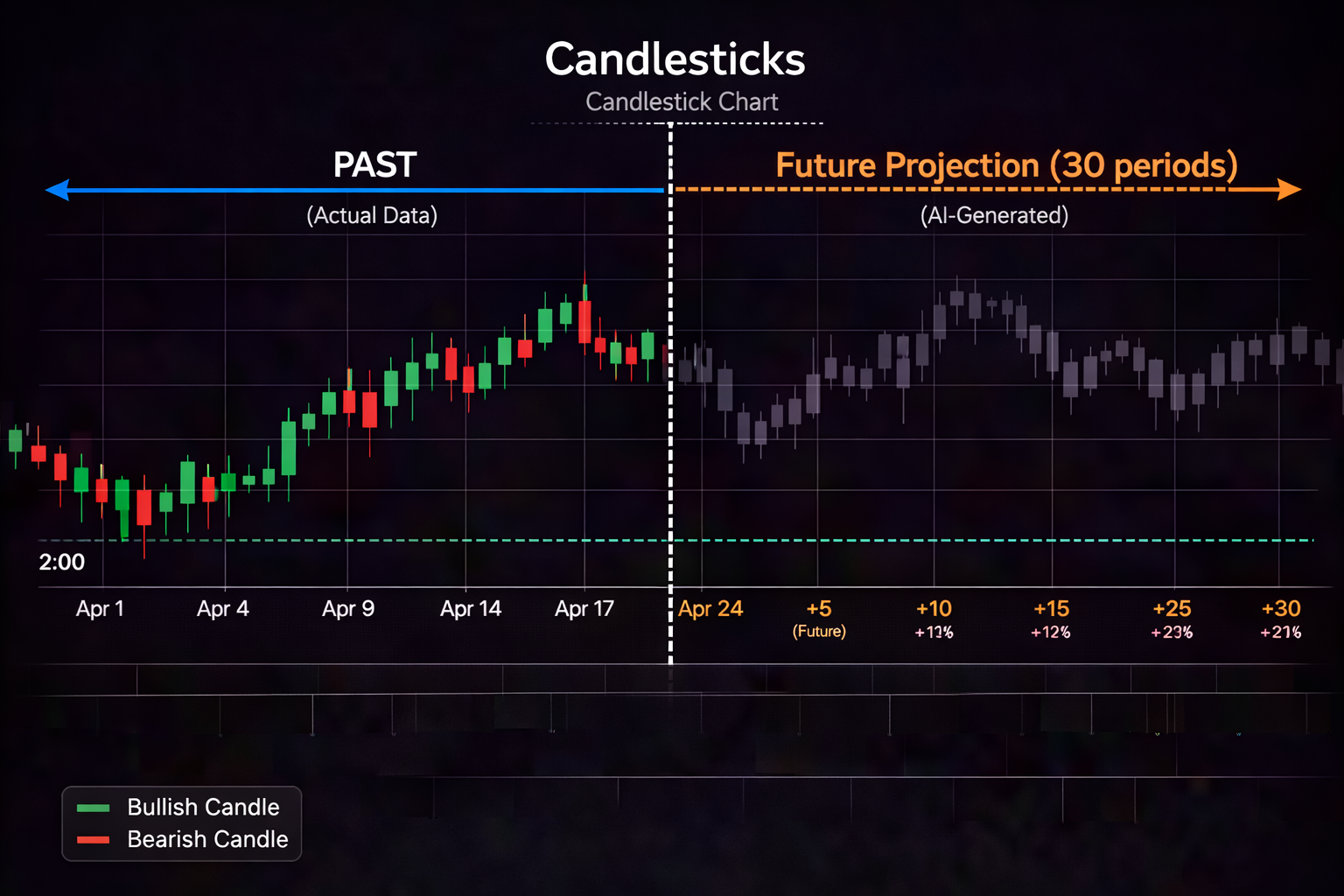
AI forecasting tools like PredictIndicators.ai require careful integration in day trading. Intraday timeframes move faster than 30-bar projections (which represent longer horizons). Strategic use matters:
Appropriate Day Trading Applications
1. Session Bias Confirmation
Before session open, check daily chart projections:
PredictIndicators.ai shows bullish MACD development on daily
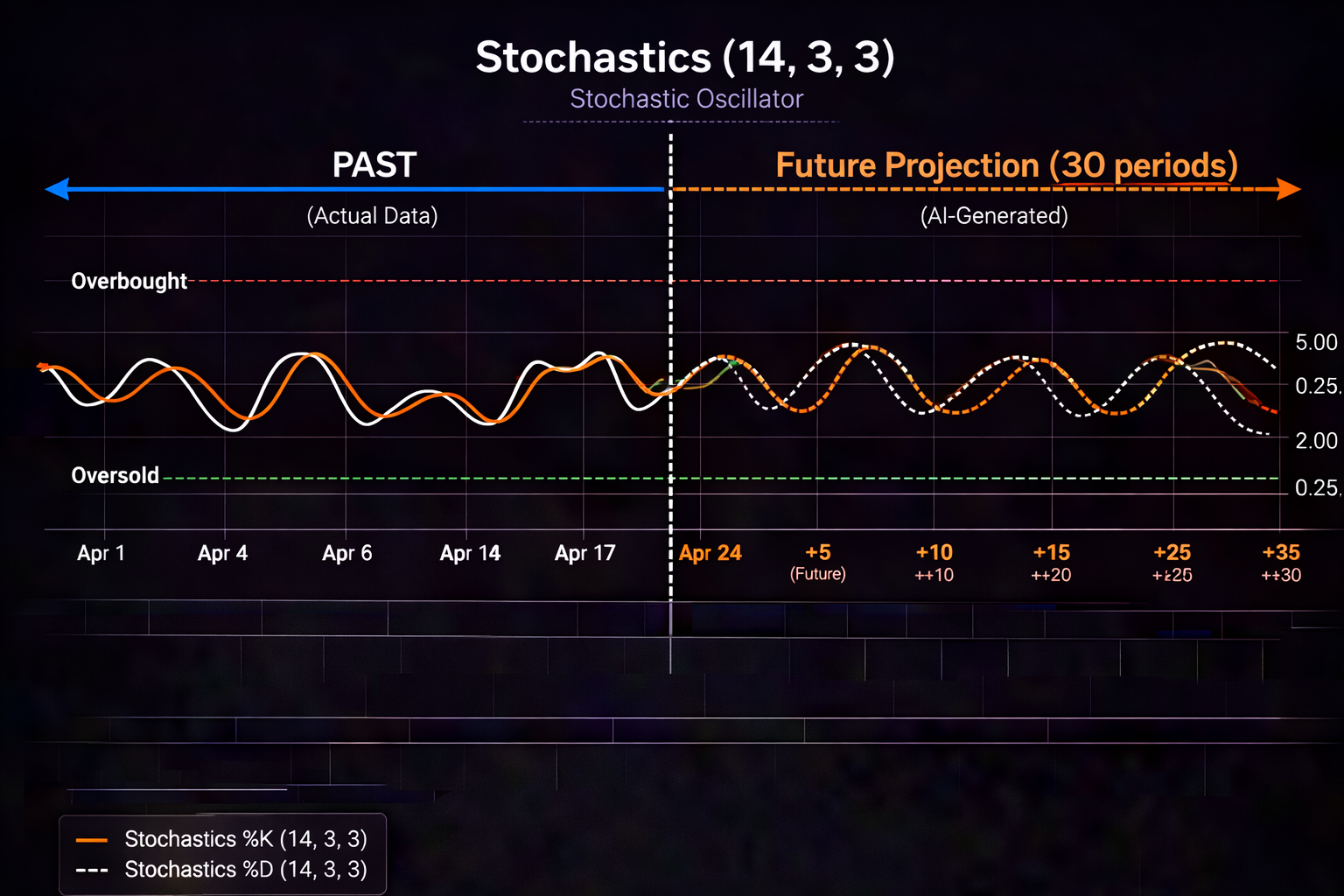
Stochastics rising from oversold on daily timeframe
Intraday Implication: Favor long setups over shorts during session (align with daily bias)
Not: "Daily is bullish, so every 1-minute long wins" (timeframes don't work that way)
2. Volatility Preparation
Check ATR projections on 1-hour charts:
PredictIndicators.ai shows ATR expansion developing over next 30 bars (≈30 hours on 1-hour)
Intraday Implication: Expect wider ranges today. Adjust stop distances (wider) and position size (smaller to maintain same dollar risk)
Not: "Volatility expanding, so I'll scalp faster" (faster scalping often means worse execution)
3. Momentum Context
During pullback entries, check momentum projections:
Price pulls back to VWAP (bullish session)
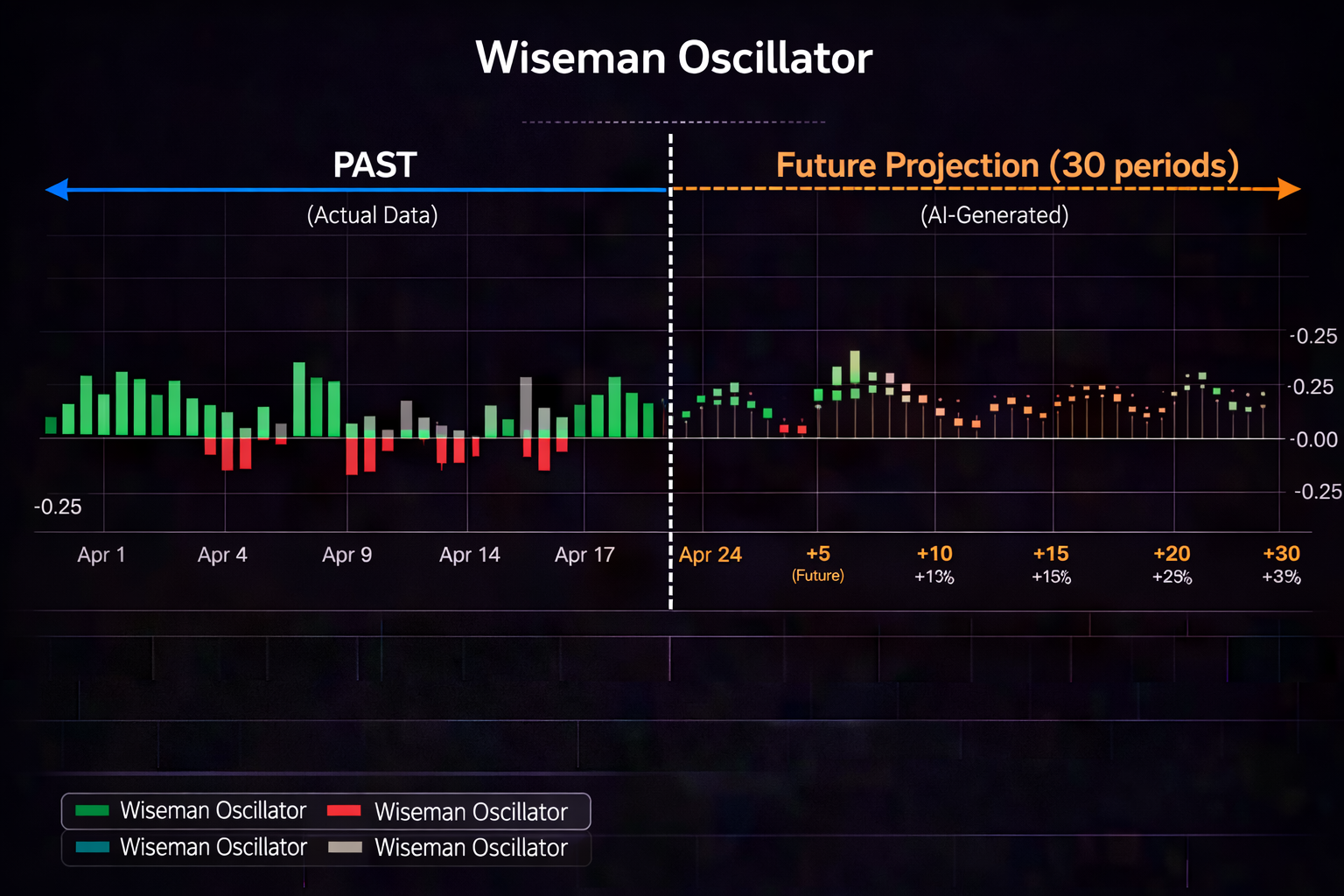
PredictIndicators.ai shows MACD bullish continuation on 4-hour
Intraday Implication: Pullback likely to bounce (momentum supports continuation). Enter with confidence, standard size.
Not: "AI says bullish, so I'll ignore the actual 1-minute setup" (intraday price action always trumps projections)
Inappropriate Day Trading Applications
Avoid These Misuses:
Using 30-bar projections as 1-minute entry triggers (timeframe mismatch)
Holding losing day trades because "projections say it'll work out" (violates session-close discipline)
Increasing size because "AI confirms the trade" (conviction doesn't change mathematics)
Ignoring intraday stops because "forecasting says I'm right" (forecasting serves analysis, not risk management)
Multi-Platform Day Trading Consistency
Day trading requires platform stability. PredictIndicators.ai's availability across NinjaTrader 8, MT5, iPhone, iPad, Android, Mac, and web ensures:
Primary Execution: NinjaTrader 8 or MT5 desktop (low latency, hotkeys, DOM access)
Mobile Monitoring: iPhone/iPad/Android for mid-session checks when away from desk
Web Access: Browser-based monitoring from any location (work, travel)
Mac Alternative: Native macOS trading if primary platform unavailable
Your forecasting inputs remain consistent across all platforms. The same daily/4-hour projections inform your intraday bias whether you're executing from your workstation or monitoring from your phone.
Day Trading Psychology: Intraday Mental Management
Day trading creates unique psychological challenges:
Screen Fatigue
Challenge: 4-6 hours of focused screen time creates mental exhaustion. Fatigued traders make poor decisions.
Solutions:
Scheduled breaks (5 minutes every hour)
Eye rest (look away from screens during breaks)
Hydration (keep water at desk)
Posture awareness (stand/stretch hourly)
Session time limits (don't trade 8 hours—fatigue kills)
Revenge Trading
Challenge: Losing trade triggers anger. Anger triggers immediate re-entry ("I'll make it back now"). Re-entry often loses bigger.
Solutions:
Pre-defined trade limits (max 3 losses before break)
Mandatory breaks after losses (step away 10 minutes)
Loss journaling (write what happened before next trade)
Daily loss limits (hard stops when reached)
Accountability (mentor, community, or tracking software)
Profit Premature Exit
Challenge: Position moves in favor. Adrenaline spikes. Exit early to "lock it in." Watch price continue to target without you.
Solutions:
Pre-defined targets (write before entering)
Auto-exit orders (set profit targets as limit orders)
Partial scaling (50% at 1R, 50% at 2R—locks some, lets rest run)
Breathing techniques (pause before exiting—ask "am I exiting from plan or adrenaline?")
Trade review (track early exits—how many became full winners?)
Execution Hesitation
Challenge: Setup forms. Entry signal triggers. Hesitate ("What if I'm wrong?"). Miss entry. Watch trade work without you.
Solutions:
Pre-defined entry rules (if X occurs, I enter—no deliberation)
Hotkey execution (one keystroke, not mouse navigation)
Rehearsal (practice entries in simulator until automatic)
Size reduction (if hesitation from fear, size may be too large)
Day trading education isn't about finding perfect entries. It's about building executable frameworks that survive intraday variability. Setup recognition matters. Execution speed matters. Risk management matters most. Psychology determines whether you implement all three.
PredictIndicators.ai supports day trading discipline across all platforms—NinjaTrader 8, MT5, iPhone, iPad, Android, Mac, and web. AI forecasting doesn't replace intraday price action reading. It enhances it with higher-timeframe context that informs session bias, volatility preparation, and momentum calibration. Your 1-minute entries remain based on 1-minute signals. AI projections inform which setups you emphasize, not which you take.
Your day trading future isn't about capturing every intraday move. It's about capturing appropriate moves consistently. Session discipline matters. Risk limits matter. AI forecasting informs context. Your execution brings them together.
That synthesis—human intraday execution augmented by higher-timeframe foresight—is where modern day trading leads. And that's where sustainable trading careers begin.