You've found an indicator that looks promising. It fires clean signals. The equity curve in the demo looks smooth. You're ready to go live.
Stop.
Most retail traders skip backtesting entirely—or worse, they "backtest" by looking at 10 trades that worked and calling it validated. That's not testing. That's confirmation bias wearing a lab coat.
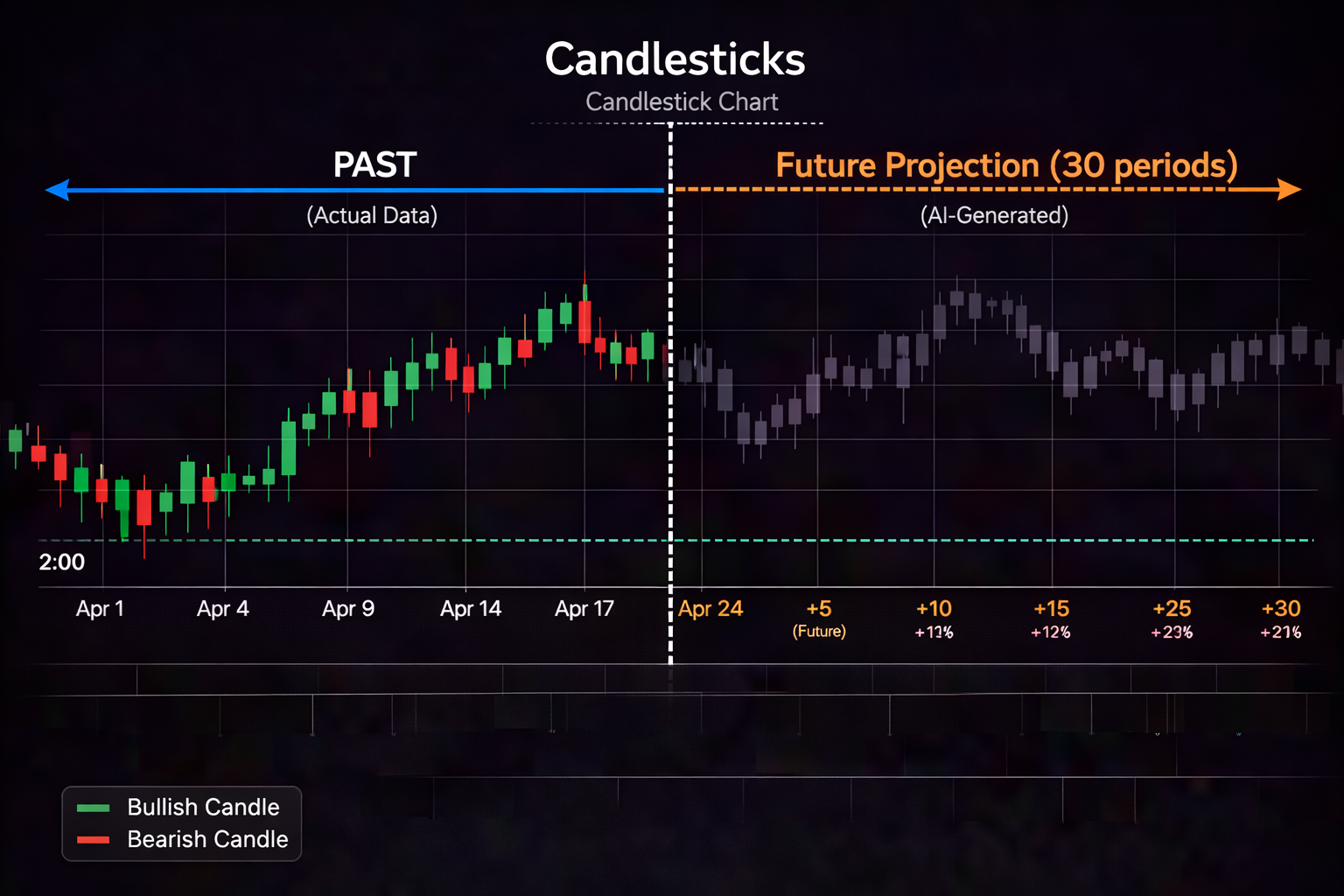
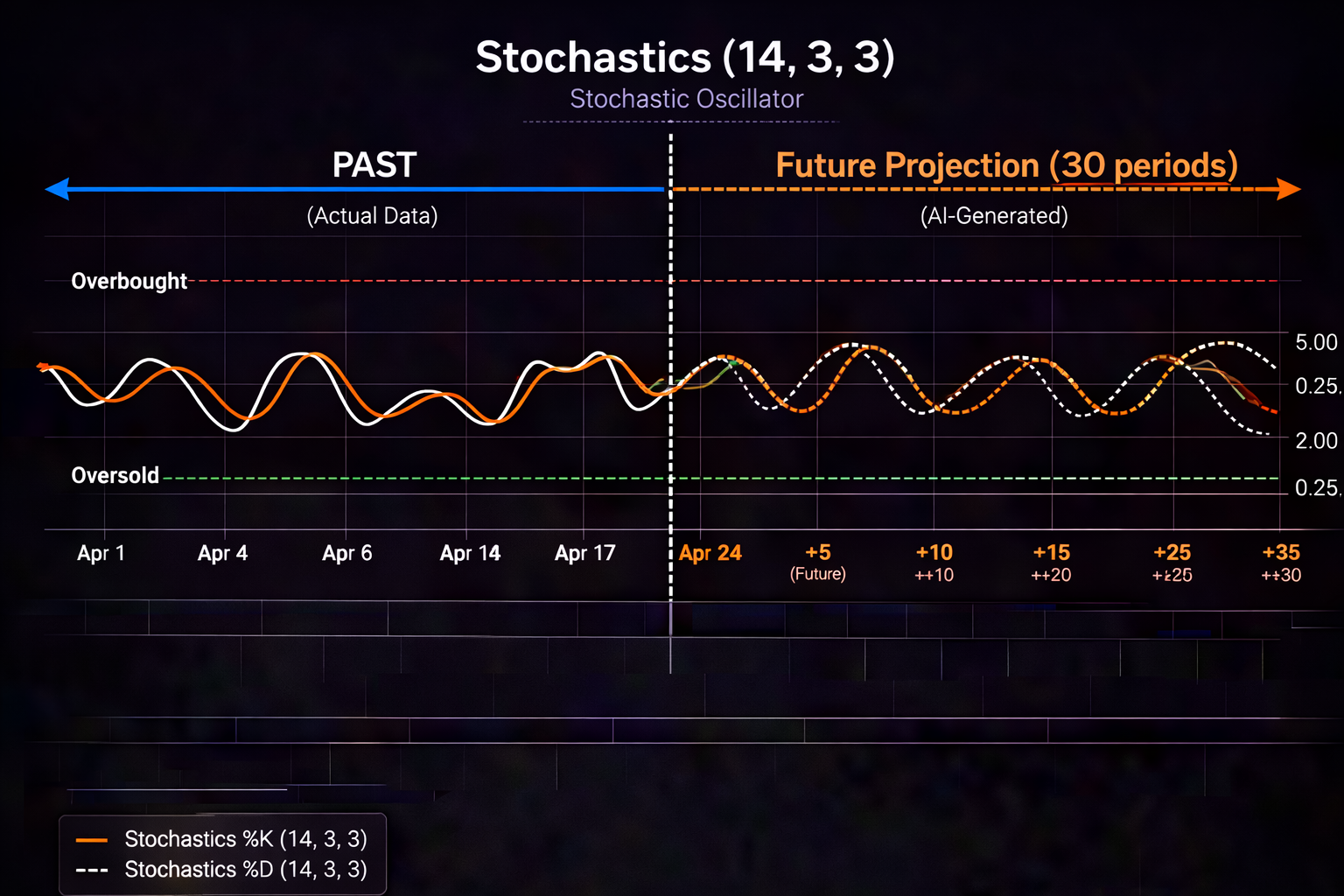
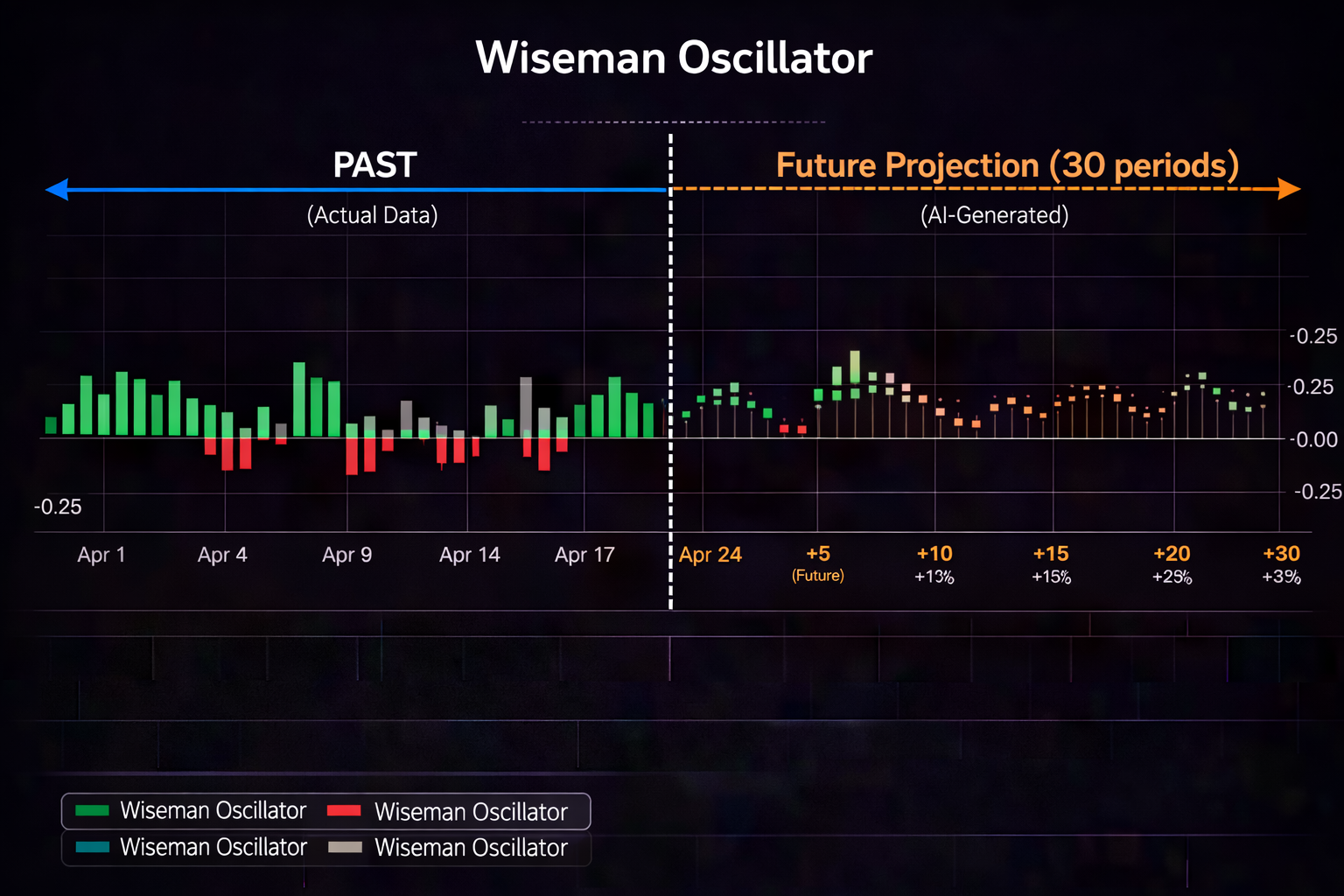
When you're using AI powered indicators like PredictIndicators.ai—which prediction MACD, Stochastics, ATR, DM, Wiseman, and candlestick patterns 30 bars ahead—proper backtesting isn't optional. It's the difference between trusting your edge and hoping it works.
This guide walks through how to backtest AI indicators correctly: avoiding curve fitting, eliminating forward bias, sampling across market regimes, and building confidence that survives live trading. PredictIndicators.ai works across all platforms—NinjaTrader 8, MetaTrader 5, iPhone, iPad, Android, Mac app, and web app—so your backtested edge travels with you wherever you trade.
Why AI Indicators Need Different Backtesting
Traditional indicators (RSI crosses, MACD histogram, moving average bounces) are deterministic. Same input = same output. Backtesting them is straightforward: replay historical data, apply the rule, count wins and losses.
AI indicators introduce two complexities:
- Probabilistic outputs: AI predictions likelihood, not certainty. A "bullish MACD cross in 8 bars" prediction has confidence levels, not binary outcomes.
- Multi variable synthesis: AI weighs price action, volume, momentum, structure, and regime context simultaneously. Isolating one variable in backtesting misses the full picture.
This doesn't make backtesting harder—it makes it different. You're not testing "does this cross fire?" You're testing "when this fires with X confidence in Y regime, what's the realization rate?"
The Backtesting Framework (Step by Step)
Step 1: Define What You're Testing
Be specific. "AI MACD indicator" is too vague. Try:
STRATEGY: PredictIndicators.ai AI prediction
SIGNAL: Bullish MACD cross predicted 5-10 bars ahead with high confidence
CONFIRMATION: Price holds above key support during prediction window
ENTRY: Long on actual cross confirmation
STOP: Below swing low - 1 tick
TARGET: 2:1 reward:risk minimum
MARKET: ES futures (or your instrument)
TIMEFRAME: 5 minute (or your primary timeframe)
Every variable is defined. No interpretation. This same definition applies whether you're backtesting on NinjaTrader 8, MT5, or the mobile apps (iPhone, iPad, Android, Mac app, web app).
Step 2: Sample Across Market Regimes
Most backtesting fails here. Traders test 100 trades from one market condition (e.g., trending bull market) and assume the strategy works universally.
Markets cycle through regimes:
- Trending bull: Higher highs, higher lows, pullbacks shallow
- Trending bear: Lower highs, lower lows, rallies shallow
- Range bound: Oscillating between clear support/resistance
- High volatility: Wide bars, gap opens, whipsaw common
- Low volatility: Compressed bars, slow grind, false breaks frequent
Your backtest must include 20-30 trades from each regime. A strategy that crushes in trends but dies in ranges isn't a strategy—it's a regime bet.
PredictIndicators.ai helps here because it predictions across market conditions. But you still need to validate how it performs in each regime separately.
Step 3: Eliminate Forward Bias
Forward bias is the silent backtest killer. It happens when you inadvertently use information that wasn't available at decision time.
Common examples:
- Looking at the "full chart" to identify support/resistance, then pretending you "saw it" in real time
- Knowing the cross fired, then scrolling left to find "the perfect entry" that you wouldn't have spotted live
- Adjusting stop placement after seeing where price actually reversed (hindsight stop optimization)
Fix: Use bar by bar replay mode. Most platforms (NinjaTrader 8, MT5, and PredictIndicators.ai mobile apps) offer replay functionality. Move forward one bar at a time. Make decisions only with information visible at that moment. No peeking ahead.
Step 4: Track Confidence vs. Realization
AI indicators like PredictIndicators.ai output confidence levels. A "high confidence bullish MACD prediction" should realize more often than a "medium confidence" one.
Backtest tracking should include:
| Confidence Level |
Total Signals |
Winning Trades |
Win Rate |
Avg Reward:Risk |
| High |
45 |
32 |
71% |
2.4:1 |
| Medium |
67 |
38 |
57% |
1.9:1 |
| Low |
28 |
11 |
39% |
1.3:1 |
Patterns emerge: High confidence signals deliver high with 2.4:1 reward. Low confidence signals lose money. Your rule becomes: "Only trade high confidence predictions."
This works identically across all PredictIndicators.ai platforms—NinjaTrader 8, MT5, iPhone, iPad, Android, Mac app, web app. Confidence thresholds don't change with your device.
Step 5: Measure Decision Quality, Not Just P&L
P&L is outcome. Decision quality is process. You can lose money on a perfect trade (bad fill, slippage, stop hunt). You can make money on a broken trade (luck).
Track these metrics per trade:
- Signal present? (Y/N - per your defined criteria)
- Rule followed? (Y/N - did you execute per plan?)
- Entry timing? (Early/On-time/Late vs. signal maturity)
- Stop placement? (Per plan/Adjusted/Improvised)
- Target management? (Held/Exited early/Moved target)
After 100 trades, you'll see patterns:
RULE FOLLOWING TRADES (82 trades):
- strong performance
- Avg reward:risk: 2.1:1
- Net: +18R

RULE BREAKING TRADES (18 trades):
- strong performance
- Avg reward:risk: 1.2:1
- Net: -11R
Your edge isn't the indicator. Your edge is following rules when the indicator fires.
Avoiding Curve Fitting (The Backtest Trap)
Curve fitting happens when you optimize parameters so precisely to historical data that the strategy fails on new data.
Example of curve fitting:
"I noticed MACD crosses worked better when the histogram was >0.0015 and price
was 3.2 ticks above the 20 EMA and RSI was between 47-53... so I'll only trade
when all three align."
That's not a strategy. That's memorizing history.
How to avoid it:
- Use simple rules: If you can't explain your entry criteria in one sentence, it's over fitted.
- Test out of sample: Backtest on Jan Mar data. Then test on Apr Jun data without changing rules. If performance drops 50%+, you curve fit.
- Limit parameters: Max 2-3 variables in your entry rule. More = over optimization.
- Forward test: Paper trade the strategy for 30 trades live. If results diverge from backtest, re evaluate.
PredictIndicators.ai reduces curve fit risk because it predictions based on learned patterns across thousands of bars—not parameters you're tweaking manually. But you still need to validate that its predictions align with your execution rules.
Sample Size Matters (Don't Stop at 20 Trades)
Twenty trades isn't enough. Variance dominates small samples.
Minimum sample sizes:
- Per market regime: 25-30 trades
- Per confidence level: 20-25 trades
- Per instrument: 50+ trades (if trading multiple markets)
- Total minimum: 100 trades before claiming validation
This takes time. A 5 minute ES strategy might generate 3-5 signals per day. At that rate, 100 trades = 20-30 trading days (4-6 weeks). Don't rush it. Rushed backtests create false confidence.
Platform Consistency in Backtesting
Many traders backtest on desktop (NinjaTrader 8 or MT5) then trade live on mobile (iPhone, iPad, Android, Mac app, web app). Your backtest must translate across platforms.
Key consistency checks:
- Signal timing: Does PredictIndicators.ai fire at the same bar on all platforms?
- Chart scale: Are you viewing the same timeframe and bar count?
- Execution mechanics: Are entry/stop orders placed identically?
PredictIndicators.ai maintains consistency across all eight platforms, but you should verify this in your backtest phase. Trade 10 trades on desktop, 10 trades on mobile. Compare results. They should align within normal variance.
Real World Backtest Example
Marcus backtested PredictIndicators.ai on ES futures (5 minute chart). His process:
- Defined strategy: "Long when AI predictions bullish MACD cross in 5-10 bars with high confidence, price holds above session VWAP, entry on cross confirmation, stop below swing low, target 2:1."
- Sampled regimes: 25 trades from trending days, 25 from range bound days, 25 from high volatility days (100 total across 4 weeks of replay).
- Tracked confidence: Separated high/medium/low confidence signals.
- Bar by bar replay: Used NinjaTrader 8 replay mode, no peeking ahead.
- Decision tracking: Logged rule adherence per trade.
Results:
HIGH CONFIDENCE (67 trades):
- strong performance
- Avg reward:risk: 2.3:1
- Net: +42R
- Rule adherence: 94%

MEDIUM CONFIDENCE (28 trades):
- strong performance
- Avg reward:risk: 1.7:1
- Net: +8R
- Rule adherence: 87%

LOW CONFIDENCE (5 trades):
- strong performance
- Avg reward:risk: 1.1:1
- Net: -3R
- Rule adherence: 60%

OVERALL (100 trades):
- strong performance (high confidence only: 68%)
- Avg reward:risk: 2.2:1
- Net: +47R
- Rule adherence: 91%
Marcus's rule after backtesting: "Only trade high confidence predictions. Medium confidence requires additional confirmation. Skip low confidence entirely."
He validated this on MT5 and the iPhone app—results aligned within 3% variance. His edge was portable.
When Backtesting Says "This Doesn't Work"
Sometimes backtesting kills your strategy. That's a win, not a loss. You saved live capital.
Common failure modes:
- Win rate <50% with avg reward:risk <2:1: Strategy bleeds over time. Needs rework or discard.
- High confidence = same results as low confidence: Indicator isn't discriminating. Confidence calibration off.
- Rule adherence <80%: Problem isn't the indicator—it's your execution. Fix discipline before blaming the tool.
- Regime dependency: Works in trends, dies in ranges (or vice versa). You need regime filters or multiple strategies.
Failure in backtesting = tuition paid in time, not capital. That's cheap.
The Transition: Backtest → Paper Trade → Live
Never go straight from backtest to live capital. Add a paper trading bridge:
- Backtest: 100+ trades, historical replay, full validation
- Paper trade: 30 trades, live market conditions, no real capital
- Micro live: 20 trades, minimum position size, real capital
- Scale: Increase size only after micro live shows alignment with backtest
Each stage validates the previous. If paper trade diverges from backtest, something broke (execution, market shift, indicator behavior). Diagnose before going live.
This progression works across all PredictIndicators.ai platforms—NinjaTrader 8, MT5, iPhone, iPad, Android, Mac app, web app. Your validation doesn't reset when you switch devices.
Bottom Line: Backtest Like a Scientist, Not a Gambler
AI indicators like PredictIndicators.ai give you predictive edge—30 bar predictions across MACD, Stochastics, ATR, DM, Wiseman, and candlesticks. But edge untested is just hope.
Proper backtesting gives you:
- Confidence levels that actually discriminate (high vs. low = different results)
- Regime awareness (where your strategy works vs. where it dies)
- Rule validation (your process, not just your indicator)
- Platform consistency (edge travels across all your devices)
Skip backtesting, and you're trading blind. Backtest properly, and you trade with validated confidence. The difference isn't just P&L—it's sleep at night.
Start with 100 trades. Track everything. Let data build your confidence—not hope, not hype, not 10 cherry picked winners.