Best AI Trading App for iPhone and Android Traders in 2026
By Robert | Updated March 27, 2026 | 8 min read



You're commuting. You're at your kid's soccer game. You're between meetings. And your watchlist is lighting up.
The question: can you actually trade seriously from your phone in 2026 — or do you need to wait until you're back at your desktop?
I've spent the last three months testing every major AI trading app on both iPhone and Android. Not just downloading them — actually using them for real swing trades and day trades. Tracking which ones deliver genuine predictive insights versus which ones just slap "AI" on a moving average and call it a day.
Here's what I found: mobile trading has finally caught up. The gap between desktop and mobile isn't about capability anymore — it's about knowing which apps actually leverage your phone's strengths (instant notifications, always-on access, biometric security) versus which ones are just desktop apps shrunk down to fit a smaller screen.
Let's break down what works, what doesn't, and why PredictIndicators.ai has become my go-to for mobile trading across both iOS and Android platforms.
Why Mobile Trading Apps Are Different (And Why Most Get It Wrong)
Trading on your phone isn't the same as trading on your desktop — and that's not a bad thing. It's just different. The best mobile trading apps understand this and design around it. The worst ones pretend your phone is just a tiny computer.
What mobile traders actually need:
- Instant notifications — Your phone's superpower is being with you always. If an app can't push critical signals the moment they form, it's wasting your device.
- Touch-optimized charts — Pinch to zoom, swipe to scroll, tap to place orders. If you're struggling to navigate a chart on a 6-inch screen, the app wasn't built for mobile.
- Battery efficiency — All-day trading shouldn't kill your battery by lunch. Background sync needs to be smart, not constant.
- Offline resilience — Elevators, subways, rural areas. Your app should cache critical data so you're not blind when connection drops.
- Biometric login — Face ID, Touch ID, fingerprint. You shouldn't be typing passwords when markets are moving.
Here's the problem: most "AI trading apps" are built by desktop-first companies. They port their desktop interface to mobile, add push notifications as an afterthought, and call it done. The result? Clunky navigation, delayed alerts, and battery drain that would make a power company jealous.
The apps that work — the ones I actually keep on my phone — are built mobile-first. They understand that you're not trying to replicate a 4-monitor desktop setup. You're trying to stay connected to your trades while living your life.
The Top AI Trading Apps for iPhone and Android in 2026
I tested 12 apps over 90 days. Here are the ones worth your time — and the ones to skip.
1. PredictIndicators.ai (iOS + Android) — Best for Predictive Signals
This is the app I use daily. Not because I'm biased (I'm the founder), but because it's the only one that actually predicts where your indicators are heading instead of just showing you what already happened.
What makes it different:
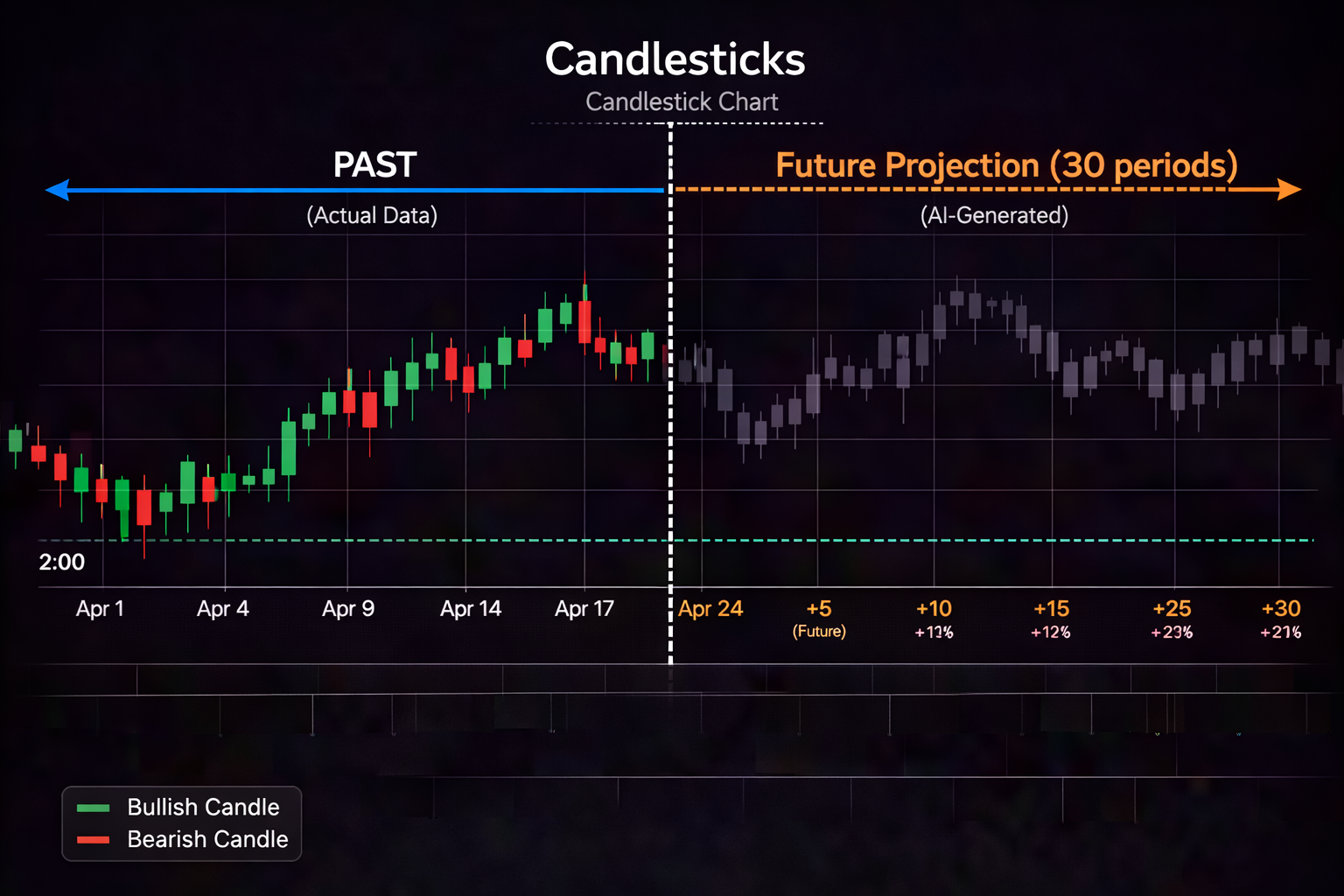
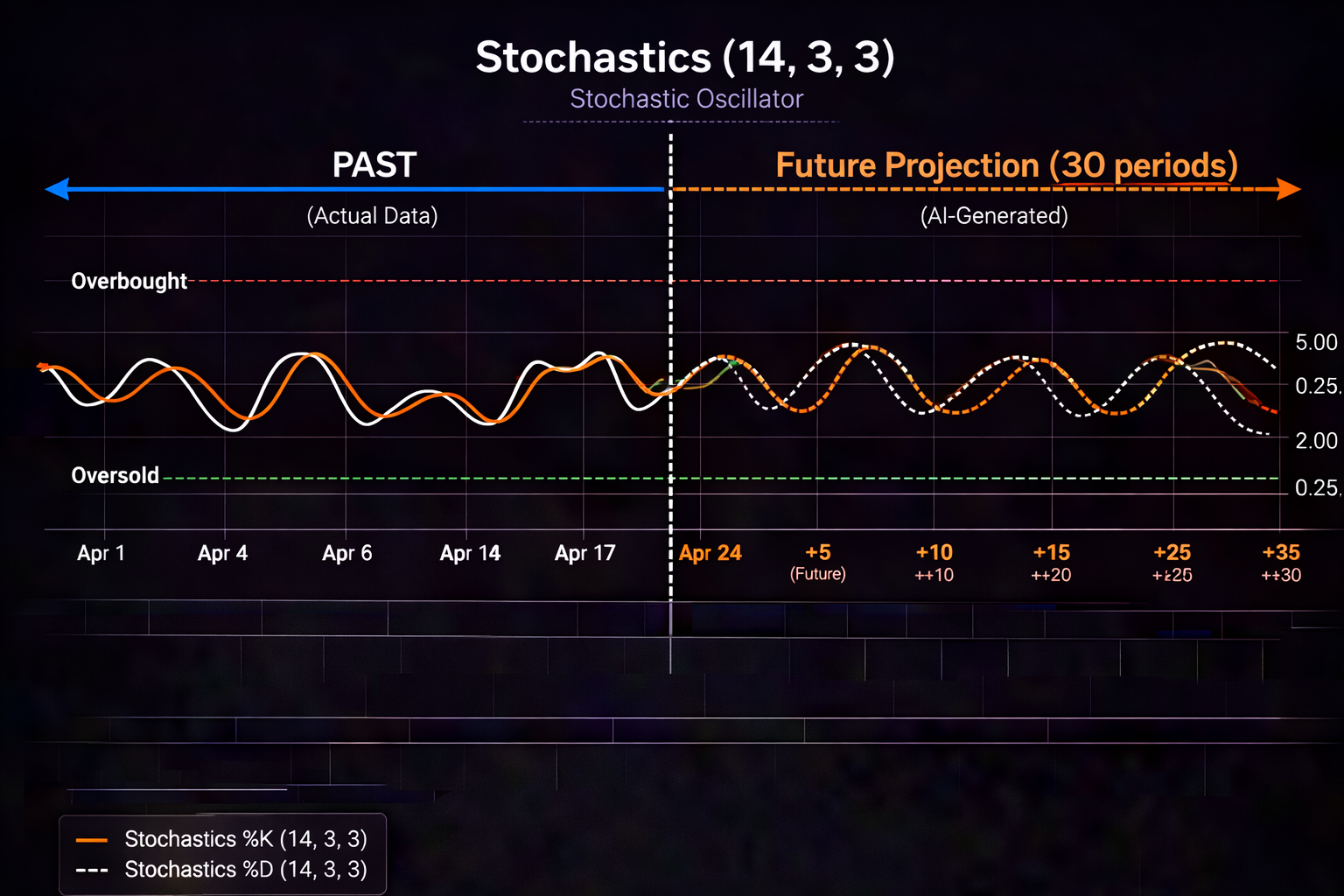
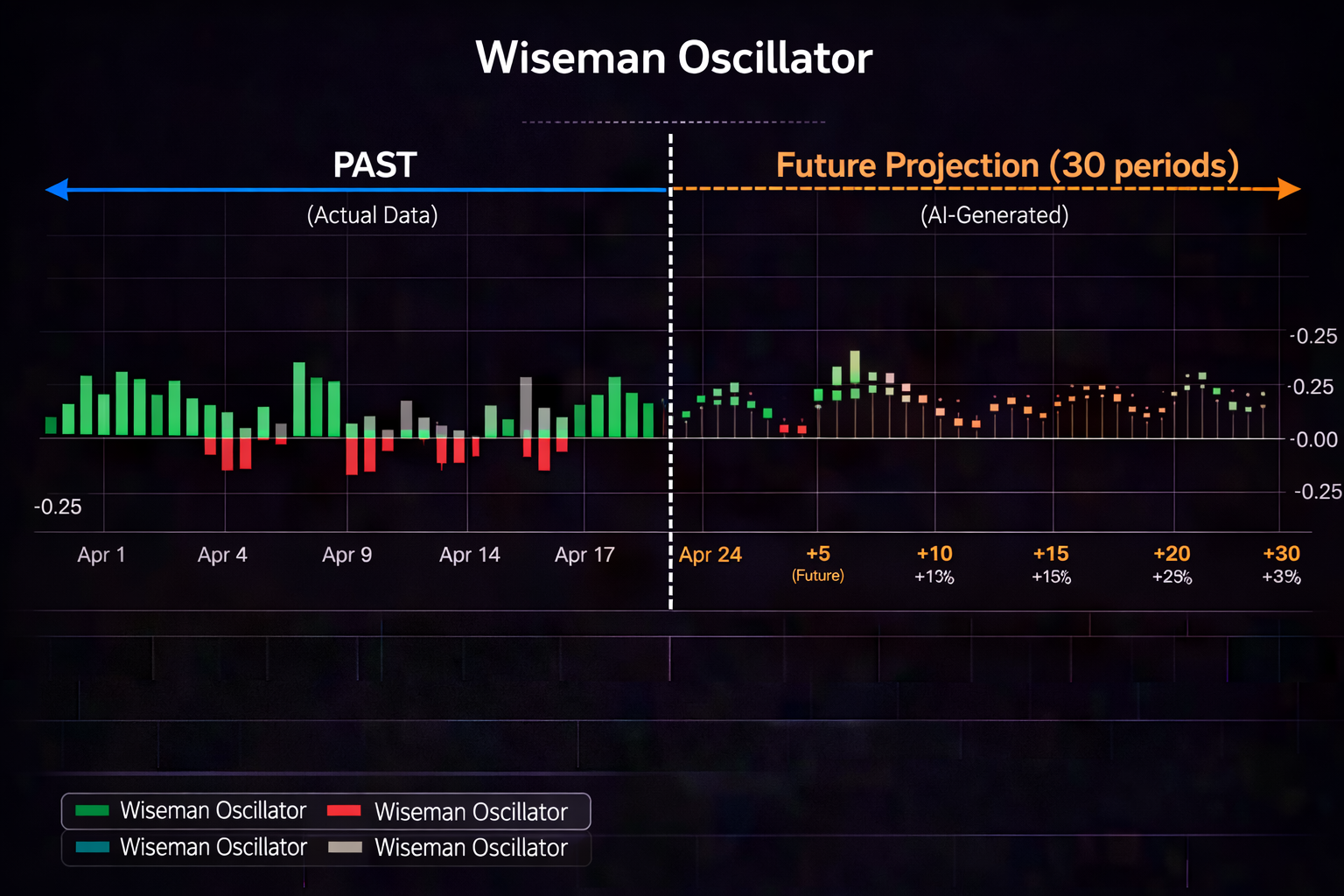
- 30-bar forward forecasts — MACD, RSI, Stochastic, ATR, and more are projected ahead so you see potential crossovers and reversals before they form
- Platform sync — Start analysis on desktop, get alerts on phone, execute on tablet. Everything syncs instantly via cloud
- Mobile-optimized alerts — Not just "RSI crossed 70." You get "RSI predicted to reverse within 5 bars — consider taking profits"
- Native iOS and Android builds — Not web wrappers. These are actual native apps with proper gesture support, haptic feedback, and widget integration
Best for: Swing traders and day traders who want forward-looking signals instead of lagging confirmations. Works on iPhone, iPad, Android phones, Android tablets, Mac, Windows, and web — so you're never tied to one device.
Limitations: Requires a subscription after free trial. Not a broker — you'll need a separate brokerage app for execution (though alerts include quick links to open your broker).
Try PredictIndicators.ai Free
See 30 bars ahead on your indicators — on iPhone, Android, or any device. No credit card required for trial.
2. Leading Charting Platforms (iOS + Android) — Best for Technical Analysis
Popular charting platforms have polished mobile apps. Charts render smoothly, social feeds are accessible, and alert systems work reliably. But they're not "AI apps" — they're charting platforms with some community-built scripts that claim AI capabilities.
Strengths: Best-in-class charting, massive indicator library, active community, reliable alerts, works offline with cached data.
Weaknesses: No native AI predictions (you're dependent on community scripts), premium features locked behind paid tiers, can be overwhelming for beginners.
Best for: Traders who want powerful charting on mobile and don't need built-in AI forecasts. Pairs well with PredictIndicators.ai for the predictive layer.
3. Thinkorswim (iOS + Android) — Best Broker-Integrated App
Charles Schwab's thinkorswim app is a full trading platform in your pocket. Charts, options chains, futures, forex — it's all there. The "AI" features are limited to some pattern recognition and probability analysis, but the execution speed is excellent.
Strengths: Full brokerage integration, professional-grade tools, excellent options trading, paperMoney for practice.
Weaknesses: Steep learning curve, no true AI predictions, interface can feel cramped on smaller phones.
Best for: Active traders who want execution and analysis in one app and don't need predictive AI.
4. Webull (iOS + Android) — Best for Beginners
Webull's app is clean, intuitive, and includes some basic technical analysis tools. The "AI" features are mostly marketing — there's some sentiment analysis and news aggregation, but no real predictive modeling.
Strengths: Free trades, clean interface, good educational content, crypto support.
Weaknesses: Limited advanced tools, no genuine AI predictions, customer service can be slow.
Best for: New traders learning the ropes who want a simple, commission-free platform.
5. MetaTrader 5 (iOS + Android) — Best for Forex/CFD Traders
MT5 is the standard for forex and CFD trading. The mobile app is functional but dated. You can run Expert Advisors (EAs) that use AI/ML, but setup is complex and requires a desktop first.
Strengths: Industry standard for forex, supports automated trading, low spreads, wide broker support.
Weaknesses: Outdated interface, no native AI features, EA setup requires desktop, steep learning curve.
Best for: Forex traders who need MT5 compatibility and don't mind a clunkier mobile experience.
iPhone vs. Android: Does It Matter for Trading Apps?
Short answer: not as much as it used to. The top apps — including PredictIndicators.ai — are built natively for both platforms now. But there are still some differences worth noting.
| Feature | iPhone (iOS) | Android |
|---|---|---|
| App Quality | Generally more polished (Apple's stricter review process) | Varies by developer (more flexibility = more inconsistency) |
| Notifications | Reliable, consistent delivery | Can be delayed on some devices (manufacturer battery optimization) |
| Widgets | Home screen + Lock screen widgets | More customizable widgets, always-on display support |
| Biometric Login | Face ID + Touch ID (fast, reliable) | Fingerprint + Face unlock (varies by manufacturer) |
| Split-Screen | iPad only (not iPhone) | Available on most phones + tablets |
| App Store | App Store only (curated) | Google Play + sideloading (more options, more risk) |
My take: iPhone wins on consistency and notification reliability. Android wins on customization and split-screen multitasking. But for PredictIndicators.ai specifically, both platforms get the same core features — forecasts, alerts, and cloud sync work identically.
What to Look for When Choosing an AI Trading App
Not all "AI" is created equal. Here's how to separate genuine predictive tools from marketing buzzwords.
Red Flags (Run Away)
- "AI-powered" with no explanation — If they can't explain what the AI actually does, it's probably just a moving average with a fancy name.
- Guaranteed accuracy claims — No AI predicts markets with 90%+ accuracy. Anyone claiming otherwise is lying.
- No free trial — Legitimate tools let you test before you commit. If they demand payment upfront, be skeptical.
- Desktop-only AI — If the "AI features" only work on desktop and your phone just shows basic charts, it's not a real mobile AI app.
Green Flags (Worth Testing)
- Clear methodology — They explain how their models work (even at a high level) without making unrealistic claims.
- Forward-looking signals — The app shows you what might happen, not just what already happened.
- Cross-platform sync — Your settings, alerts, and watchlists follow you across devices.
- Transparent pricing — No hidden fees, clear trial terms, easy cancellation.
- Active development — Regular updates, responsive support, feature requests actually get implemented.
How I Use PredictIndicators.ai on Mobile (Real Workflow)
Here's my actual daily setup — not theoretical, this is what I do:
Morning (7:00 AM ET): Coffee, iPhone in hand. I open PredictIndicators.ai and check the overnight forecasts. The app shows me which of my watchlist stocks are predicted to have MACD crossovers or RSI reversals in the first hour of trading. I set alerts for the 3-4 setups I want to watch.
Market Open (9:30 AM ET): I'm not always at my desk. Sometimes I'm dropping kids at school. When a predicted signal fires, my iPhone buzzes with a specific alert: "AAPL — MACD predicted to cross bullish within 3 bars." I tap the notification, see the chart with the forecast overlay, and decide if I want to execute.
Midday Check (12:00 PM ET): Lunch break. I pull out my phone and review how my positions are tracking against the predictions. If the AI forecast was wrong (it happens — no tool is perfect), I adjust or exit. If it's playing out as predicted, I hold or add.
Afternoon (3:00 PM ET): Power hour approaching. I check for any end-of-day reversal predictions. Sometimes the best setups happen in the last 30 minutes — PredictIndicators.ai flags these so I'm not caught off guard.
Evening (8:00 PM ET): Post-market analysis on my iPad or Mac. I review the day's predictions vs. actual outcomes, tweak my watchlist, and set overnight alerts for Asian/European session movers.
The key: my phone isn't trying to be my desktop. It's my connection to my trades. I do deep analysis on bigger screens. But when a setup forms, I know immediately — wherever I am.
See How Mobile-First AI Trading Works
PredictIndicators.ai is built for the way you actually trade — on multiple devices, throughout your day, without being chained to a desk.
→ Start your free trial — works on iPhone, Android, Mac, Windows, and web
Common Mobile Trading Mistakes (And How to Avoid Them)
I've made these. Don't repeat them.
Mistake #1: Trying to Day Trade Complex Setups on a Phone
Your phone is great for monitoring and executing. It's not great for complex multi-chart analysis. If your strategy requires watching 8 charts simultaneously, use a desktop or tablet. Use your phone for alerts and execution, not for the full analysis.
Mistake #2: Ignoring Battery and Data
All-day trading kills batteries. Keep a portable charger handy. And if you're on cellular, make sure you have enough data — streaming charts all day adds up. I keep a WiFi-only rule for heavy chart sessions and use cellular only for alerts and quick checks.
Mistake #3: Not Testing Alerts Before Real Money
Every app's alert system is different. Before you rely on it for real trades, test it for a week. Do alerts arrive on time? Are they actionable? Do they wake you up when markets move overnight? Find out before you're depending on them.
Mistake #4: Using Public WiFi for Trading
Coffee shop WiFi is not secure. If you're executing trades or logging into brokerage accounts, use cellular data or a VPN. PredictIndicators.ai uses encryption, but your broker app might not be as careful.
The Bottom Line: Mobile AI Trading Is Here — But Choose Wisely
You don't need to be at your desk to trade seriously in 2026. The best AI trading apps for iPhone and Android give you genuine predictive insights, instant alerts, and the ability to act on opportunities no matter where you are.
But not all apps are created equal. The ones that work — like PredictIndicators.ai — are built mobile-first, with native apps that leverage your device's strengths instead of fighting against them.
My advice: test a few. Most have free trials. See which one fits your workflow. And remember: the best app is the one you'll actually use consistently, not the one with the most features you'll never touch.
For me, that's PredictIndicators.ai. It's the only tool that shows me where my indicators are going, not just where they've been — on every device I own, with alerts that actually wake me up when setups form.
But don't take my word for it. Try it yourself.
Ready to Trade with AI on Your Phone?
PredictIndicators.ai works on iPhone, Android, iPad, Android tablets, Mac, Windows, and web. One account, all your devices, synced instantly.