Algorithmic Trading Education for Retail Traders in 2026: Bridging Manual and Systematic Approaches
Algorithmic trading has long been perceived as institutional territory—quant funds, high-frequency traders, and hedge funds with massive computational resources. But 2026 has changed that landscape dramatically. Retail traders now access algorithmic concepts, systematic frameworks, and AI-powered forecasting tools that were unavailable even five years ago.
If you've been searching for "algorithmic trading education" or "algo trading for retail traders," you've encountered a marketplace split between two extremes: oversimplified "set-and-forget" bots that promise passive income, and overly complex quantitative curricula that assume PhD-level mathematics. The reality lies between these poles.
In this comprehensive guide, we'll explore what algorithmic trading education actually means for retail traders in 2026, how to integrate systematic thinking without abandoning discretionary judgment, and why tools like PredictIndicators.ai are redefining how retail traders approach algorithmic concepts across NinjaTrader 8, MetaTrader 5, iPhone, iPad, Android devices, Mac apps, and web browsers.
Demystifying Algorithmic Trading for Retail Traders
The term "algorithmic trading" triggers assumptions that often don't serve retail traders: fully automated execution, complex coding requirements, institutional-grade infrastructure. These assumptions create unnecessary barriers.
What Algorithmic Trading Really Means
At its core, algorithmic trading is simply rule-based decision-making. An algorithm is a sequence of instructions that produces an output. In trading, that means: "When condition X occurs, I do Y." That's it. No PhD required.
Your existing trading probably already uses algorithmic thinking. "When price breaks above resistance with expanding volume, I enter long." That's an algorithm. "When RSI crosses above 70, I look for reversals." That's an algorithm. "When my stop-loss is hit, I exit." That's an algorithm.
The question isn't whether you use algorithms—you do. The question is whether you use them explicitly and systematically.
Institutional vs. Retail Algorithmic Trading
Institutional algo trading emphasizes:
Execution speed (microsecond advantages)
Order routing optimization
Market impact minimization
Statistical arbitrage
High-frequency strategies
Retail algo trading emphasizes:
Strategy clarity (knowing your rules)
Risk management consistency
Pattern recognition enhancement
Decision automation (partial or full)
Backtesting and optimization
Retail traders don't compete on speed. They compete on clarity, consistency, and risk management. Algorithmic education for retail traders should reflect this reality.
Levels of Algorithmic Integration for Retail Traders
Not all retail traders want the same level of algorithmic involvement. Education should accommodate different comfort levels:
Level 1: Algorithmic Thinking (No Coding)
This level focuses on explicit rule definition without automation. You articulate your entry criteria, exit criteria, position sizing rules, and risk parameters clearly. You trade manually, but your decisions follow defined algorithms.
Example algorithm (traded manually):
Entry: Price closes above 20-period high with MACD bullish crossover
Stop: 2 ATR below entry candle low
Target: 3R (three times risk)
Position size: 2% account risk per trade
This is algorithmic trading without coding. You've defined rules explicitly. You execute them manually. The algorithm guides; you pull the trigger.
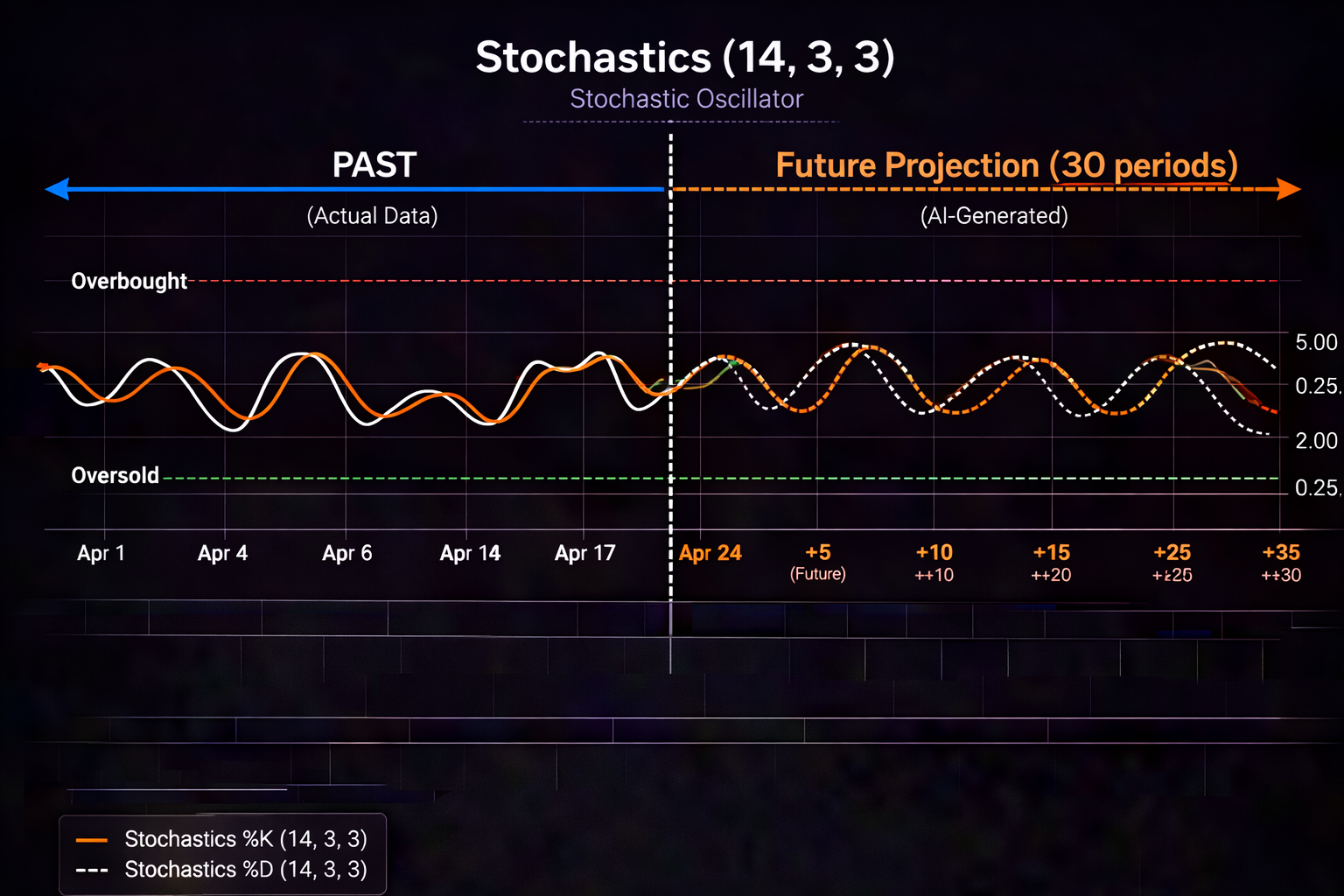
PredictIndicators.ai supports this level by providing forward-looking indicator projections. Your algorithm might include: "If 30-bar projection shows overbought Stochastics approaching, reduce position size to 1%." The AI forecast becomes an algorithm input.
Level 2: Semi-Automated Scanning
This level uses tools to scan for setups matching your algorithmic criteria. You still execute manually, but the scanning is automated.
Platforms like NinjaTrader 8 and MT5 support custom scanners that alert when conditions match your rules. You define the algorithm; software monitors markets; you review alerts and decide whether to trade.
This level reduces screen time while preserving discretionary execution. It suits traders who want systematic opportunity identification but manual decision confirmation.
Level 3: Partial Automation
This level automates some decisions while retaining others manually. Common partial automation scenarios:
Automated entries, manual exits
Automated stop placement, manual profit-taking
Automated position sizing, manual entry timing
Automated scanning and entries, manual override available
Partial automation acknowledges that some decisions benefit from automation (consistency, speed) while others benefit from human judgment (context awareness, news events, regime changes).
PredictIndicators.ai's cross-platform availability—NinjaTrader 8, MT5, iPhone, iPad, Android, Mac, web—means your semi-automated algorithms work consistently across environments. Your scanning logic doesn't reset when you switch devices.
Level 4: Full Automation
This level executes trades automatically based on algorithmic rules. Human intervention is minimal or absent during trading sessions.
Full automation requires:
Thoroughly backtested strategies
Clear risk parameters (maximum drawdown, position limits)
Infrastructure reliability (platform stability, internet connectivity)
Monitoring protocols (checking in on automated systems)
Emergency override procedures (knowing when to intervene)
Full automation suits traders who've validated strategies extensively and prefer systematic execution over discretionary decisions. It's not "set and forget"—it's "set and monitor."
Core Concepts in Retail Algorithmic Trading Education
Effective algorithmic education for retail traders covers these fundamentals:
Strategy Specification
Before automating anything, specify your strategy explicitly:
Entry conditions (exact criteria, not vague descriptions)
Position sizing (fixed fractional, volatility-adjusted, etc.)
FILTERS (what disqualifies setups?)
Market context (which sessions, which instruments, which regimes?)
Vagueness kills algorithmic trading. "Enter on pullbacks" isn't algorithmic. "Enter when price retraces 38.2% of prior swing with bullish candlestick confirmation" is algorithmic.
PredictIndicators.ai adds forecasting to this specification. Your entry algorithm might include: "Enter when setup forms AND 30-bar projection shows favorable indicator conditions." This adds forward-looking context to your rules.
Backtesting Fundamentals
Backtesting validates whether your algorithm worked historically. Key principles:
Use sufficient data (minimum 100 trades, ideally 500+)
Account for transaction costs (slippage, commissions)
Avoid look-ahead bias (using future data in past decisions)
Test across market regimes (trending, ranging, volatile, quiet)
Measure risk-adjusted returns (Sharpe, Sortino, max drawdown)
Backtesting platforms integrate with NinjaTrader 8, MT5, and other retail environments. Run your algorithm through historical data. See how it performed. Adjust parameters. Retest.
Important: Backtesting proves nothing about future performance. It proves only that your algorithm is internally consistent and historically viable. Forward uncertainty remains.
Overfitting Awareness
Overfitting occurs when you optimize parameters so precisely to historical data that they fail in live trading. Warning signs:
Perfect backtest results (90%+ win rates, no drawdowns)
Excessively complex rules (10+ conditions for entry)
Parameter sensitivity (tiny changes cause huge result swings)
Curve-fitting (optimizing to specific historical periods)
Testing out-of-sample data (periods not used in optimization)
Using walk-forward analysis (rolling optimization and testing)
Accepting imperfect results (50-60% win rates with good R-multiples)
Retail traders often overfit from excitement ("I found a winning formula!"). Discipline accepts that robust algorithms underperform optimized ones in backtests but outperform them live.
Risk Management Automation
Algorithmic risk management ensures consistency regardless of emotional state:
Maximum position size per trade (e.g., 2% account risk)
Maximum daily loss limit (stop trading after X% drawdown)
Maximum correlation exposure (limit similar directional bets)
Volatility adjustment (reduce size when ATR expands)
Time-based exits (close all positions before major news)
Automating risk management removes emotional interference from the most critical trading decisions. Your algorithm enforces discipline even when you feel tempted to "make it back."
PredictIndicators.ai supports risk automation by projecting volatility conditions ahead. Your algorithm might include: "If 30-bar ATR projection shows expansion, reduce position size by 50%." This adjusts risk proactively, not reactively.
Integrating AI Forecasting into Algorithmic Frameworks
AI forecasting tools like PredictIndicators.ai add forward-looking dimensions to algorithmic trading. Here's how integration works:
Forecasting as Filter
Use AI projections to filter setups rather than trigger them:
Algorithm: "Enter long when price breaks above 20-period high with bullish MACD crossover."
Filter: "Only enter if 30-bar Stochastic projection doesn't show extreme overbought conditions."
This filter reduces entries when momentum exhaustion is likely ahead. You're still trading the breakout, but you're avoiding setups prone to immediate reversals.
Forecasting as Position Sizing Input
Adjust position size based on forward-looking volatility projections:
Algorithm: "Risk 2% per trade under normal conditions."
This adjustment respects upcoming volatility without avoiding trades entirely. You participate, but with reduced exposure when conditions suggest higher uncertainty.
Forecasting as Exit Timing Signal
Use projections to anticipate exit zones:
Algorithm: "Trail stop to breakeven after 1R profit."
Enhancement: "If 30-bar projection shows potential reversal patterns forming, consider taking partial profits at 2R instead of waiting for full target."
This enhancement doesn't abandon your exit rules—it adds contextual awareness that might improve outcomes.
Forecasting as Regime Indicator
Use projections to identify developing market regimes:
If PredictIndicators.ai consistently shows expanding ATR projections across multiple bars, volatility regime may be shifting. Your algorithm might adapt: "In expanding ATR regimes, widen stops by 20% and reduce position size by 25%."
This regime awareness helps your algorithm adjust to changing conditions rather than applying static rules to dynamic markets.
Platform Considerations for Retail Algorithmic Trading
Algorithmic trading requires platform infrastructure that supports your implementation level:
NinjaScript for custom strategy development (C#-based)
Strategy Builder for no-code algorithm creation
Integrated backtesting and optimization
Automated execution with risk controls
Market replay for forward testing
PredictIndicators.ai's NinjaTrader 8 plugin delivers AI forecasting within this infrastructure. Your algorithms can incorporate 30-bar projections as inputs without external data feeds.
MetaTrader 5
MT5 provides algorithmic trading via MQL5:
MQL5 programming language (C++-based)
Expert Advisors (EAs) for full automation
Custom indicators for signal generation
Strategy tester for backtesting
Signal marketplace for sharing algorithms
MT5's global reach makes it popular for forex and CFD algorithmic trading. PredictIndicators.ai's MT5 integration brings AI forecasting to this international retail algo community.
Mobile Platforms (iPhone, iPad, Android)
Mobile algorithmic trading typically emphasizes semi-automation:
Alert-based scanning (notify when conditions match)
Full automation on mobile is less common due to connectivity reliability and screen-time constraints. PredictIndicators.ai's mobile availability ensures your forecasting-informed algorithms work whether you're at your desk or on the go.
Mac Platforms
Mac trading software has matured significantly:
Native macOS trading applications
Cross-platform algorithm portability
Cloud-based backtesting infrastructure
API access for custom integrations
PredictIndicators.ai on Mac delivers consistent AI forecasting alongside these algorithmic tools. Your algorithms don't lose forecasting inputs when switching from Windows to macOS.
Web platforms suit traders who value accessibility over native performance. PredictIndicators.ai's web presence ensures algorithmic forecasting works regardless of device constraints.
Common Mistakes in Retail Algorithmic Trading
Algorithmic education must address recurring pitfalls:
Over-Optimization
Tweaking parameters until backtests look perfect produces fragile algorithms. Live trading reveals the fragility immediately.
Solution: Accept "good enough" backtest results. Focus on robustness over optimization. Test out-of-sample. Use walk-forward analysis.
Neglecting Transaction Costs
Backtests that ignore slippage and commissions overstate profitability. Real trading includes these costs.
Solution: Model conservative slippage (1-2 ticks minimum). Include commission schedules. Test with realistic cost assumptions.
Strategy Hopping
Abandoning algorithms after brief drawdowns prevents learning whether they actually work. All strategies experience losing periods.
Solution: Define minimum trial period (e.g., 100 live trades). Track performance objectively. Distinguish normal variance from strategy failure.
Ignoring Market Regime Changes
Algorithms optimized for trending markets fail in ranging conditions. Regime awareness matters.
Solution: Build regime filters into algorithms. Reduce exposure when conditions don't match strategy strengths. Monitor regime shifts proactively.
Automation Without Monitoring
"Set and forget" mentalities ignore that algorithms need oversight. Technical failures, broker issues, and regime changes require intervention.
Write your current trading rules explicitly. Transform vague guidelines ("I enter on strength") into specific algorithms ("I enter when price closes above prior day high with RSI above 60").
This phase requires no coding. It requires clarity. Most traders discover their rules are vaguer than they realized.
Month 3-4: Manual Backtesting
Test your explicit rules against historical charts. Mark where setups would have triggered. Track hypothetical outcomes. Calculate win rate, average R-multiple, maximum drawdown.
Manual backtesting builds intuition about strategy behavior before automating. You see setups contextually, not just statistically.
Month 5-6: Platform Backtesting
Use NinjaTrader 8, MT5, or other platform backtesting engines. Code your algorithm (or use strategy builders). Run formal backtests with transaction costs modeled.
Compare platform results to manual backtests. Discrepancies reveal biases or errors. Reconcile them before proceeding.
Month 7-8: Forward Testing
Run your algorithm in real-time without live execution. Use paper trading or market replay. Track signals and hypothetical outcomes.
Forward testing reveals whether backtest performance translates to live conditions. Expect degradation—backtests are cleaner than reality.
Month 9-12: Partial Automation
Automate one component: scanning, entries, or risk management. Keep other components manual. Monitor automated component reliability.
Partial automation builds confidence while preserving discretion. You learn automation gradually, not abruptly.
The Role of AI in Retail Algorithmic Trading
AI forecasting doesn't replace algorithmic trading—it enhances it:
Information Enhancement
Algorithms need quality inputs. AI forecasting provides forward-looking indicator data that traditional technical analysis can't access. This expands your algorithm's informational foundation.
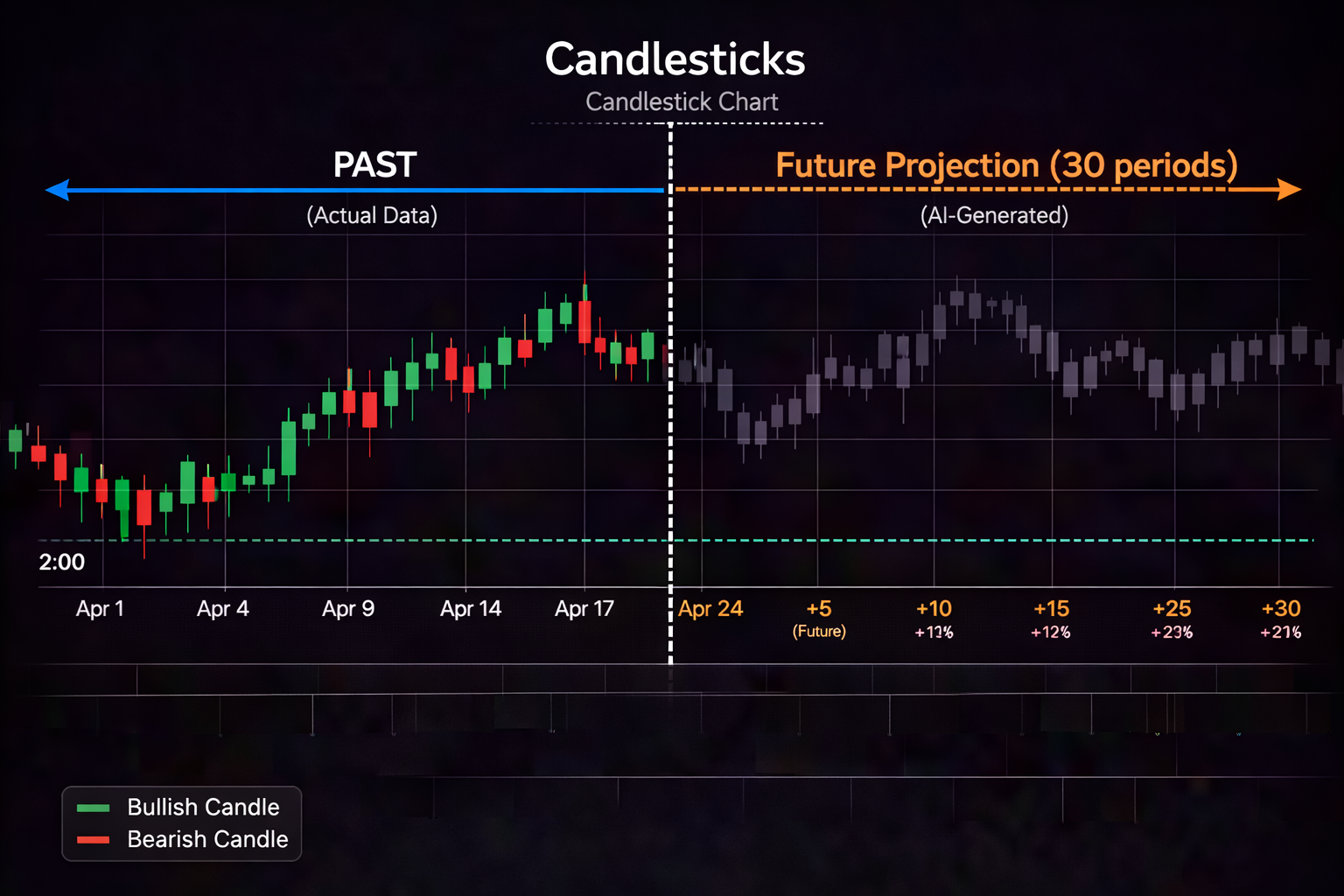
PredictIndicators.ai projects MACD, Stochastics, ATR, Donchian channels, and candlestick patterns 30 bars ahead. Your algorithms can incorporate these projections as decision inputs.
Regime Detection
AI pattern recognition can identify developing regime shifts before they're obvious in price action. Your algorithms can adapt proactively rather than reactively.
Example: If PredictIndicators.ai shows consistent volatility expansion projections, your algorithm might shift to "high volatility regime" parameters (wider stops, smaller sizes, longer targets).
Risk Calibration
AI forecasting helps algorithms calibrate risk to upcoming conditions. Rather than static risk parameters, your algorithms adjust position sizing, stop placement, and exposure based on forward-looking volatility and indicator projections.
This calibration reduces drawdowns during unfavorable periods and capitalizes on favorable periods. Risk becomes dynamic, not fixed.
Final Thoughts: Algorithmic Trading as Retail Empowerment
Algorithmic trading education for retail traders in 2026 isn't about competing with institutions on speed or complexity. It's about bringing systematic clarity to discretionary trading, leveraging technology for consistency, and integrating forward-looking insights into rule-based frameworks.
PredictIndicators.ai exemplifies this integration across all retail platforms—NinjaTrader 8, MT5, iPhone, iPad, Android, Mac, and web. AI forecasting becomes an algorithm input, not an algorithm replacement. You remain the strategist; AI remains the information provider.
The retail trading future isn't human versus machine. It's human intelligence augmented by computational insight, systematic frameworks enhanced by forward-looking data, and discretionary judgment informed by algorithmic consistency.
That synthesis—where retail traders wield systematic rigor alongside human adaptability, enhanced by AI forecasting—is where modern algorithmic education leads. And that's where sustainable retail trading careers begin.