AI Learning Platforms for Traders in 2026: Separating Hype from Reality
Artificial intelligence has permeated every corner of trading education. Platforms promise machine learning mastery, neural network insights, and algorithmic advantages. But most retail traders end up confused about what AI actually means for their trading—and more importantly, what it doesn't mean.
If you've been searching for "AI learning platforms for traders" or "machine learning trading education," you've encountered a marketplace flooded with buzzwords and vague promises. The reality is simpler: AI in trading isn't about replacing human judgment with algorithms. It's about giving traders better information to work with while preserving their decision-making autonomy.
In this comprehensive guide, we'll examine what AI learning platforms actually deliver in 2026, how retail traders can benefit without becoming dependent on black-box systems, and why tools like PredictIndicators.ai are redefining how traders integrate machine learning into their existing workflows across NinjaTrader 8, MetaTrader 5, iPhone, iPad, Android devices, Mac apps, and web browsers.
The AI Learning Landscape: What's Real vs. What's Marketing
The trading education industry has discovered that "AI" sells. Every platform now claims artificial intelligence capabilities, but the implementations vary wildly in transparency and utility.
Genuine AI Applications in Trading
Real AI learning platforms for traders share three characteristics:
Transparent Functionality: You understand what the AI does and how it reaches conclusions. There's no "secret sauce" or proprietary black box. The system shows its reasoning, or at minimum, shows you what data it's processing and what output it generates.
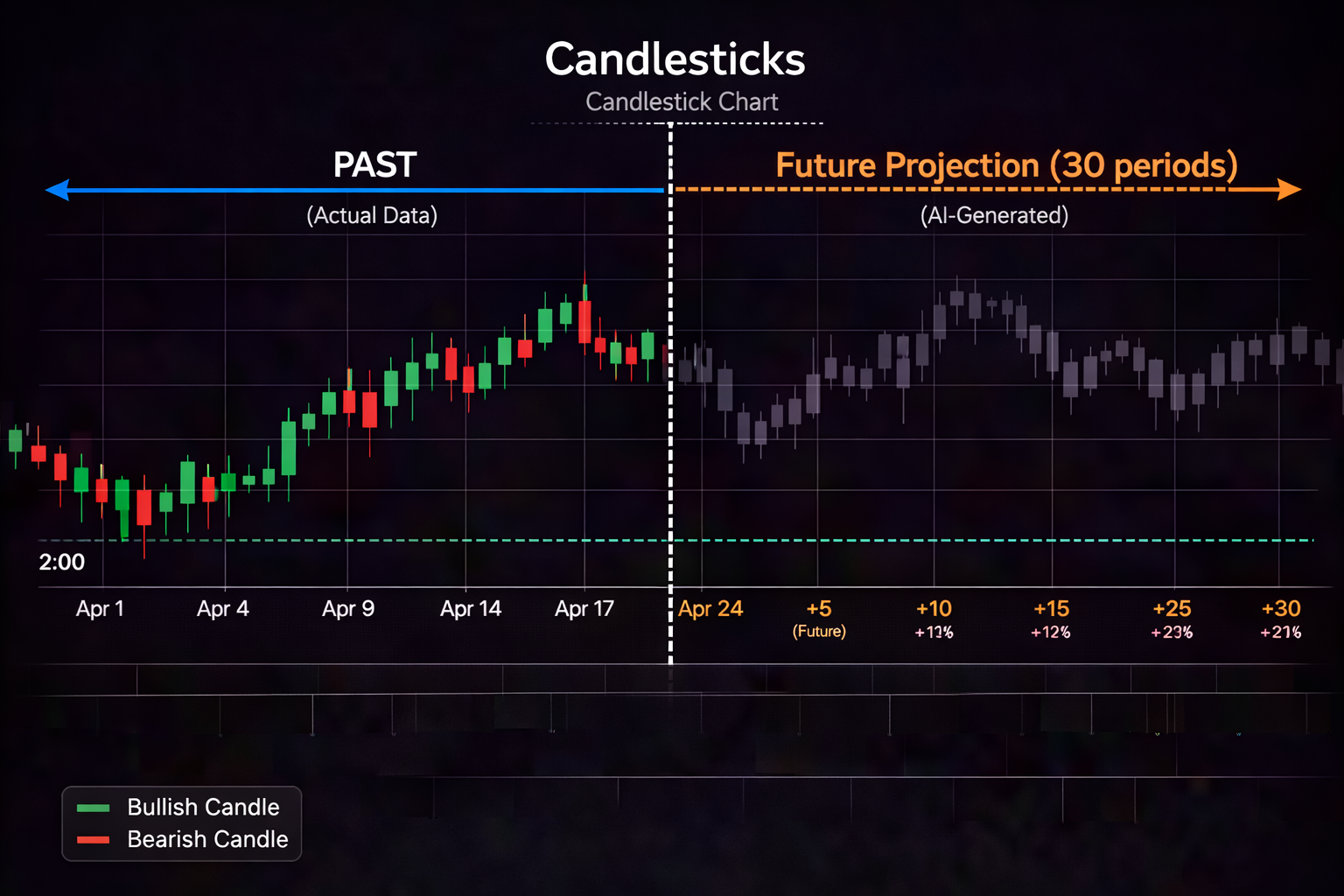
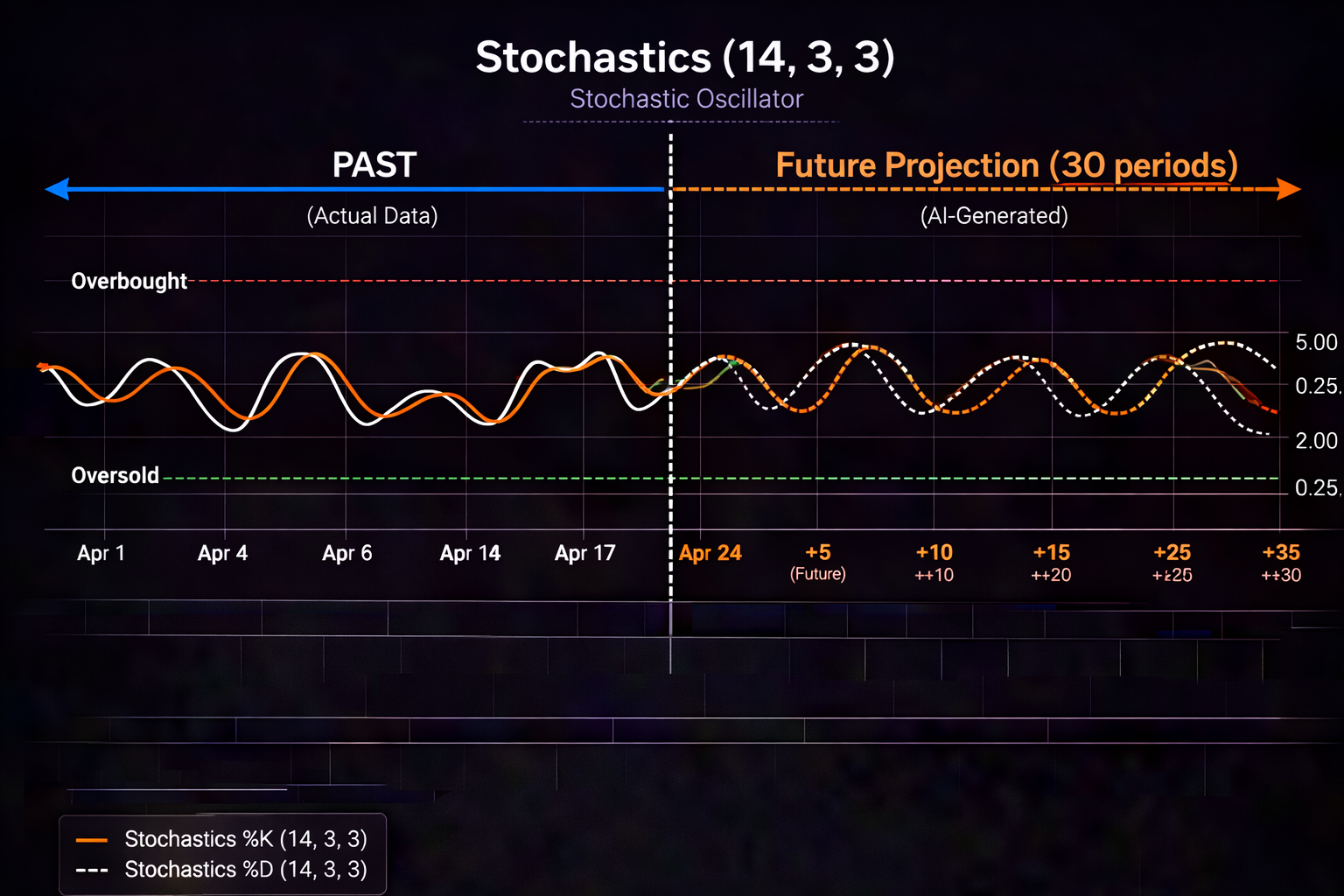
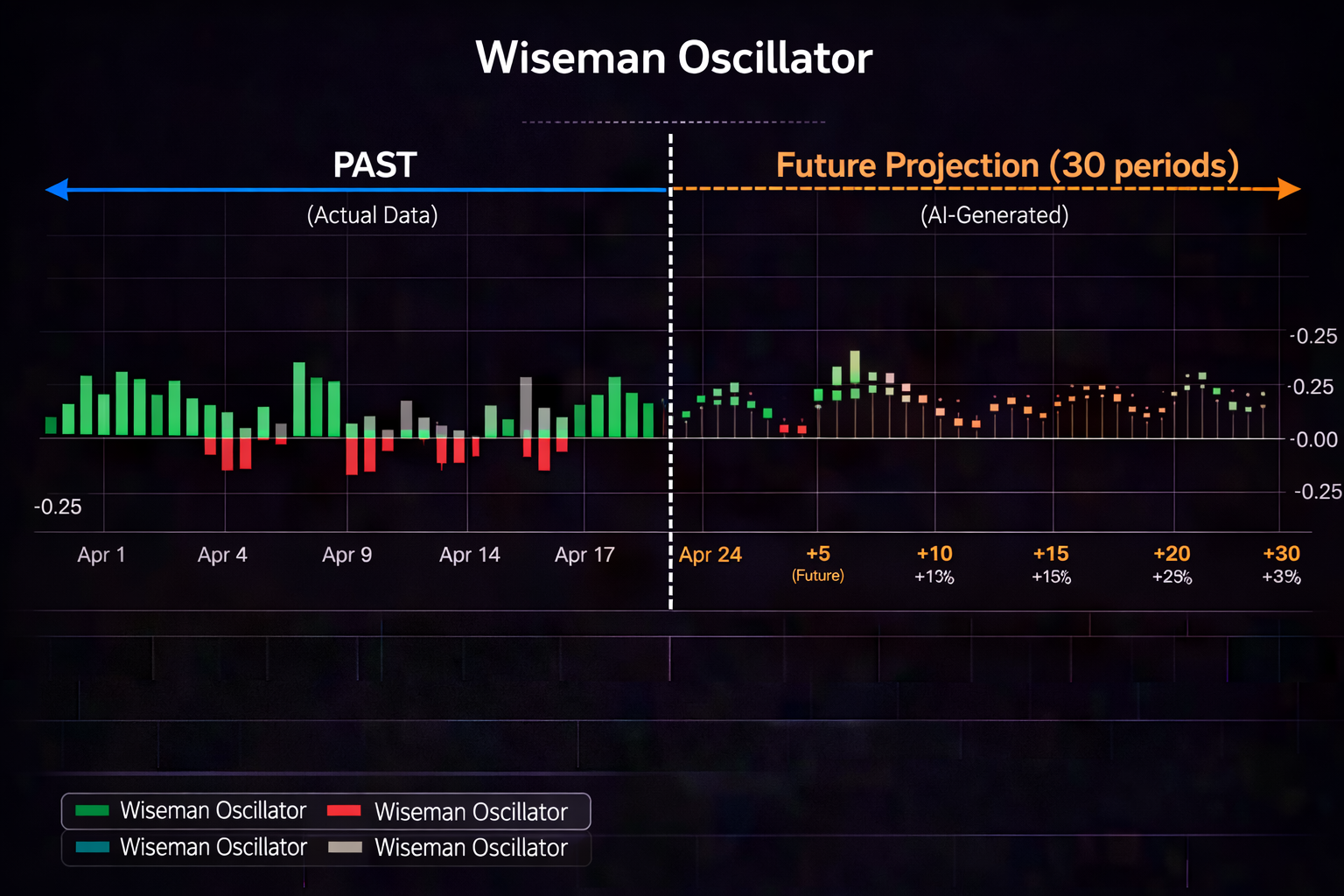
PredictIndicators.ai exemplifies this transparency. It projects indicator values (MACD, Stochastics, ATR, Donchian channels, Wiseman patterns, candlestick formations) 30 bars ahead. You see the projections. You understand the timeframe. You know exactly what information you're receiving and what it represents.
Human-in-the-Loop Design: AI serves human decision-making; it doesn't replace it. The platform presents information that you integrate into your own analysis. You remain the trader; the AI remains the tool.
This design philosophy matters profoundly for retail traders. When AI makes decisions for you, you don't learn—you obey. When AI provides information for you to evaluate, you develop judgment alongside computational insight. The latter produces traders who improve over time. The former produces traders who panic when the algorithm stops working.
Cross-Platform Accessibility: Real trading happens across devices and environments. AI tools that only work in one platform create artificial limitations. Quality AI education prepares you to use machine learning insights wherever you trade.
PredictIndicators.ai demonstrates this standard by operating across NinjaTrader 8, MT5, iPhone, iPad, Android phones and tablets, Mac applications, and web browsers. Your AI-enhanced analysis doesn't reset when you switch devices. The forecasting logic remains consistent everywhere.
AI Marketing vs. AI Reality
Most platforms trading on AI buzzwords deliver one of these: basic statistical analysis rebranded as "machine learning," simple pattern recognition labeled "neural networks," or automated signal services disguised as "AI trading systems."
Red flags include:
Vague explanations of how the AI works ("proprietary algorithms")
Accuracy percentage claims (real AI acknowledges uncertainty)
Profit guarantees (markets are probabilistic, not deterministic)
Signal-based outputs without context (you don't learn, you follow)
Genuine AI learning platforms teach you to think with AI, not to follow AI. They make you more informed, not more dependent.
Categories of AI Learning Platforms for Traders
Not all AI education serves the same purpose. Understanding the categories helps you choose platforms that match your learning goals.
Forecasting Tools
These platforms project future market conditions based on historical patterns. They don't tell you what to trade—they show you where indicators might go, helping you anticipate potential scenarios.
PredictIndicators.ai operates in this category. It uses machine learning to forecast indicator values 30 bars ahead. You still decide entries, exits, and position sizing. The AI provides forward-looking context; you provide trading judgment.
This category suits traders who want enhanced information without surrendering autonomy. You're learning to interpret AI projections alongside your existing analysis, not replacing your analysis with AI outputs.
Pattern Recognition Systems
These tools identify chart formations, candlestick patterns, or indicator setups automatically. They can accelerate pattern recognition learning by highlighting formations you might miss.
The educational value depends on implementation. Some systems simply label patterns (bullish engulfing, head and shoulders, etc.), which helps beginners learn identification. Others score pattern reliability or show historical outcomes, which deepens understanding.
The risk: over-reliance on automated recognition can atrophy your natural pattern-reading skills. Use these tools as training aids, not permanent crutches.
Backtesting and Optimization Platforms
AI-powered backtesting tools use machine learning to optimize strategy parameters, identify regime changes, or detect overfitting. They help you understand which strategies work in which conditions.
These platforms teach statistical thinking and strategy evaluation—critical skills for systematic traders. However, they serve strategy development more than real-time trading. They're educational laboratories, not live trading assistants.
Behavioral Analysis Tools
Emerging AI platforms analyze your trading behavior to identify biases, emotional patterns, and decision inconsistencies. They use machine learning to spot tendencies like revenge trading, overtrading, or loss aversion.
These tools address the psychological dimension of trading—the area where most traders fail despite technical competence. By surfacing behavioral patterns objectively, AI helps you develop self-awareness that pure journaling can't achieve.
How PredictIndicators.ai Fits the AI Learning Framework
Understanding where PredictIndicators.ai positions itself clarifies what you're learning and what you're not:
What It Teaches
Forward-Looking Analysis: Traditional technical analysis reads current conditions. PredictIndicators.ai teaches you to think 30 bars ahead. This temporal expansion changes how you evaluate setups. You're not just asking "Is this a good entry?" You're asking "Where will this setup be in 30 bars?"
This shift produces more patient traders. When you see projected indicator conditions ahead, you're less likely to chase immediate entries. You wait for confluence between current price action and future projections. This patience reduces impulsive trading.
Multi-Platform Fluency: Because PredictIndicators.ai operates across NinjaTrader 8, MT5, iPhone, iPad, Android, Mac, and web platforms, you learn to apply AI forecasting consistently regardless of your trading environment. This portability means your education compounds—it doesn't fragment when you switch devices.
Real trading isn't platform-loyal. You'll check positions from your iPhone during commutes. You'll analyze charts on your Mac at home. You'll execute trades on NinjaTrader at your workstation. AI education should flow across all these contexts.
Indicator Literacy: Forecasting MACD, Stochastics, ATR, Donchian channels, and candlestick patterns requires understanding what these indicators mean. PredictIndicators.ai's projections make you more attentive to indicator behavior. You notice divergences more readily. You recognize extremes more quickly. You understand indicator calculations more deeply because you're seeing their projected trajectories.
What It Doesn't Teach
Entry Timing: PredictIndicators.ai doesn't tell you when to enter trades. That decision remains yours, based on your strategy, risk tolerance, and market assessment. The AI shows where indicators might go; you decide whether to act on that information.
This distinction separates education from automation. You're learning to integrate forecasting into your decision process, not to follow signals blindly.
Profit Outcomes: The platform never quotes accuracy percentages or profit projections. Markets are probabilistic. AI forecasting deals in likelihoods, not certainties. Education that acknowledges this reality produces traders who manage risk appropriately.
Strategy Selection: PredictIndicators.ai doesn't tell you which strategies to trade. It works with your existing indicators and approaches. Whether you're a trend follower, mean reversion trader, or breakout specialist, the forecasting enhances your current methodology without dictating it.
Building AI Literacy as a Trader
Integrating AI into your trading education requires deliberate progression. Here's a framework:
Phase 1: Understanding AI Capabilities
Before using any AI tool, understand what it does and doesn't do. For PredictIndicators.ai, this means knowing:
It forecasts indicator values 30 bars ahead
It uses historical patterns to project future conditions
It doesn't predict news events or fundamental shocks
It works across multiple trading platforms
It provides information, not directives
This foundational understanding prevents magical thinking about AI. You know the tool's scope, which prevents disappointment when it doesn't deliver impossible promises.
Phase 2: Observational Learning
Before trading with AI forecasting, observe it passively. Watch how projections compare to actual outcomes. Notice when forecasts are accurate and when they diverge. Build intuition about the tool's reliability patterns.
This phase develops calibration. You're not just absorbing AI outputs—you're evaluating them critically. This critical stance prevents dependency. You're using AI as a reference point, not an oracle.
PredictIndicators.ai supports this learning mode by showing clear projections you can verify against subsequent price action. Over time, you develop a sense of when to weight forecasts heavily and when to treat them cautiously.
Phase 3: Integration into Analysis
Once you understand AI forecasting behavior, layer it into your existing analysis. Keep your chart reading, your indicator monitoring, your volume assessment. Add AI projections as another data point.
This integration preserves your developed skills while expanding your informational toolkit. You're not abandoning price action for AI—you're enriching price action reading with forward-looking context.
The cross-platform availability of PredictIndicators.ai reinforces this integration. Whether you're analyzing on NinjaTrader at your desk or checking forecasts from your iPhone on the go, you're layering the same insights onto your core analysis.
Phase 4: Decision Enhancement
Finally, use AI forecasting to inform decisions without dictating them. When PredictIndicators.ai projects overbought Stochastics 30 bars ahead, you might tighten stops or reduce position size. When it shows potential MACD crossovers approaching, you might prepare for momentum shifts.
The key: AI informs decisions; it doesn't make them. Your risk management, your entry timing, your trade selection—these remain under your control. The forecasting enhances your judgment; it doesn't replace it.
The Multi-Platform Reality of Modern Trading
Trading doesn't happen in one environment. Retail traders operate across devices, locations, and platforms. AI education must accommodate this reality.
Desktop Trading (NinjaTrader 8, MT5, Mac)
Primary analysis typically happens on desktop platforms. These environments offer full charting capabilities, multiple timeframes, and comprehensive indicator suites. AI forecasting tools should integrate seamlessly here.
PredictIndicators.ai operates natively on NinjaTrader 8 and MT5, the two most popular retail trading platforms. On Mac, it delivers the same forecasting logic through platform-specific implementations. Your AI-enhanced analysis works consistently across these desktop environments.
Mobile Trading (iPhone, iPad, Android)
Mobile trading isn't just for quick checks anymore. Traders execute positions from phones and tablets regularly—during commutes, at work, or when away from their primary workstation.
AI tools that only work on desktop create educational fragmentation. You learn one way at your desk and another way on your phone. This fragmentation slows skill development.
PredictIndicators.ai's availability on iPhone, iPad, and Android ensures your AI forecasting literacy transfers across all mobile contexts. You're learning one system that works everywhere, not multiple systems that work somewhere.
Web Trading (Any Browser)
Web-based trading platforms attract traders who value accessibility over native performance. Browser-based interfaces work on any device with internet connectivity.
AI forecasting should work here too. PredictIndicators.ai's web presence means your machine learning insights aren't device-dependent. You can forecast from a work laptop, a library computer, or a tablet—anywhere with browser access.
Red Flags in AI Trading Education
Not all AI platforms deliver genuine learning. Watch for these warning signs:
Black Box Claims
"Our proprietary AI uses secret algorithms" should send you running. Transparency matters. You should understand what data the AI processes, what it outputs, and how it reaches conclusions (at minimum at a conceptual level).
PredictIndicators.ai is transparent: it forecasts specific indicators 30 bars ahead using pattern recognition on historical data. You know what you're getting and what it represents.
Accuracy Percentage Claims
Any AI tool quoting specific accuracy percentages misunderstands markets. Trading is probabilistic. AI forecasting deals in likelihoods, not certainties. Quoting accuracy implies deterministic outcomes that don't exist.
Legitimate AI platforms acknowledge uncertainty. They present projections as information to evaluate, not facts to follow.
Platform Lock-In
AI tools that only work on one platform create artificial limitations. Your trading shouldn't stop when you step away from your primary workstation.
PredictIndicators.ai's cross-platform presence—NinjaTrader 8, MT5, iPhone, iPad, Android, Mac, web—ensures your AI education flows across all your trading environments.
Signal-Based Outputs
If AI only gives you "buy" or "sell" signals without context, you're not learning—you're following. Education produces understanding. Signals produce dependency.
Quality AI platforms provide information you integrate into your analysis. They don't replace your analysis with their outputs.
Measuring AI Learning Progress
How do you know if AI education is working? Look for these indicators:
Enhanced Pattern Recognition
AI forecasting should sharpen your natural pattern recognition. You notice indicator divergences more quickly. You recognize overbought/oversold conditions more readily. You anticipate momentum shifts more accurately.
This enhancement comes from seeing projected indicator conditions 30 bars ahead. Your brain starts connecting current setups to future outcomes. pattern recognition deepens through repeated exposure to forecast-actual comparisons.
Improved Risk Calibration
AI should make you more conservative, not more aggressive. When you see potential indicator extremes ahead, you respect risk more. You size positions appropriately. You place stops thoughtfully.
PredictIndicators.ai supports this by showing where volatility might expand, where reversals might occur, and where indicator conditions might become extreme. This foresight breeds respect for uncertainty.
Reduced Impulse Trading
Forward-looking information reduces FOMO and chasing. When you know potential setups are coming 30 bars ahead, you don't panic about missing current moves. You wait for confluence.
This patience distinguishes educated traders from reactive ones. AI forecasting gives you temporal perspective that calms emotional impulses.
Platform Consistency
Your AI-enhanced trading should feel consistent across devices. Whether you're on NinjaTrader, MT5, iPhone, iPad, Android, Mac, or web, you're applying the same forecasting principles. This consistency indicates genuine learning, not platform-specific habits.
The Future of AI in Trading Education
Several trends are shaping how AI will serve trader education going forward:
Explainable AI (XAI)
The field is moving toward AI that explains its reasoning. Instead of "black box" outputs, systems will show why they reached conclusions. This transparency accelerates learning by revealing the logic behind forecasts.
PredictIndicators.ai aligns with this trend by showing clear indicator projections you can verify. You see what's forecasted and compare it to what actually unfolds. This verification loop builds understanding.
Adaptive Learning Systems
AI education platforms increasingly personalize to individual traders. They recognize your trading style, your preferred timeframes, your risk tolerance, and tailor forecasting accordingly.
This personalization respects trading diversity. Swing traders need different forecasting than day traders. Forex traders face different patterns than equity traders. One-size-fits-all AI education serves no one well.
Integration Over Replacement
The future isn't AI replacing human traders—it's AI integrating with human judgment. Education increasingly teaches collaboration: how to use AI insights alongside traditional analysis, how to weight computational forecasts against intuitive reads, how to maintain autonomy while leveraging machine learning.
PredictIndicators.ai embodies this integration model. It enhances your existing indicators and strategies without dictating them. You remain the trader; AI remains the tool.
Choosing the Right AI Learning Platform
Your decision should reflect your trading identity, technology comfort, and learning goals:
Assess Your Trading Style
Day traders need different AI tools than swing traders. Scalpers need different forecasting than position traders. Match the platform's forecasting timeframe to your holding period.
PredictIndicators.ai's 30-bar projection suits multiple styles. Day traders see near-term indicator trajectories. Swing traders see developing conditions. The forecasting frame is flexible enough to serve various time horizons.
Evaluate Platform Coverage
Where do you actually trade? If you're multi-platform, your AI tool should be too. If you're single-platform, ensure the AI integrates well with that environment.
PredictIndicators.ai covers all major retail trading environments: NinjaTrader 8, MT5, iPhone, iPad, Android, Mac, and web. This coverage means you're learning one system that works everywhere, not fragmenting your education across platforms.
Test Transparency
Before committing, verify that the AI platform explains what it does. You should understand the forecasting mechanism, the data sources, the output format, and the limitations.
Opacity indicates either ignorance (the creators don't understand their own system) or deception (they're hiding weaknesses). Neither serves your education.
Final Thoughts: AI as Educational Enhancement
Artificial intelligence in trading education isn't about creating algorithmic traders. It's about creating informed traders who use computational insights alongside human judgment.
The best AI learning platforms teach you to think with AI, not to follow AI. They expand your informational toolkit without shrinking your decision-making autonomy. They make you more aware, not more dependent.
PredictIndicators.ai exemplifies this philosophy. Across every platform you use—NinjaTrader 8, MT5, iPhone, iPad, Android, Mac, web—it provides forward-looking indicator context that enhances your existing analysis. It doesn't replace your skills. It enriches them.
Your trading future isn't about choosing between human judgment and AI. It's about integrating both. Education gives you foundation. AI gives you foresight. Your judgment brings them together.
That integration—human understanding augmented by machine learning—is where modern trading education leads. And that's where sustainable trading careers begin.