Day trading has evolved dramatically over the past few years. What once required hours of manual chart analysis and gut-feeling decisions can now be augmented with artificial intelligence that processes market data faster and more accurately than any human trader. If you're a day trader looking to stay competitive in 2026, understanding and implementing advanced AI trading strategies isn't optional—it's essential.
In this comprehensive guide, we'll dive deep into the most effective AI-powered strategies that day traders are using to gain an edge. Whether you're trading stocks, forex, futures, or cryptocurrencies, these techniques will help you make better entry and exit decisions, manage risk more effectively, and ultimately improve your profitability.
Traditional technical analysis relies on historical price patterns and lagging indicators. While tools like moving averages, RSI, and MACD have served traders for decades, they all look backward—they tell you what has already happened, not what's likely to happen next.
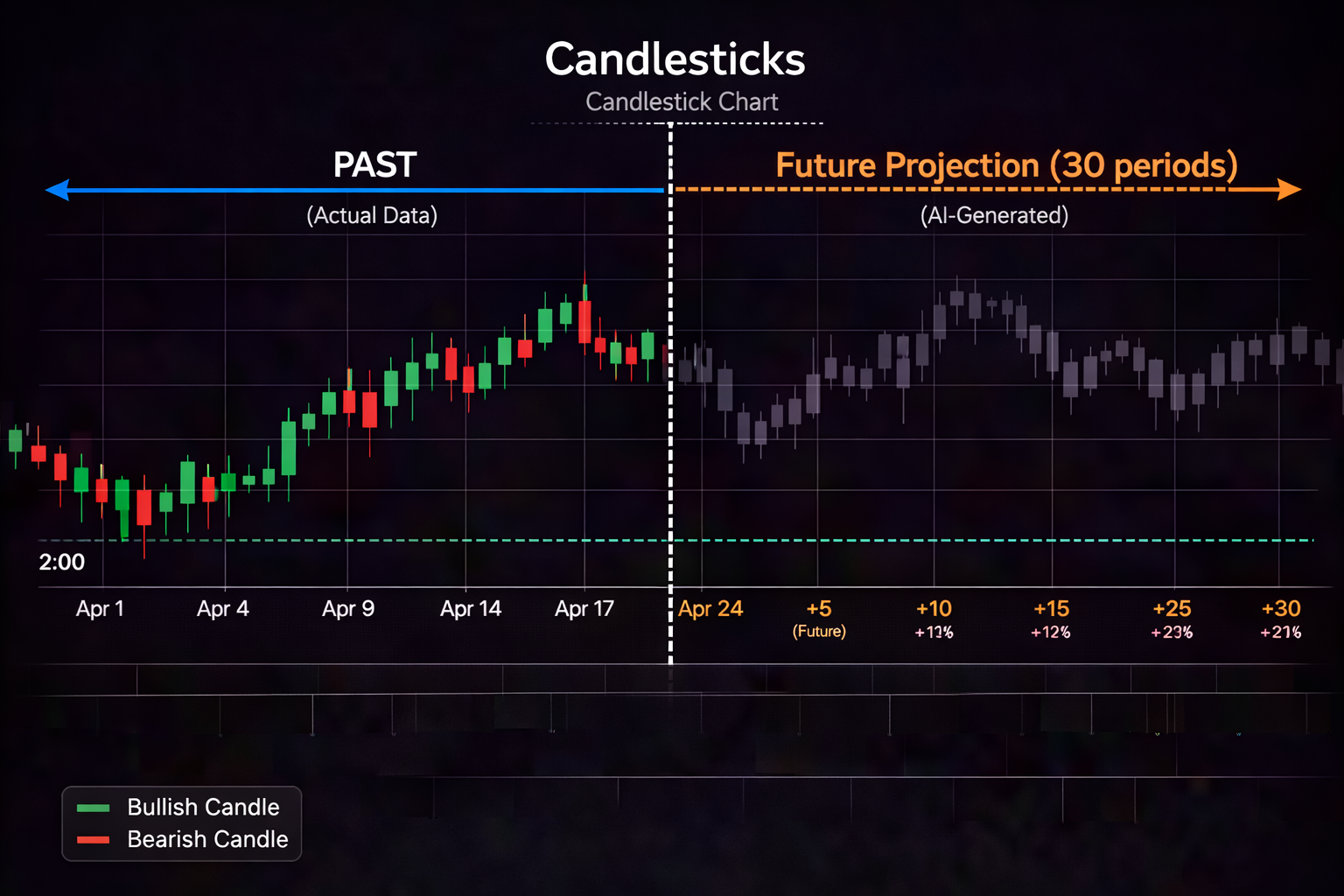
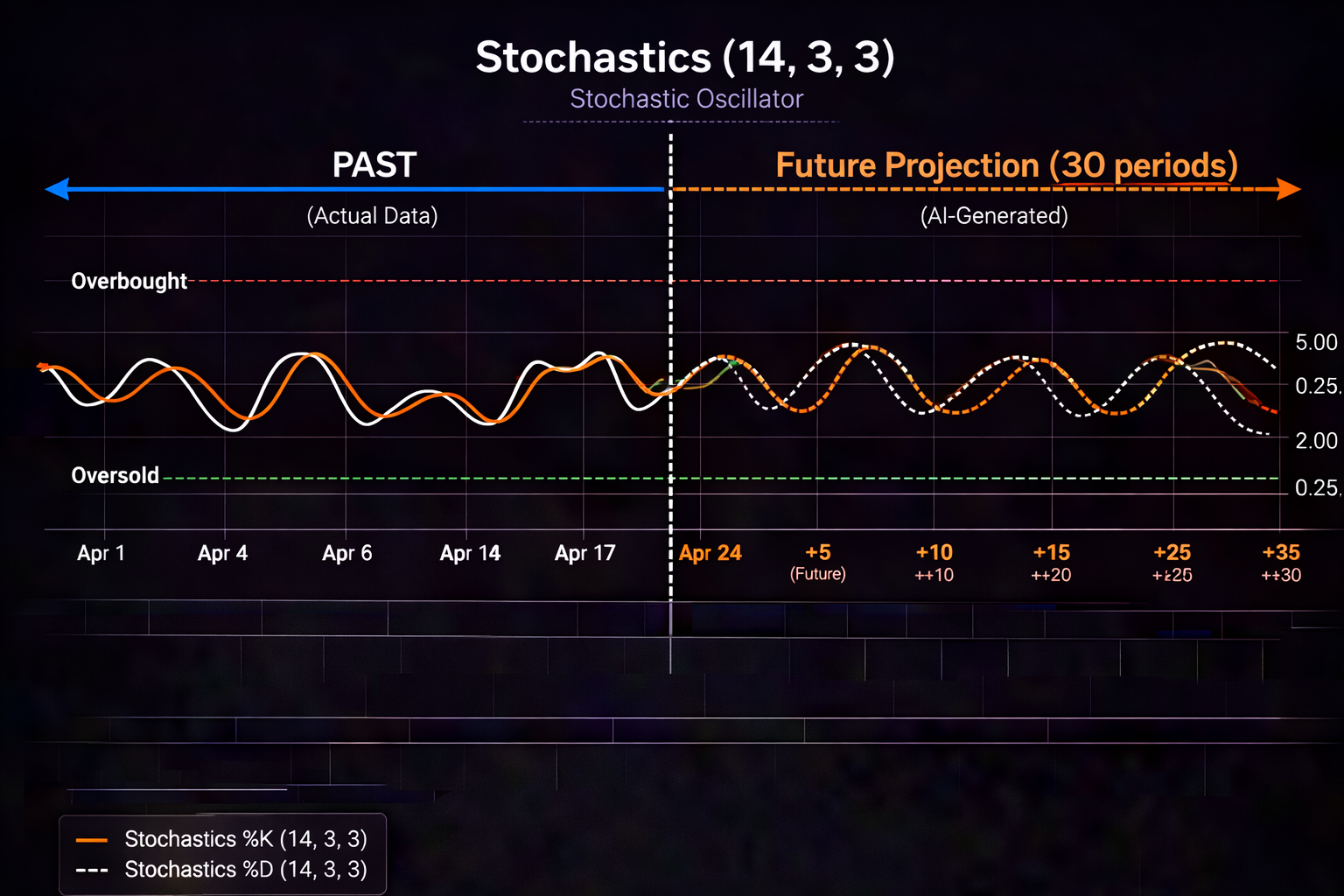
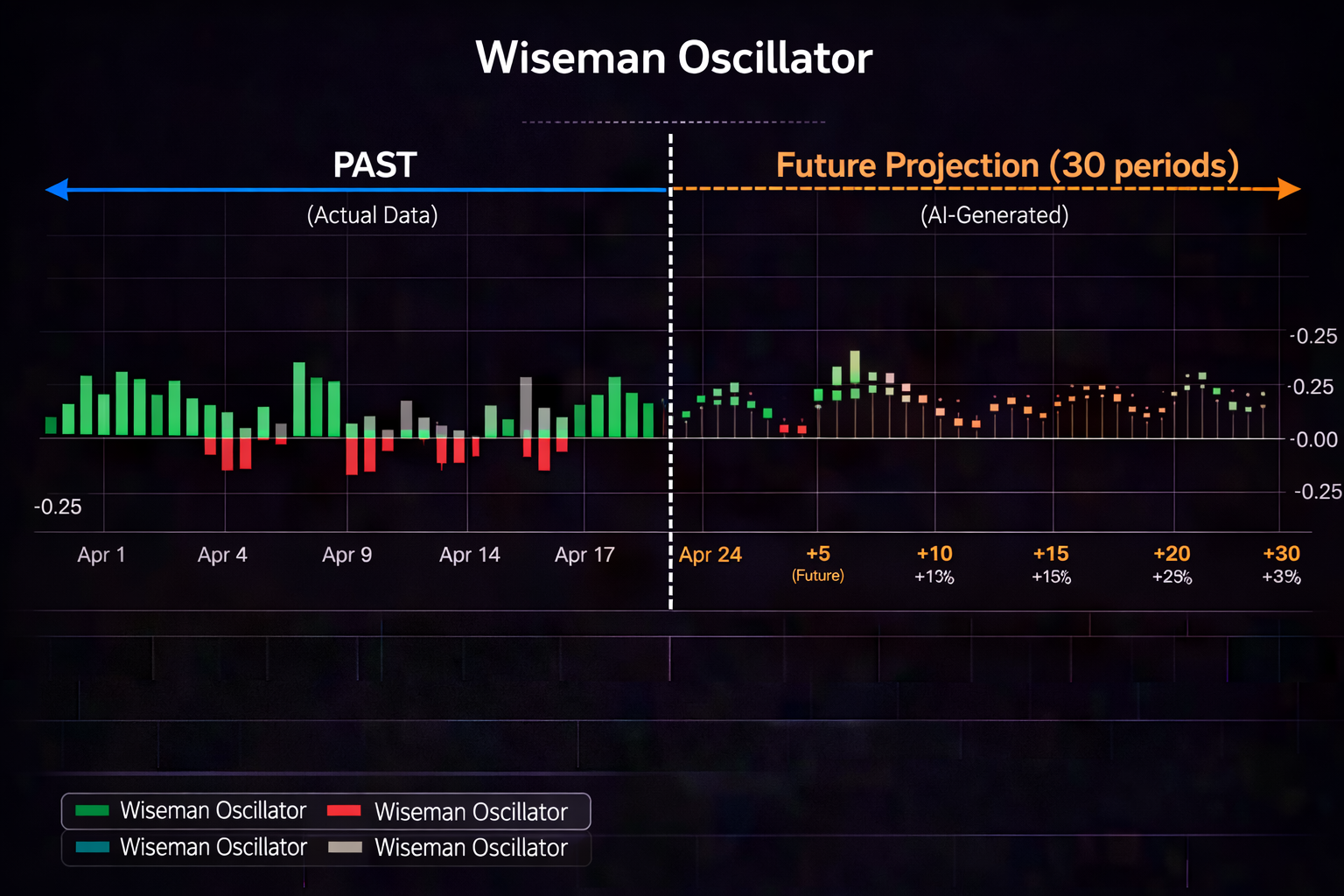
AI-powered trading tools change this paradigm completely. Instead of reacting to price movements after they occur, AI can forecast where indicators and price action are heading 20, 30, or even 50 bars into the future. This predictive capability gives day traders a crucial advantage: the ability to anticipate market moves before they fully develop.
Tools like PredictIndicators.ai exemplify this shift. The platform uses sophisticated AI models to forecast multiple technical indicators simultaneously—MACD, Stochastics, ATR, directional movement, and candlestick patterns—allowing traders to see potential future scenarios before committing capital to a trade.
Scalping is one of the most demanding day trading styles, requiring traders to make dozens of quick trades throughout the session, often holding positions for just seconds or minutes. Success depends on identifying micro-trends and momentum shifts faster than the competition.
AI excels at scalping because it can process multiple data streams simultaneously and identify patterns too subtle for human perception. Here's how to implement an AI-enhanced scalping strategy:
For scalping, speed is critical. Ensure your AI plugin is running on a low-latency connection and that your broker offers fast execution. Platforms like NinjaTrader 8 and MetaTrader 5 support AI integrations like PredictIndicators.ai, which work seamlessly across desktop and even mobile devices if you need to monitor positions on the go.
Momentum trading involves riding strong price moves in the direction of the trend. The challenge is distinguishing between genuine momentum and false breakouts that quickly reverse.
AI can analyze multiple momentum indicators simultaneously and forecast whether the current move has staying power. Here's a systematic approach:
Imagine you're watching a stock approach a key resistance level at $50. Price breaks through on high volume, but your AI tool forecasts that MACD will begin declining within 10 bars and Stochastics will hit overbought territory within 15 bars. This suggests the breakout may be short-lived, prompting you to either skip the trade or take quick profits rather than holding for a larger move.
Mean reversion strategies profit from the tendency of prices to return to their average after extreme moves. The key is identifying when an overextended price is likely to snap back.
Traditional mean reversion uses bands (like Bollinger Bands) or overbought/oversold readings (like RSI above 70 or below 30). AI enhances this by forecasting when the reversion is likely to begin:
Breakout trading involves entering positions when price moves beyond defined support or resistance levels. The challenge is separating genuine breakouts from false moves that quickly reverse.
Use AI to validate breakouts before committing capital:
You're watching a forex pair consolidating in a tight range between 1.0850 and 1.0900. Price approaches the upper boundary at 1.0900. Before entering on the breakout, you check your PredicIndicators.ai dashboard and see that MACD, Stochastics, and directional movement indicators are all forecasted to strengthen over the next 25 bars. This multi-indicator confirmation increases the probability that the breakout will sustain, making it a higher-conviction trade.
Professional day traders rarely look at just one timeframe. A setup that looks bullish on a 5-minute chart might be occurring within a larger downtrend on the 1-hour chart, creating conflicting signals.
AI tools work across multiple timeframes, allowing you to build a cohesive picture:
No trading strategy succeeds without proper risk management. AI can significantly improve how you manage risk on every trade:
Use AI forecasts of ATR (Average True Range) to adjust position sizes based on expected volatility. When AI predicts expanding volatility, reduce position size to maintain consistent dollar risk. When volatility is forecasted to contract, you can safely increase size.
Instead of placing stops at arbitrary price levels, use AI forecasts to identify levels where the market is likely to reverse if your thesis is wrong. For example, if AI shows that a support level should hold based on forecasted momentum, place your stop just below that level rather than a fixed number of ticks away.
AI can forecast where momentum indicators are likely to peak, giving you data-driven profit targets rather than arbitrary price levels. If AI predicts that RSI will reach overbought territory in 20 bars at a specific price level, that becomes your logical exit point.
The effectiveness of your AI trading strategies depends heavily on the platform you use. Here's what to look for:
NinjaTrader 8 is popular among futures and forex day traders for its speed, charting capabilities, and support for custom indicators. AI plugins like PredictIndicators.ai integrate directly, allowing you to overlay AI forecasts on your charts and receive real-time alerts.
MT5 is widely used in the forex community and supports Expert Advisors (EAs) for automated trading. AI tools can function as indicators within MT5 or as part of a fully automated EA system. The platform's multi-asset capabilities make it suitable for traders who work across forex, stocks, and commodities.
Modern AI trading tools aren't confined to desktop platforms. PredictIndicators.ai, for example, works across iPhone, iPad, Android devices, Mac, and web browsers. This flexibility is crucial for day traders who need to monitor positions throughout the trading day, whether at their desk or away from home.
Implementing AI strategies isn't about replacing your existing approach—it's about enhancing it. Here's a practical framework:
Start with a proven trading approach you understand well. Whether it's momentum trading, mean reversion, or breakout trading, you need a solid foundation before adding AI enhancements.
Add AI-powered indicators to your charts. Use them to confirm or question your traditional technical analysis. Over time, you'll develop intuition for when AI forecasts are most reliable.
Define specific rules for how AI forecasts influence your trading decisions. For example: "I will only enter long trades when AI forecasts show strengthening MACD and RSI over the next 20 bars." Write these rules down and stick to them.
Test your AI-enhanced strategy on historical data to see how it would have performed. Look for patterns in which setups work best and which conditions lead to losses. Refine your rules based on this analysis.
When deploying a new AI-enhanced strategy in live markets, start with small position sizes. As you gain confidence in the approach and see consistent results, gradually increase your size.
Even experienced traders make mistakes when incorporating AI into their trading. Here are the most common pitfalls:
AI is a powerful tool, but it's not infallible. Always combine AI forecasts with your own market analysis and risk management. Never blindly follow AI signals without understanding the underlying setup.
Having access to multiple AI forecasts across different indicators can lead to overthinking. Stick to a core set of indicators and rules. More data doesn't always mean better decisions.
AI forecasts work best when aligned with broader market conditions. A bullish AI signal during a major market sell-off may be less reliable than the same signal during a stable or bullish market environment.
Never deploy an AI strategy in live markets without first testing it on historical data. Backtesting reveals how your strategy performs across different market conditions and helps you refine your rules before risking real capital.
We're still in the early stages of AI's transformation of day trading. As these tools become more sophisticated, we'll see:
If you're ready to incorporate AI into your day trading, here's how to begin:
Advanced AI trading strategies represent a significant evolution in how day traders approach the markets. By leveraging predictive analytics, multi-indicator confirmation, and data-driven risk management, traders can make better decisions and improve their consistency.
The key is to view AI as a powerful enhancement to your existing skills, not a replacement for them. The most successful traders will be those who combine AI's analytical capabilities with their own market intuition, discipline, and risk management expertise.
Whether you're trading from a desktop setup with NinjaTrader 8, managing positions on MetaTrader 5, or monitoring markets from your iPhone during the day, AI tools are now accessible across all platforms. The question isn't whether AI will transform day trading—it already has. The question is whether you'll adapt and leverage these tools to stay competitive.
Start small, test thoroughly, and scale gradually. With the right approach, AI-powered trading strategies can become a core component of your day trading success in 2026 and beyond.
Trading Disclaimer: This content is for educational and informational purposes only and does not constitute financial advice, investment recommendations, or trading instructions. Trading financial instruments involves substantial risk of loss and is not suitable for all investors. Past performance is not indicative of future results. Always conduct your own research and consult with a licensed financial advisor before making any trading or investment decisions. PredictIndicators.ai is a software tool that provides predictive analytics; it does not guarantee profits or protect against losses.